
Basement Home Office Ideas: Soundproofing for a Focused Workspace

Conflicting plans are not inevitable in remodeling. They result from fragmented structure.
Anthony Slabaugh Remodeling & Design provides design-build home renovation services for homeowners in Hudson, Akron & surrounding areas who value architectural alignment and disciplined execution.
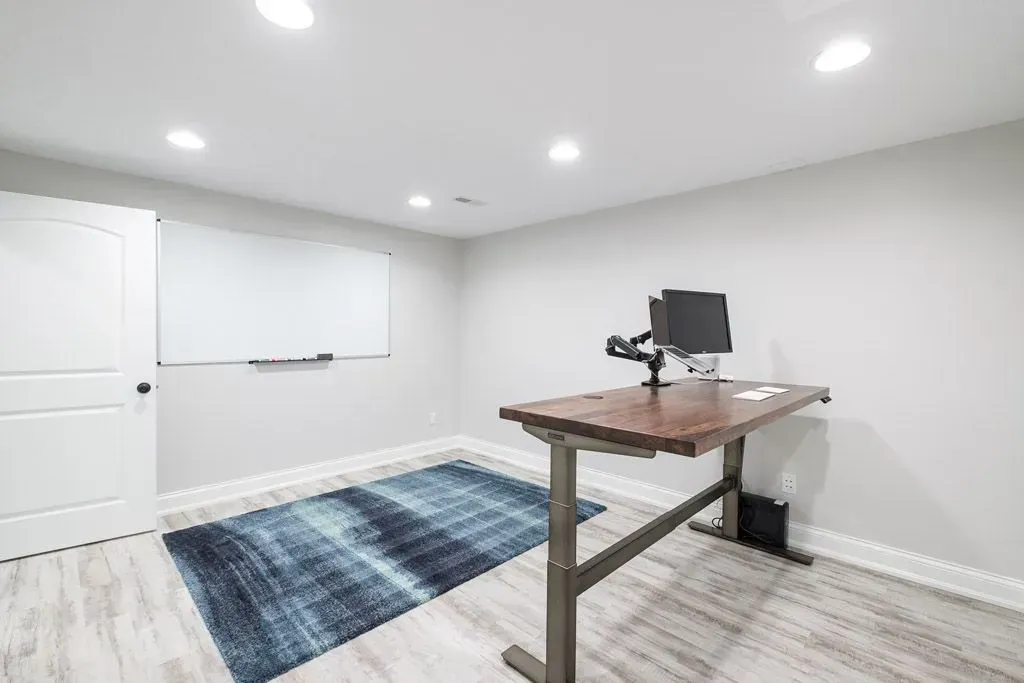
A basement home office can give homeowners a quieter, more focused place to work without taking space from the main living areas. The lower level can be ideal for remote work, calls, planning, reading, or creative projects when the space is designed with privacy, lighting, acoustics, and comfort in mind.
The best basement home office ideas go beyond placing a desk in an unused corner. Sound control, separation from family activity, electrical planning, storage, lighting, and finish coordination all affect how well the office works day to day.
At
Anthony Slabaugh Remodeling & Design, we help homeowners in Hudson, Akron and surrounding areas design basement living spaces that feel functional, refined, and connected to the home.
Start With Privacy and Placement
A basement office should be placed where it can stay separate from louder lower-level activities. If the basement also includes a family room, media area, gym, or guest suite, the office should not sit directly in the main traffic path.
The location should support focus while still feeling comfortable and accessible. A dedicated room may work best for frequent calls, while a defined office zone may be enough for lighter use.
For homeowners throughout Bath, Fairlawn, and Chagrin Falls, planning placement early helps the office feel like a true workspace rather than leftover basement space.
Think About Sound Before Finishes
Basement soundproofing should be discussed before walls, ceilings, doors, and flooring are finalized. Sound can travel from the main floor above, nearby mechanical systems, media areas, exercise rooms, or open family spaces.
Acoustic planning may include wall placement, door selection, insulation strategies, ceiling details, flooring choices, and room separation. The goal is not complete silence in every case. It is a workspace that supports concentration and professional calls.
At
Anthony Slabaugh Remodeling & Design, these details are reviewed early so the finished office supports how the homeowner works.
Plan Lighting for Long Work Sessions
Basement offices often have limited natural light, so lighting needs special attention. A single overhead fixture may create glare, shadows, or eye strain during long workdays.
A better plan may include recessed lighting, task lighting at the desk, wall lighting, and carefully placed accent lighting. If the office has windows, the layout should use that natural light without creating screen glare.
Lighting should make the basement office feel comfortable for focused work, not just bright enough to use.
Include Electrical and Technology Planning
A finished basement office needs more than one outlet near a desk. Computers, monitors, printers, chargers, lighting, speakers, routers, and video call equipment may all need support.
Electrical placement, data needs, outlet locations, charging storage, and cable management should be planned before walls and built-ins are completed. A refined office should keep technology accessible without visible cord clutter.
This planning helps the space feel professional and organized.
Basement Home Office Planning Guide
| Office Detail | Why It Matters |
|---|---|
| Room placement | Reduces interruptions and improves privacy |
| Acoustic planning | Helps control sound from family spaces and mechanical areas |
| Lighting layers | Supports long work sessions and video calls |
| Electrical planning | Supports computers, monitors, chargers, and task lighting |
| Built-in storage | Keeps papers, supplies, and equipment organized |
| Finish coordination | Makes the office feel connected to the home |
This table is useful because a basement office depends on comfort, performance, and design quality working together.
Use Built-Ins to Control Clutter
A basement office can quickly collect papers, equipment, chargers, files, and supplies. Built-in storage helps keep the room clean without adding bulky furniture.
Cabinets, drawers, shelving, printer storage, and a built-in desk can all help. The right solution depends on whether the office is used every day, part time, or as a shared workspace.
Storage should support focus by keeping visual clutter contained.
Keep the Office Connected to the Home
A basement office should feel quiet, but not disconnected or unfinished. Flooring, trim, doors, lighting, wall color, and hardware should relate to the rest of the finished basement and main home.
This is especially important when the office sits near shared basement living space. Coordinated finishes help the office feel like part of a complete lower-level design.
Visit Our Design Studio in Stow, Ohio
Our Stow, Ohio design studio gives homeowners a place to review basement layout ideas, lighting, cabinetry, finishes, hardware, and built-in storage options together. Seeing these choices in context helps clarify how a basement home office can be both quiet and refined.
Client Feedback on Our Remodeling Process
Homeowners often share that early planning helps them feel more confident about specialized spaces like home offices. By reviewing privacy, sound control, lighting, electrical needs, storage, and finish coordination together,
Anthony Slabaugh Remodeling & Design helps clients make decisions with clarity instead of pressure.
Frequently Asked Questions
Is a basement a good place for a home office?
A basement can be a strong home office location when privacy, lighting, acoustics, electrical needs, and comfort are planned carefully. The lower level can provide separation from main-floor activity while still feeling connected to the home.
How do you soundproof a basement office?
Basement soundproofing may involve room placement, wall and ceiling planning, insulation strategies, flooring choices, and door selection. The right approach depends on nearby noise sources, such as family rooms, mechanical systems, exercise areas, or the main floor above.
What lighting works best for a basement home office?
A basement home office usually benefits from layered lighting. Recessed lighting can provide general brightness, while desk lighting and wall lighting can improve comfort. Natural light should be used carefully to reduce glare on screens.
What should be included in a finished basement office?
A finished basement office should include a comfortable work area, electrical access, lighting, sound control, storage, and coordinated finishes. Built-ins, cable management, and task lighting can help the room feel professional and easier to use.
Start With a Basement Office Designed for Focus
A refined basement home office should support privacy, quiet, lighting, storage, and daily work without feeling disconnected from the home. Schedule a consultation with Anthony Slabaugh Remodeling & Design or call (330) 940-3237 to plan your basement living space with confidence.
Recent Posts
Share this article
CLIENT REVIEWS
Don’t Just Take Our Word For It
See below how our customers react on our ultimate pressure cleaning services