
INTERIOR HOME REMODELING
Interior Home Remodeling in Hudson, Akron & Surrounding Areas
Interior home remodeling is not simply about updating finishes. It is about restructuring how a home functions from the inside out.
Many homes feel outdated not because of aesthetics alone, but because of inefficient layouts, disconnected rooms, and structural decisions that no longer support modern living. Over time, isolated renovations can create inconsistencies in proportion, circulation, and performance.
At Anthony Slabaugh Remodeling & Design, interior remodeling begins with evaluating the entire interior as a connected architectural system. Through our coordinated design-build process, layout refinement, structural analysis, and construction planning move forward together to support long-term livability.
Interior remodeling strengthens how every space works in relation to the next.
When Interior Remodeling Is the Right Approach
An interior whole house remodel becomes appropriate when the existing layout no longer reflects how the home is used.
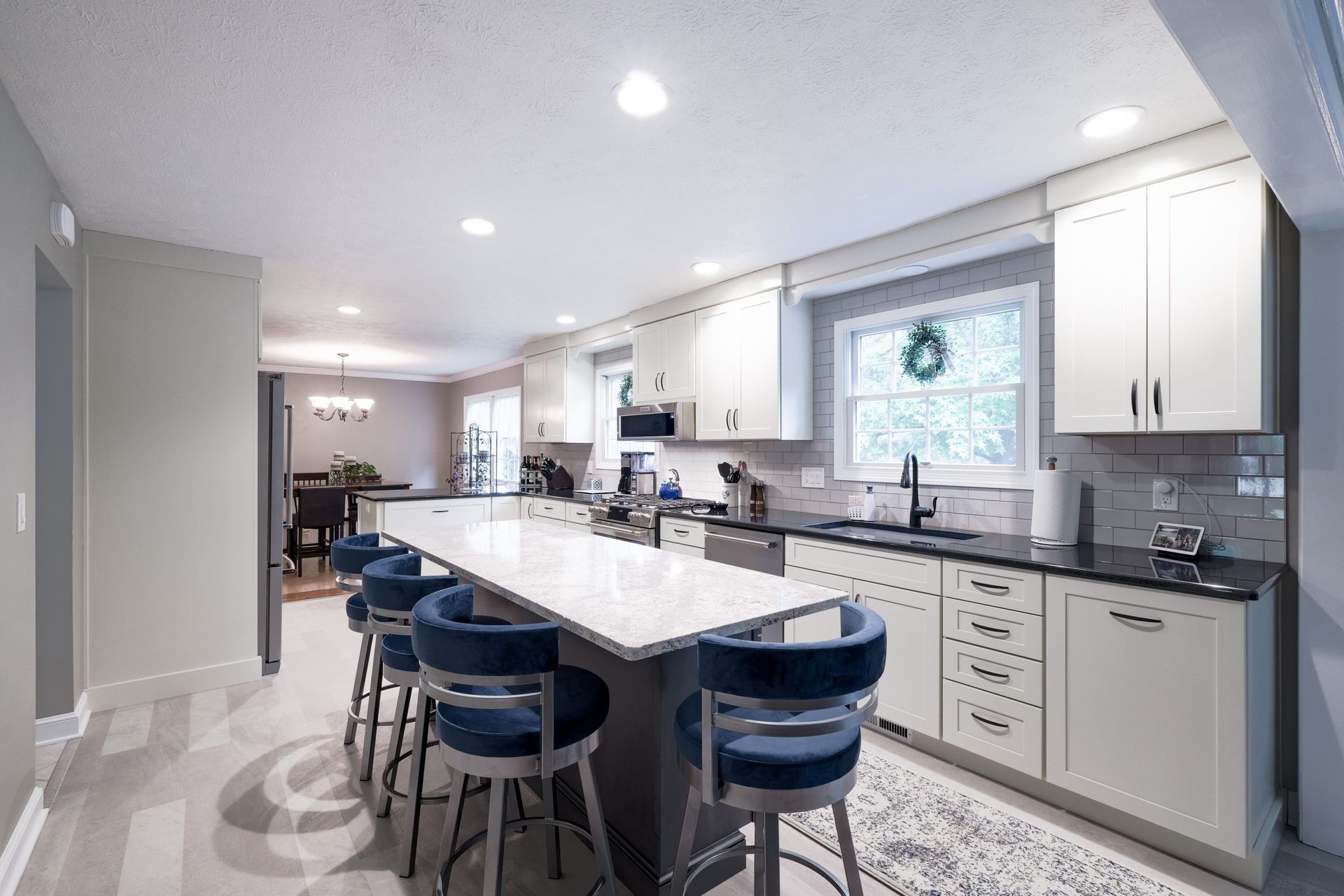
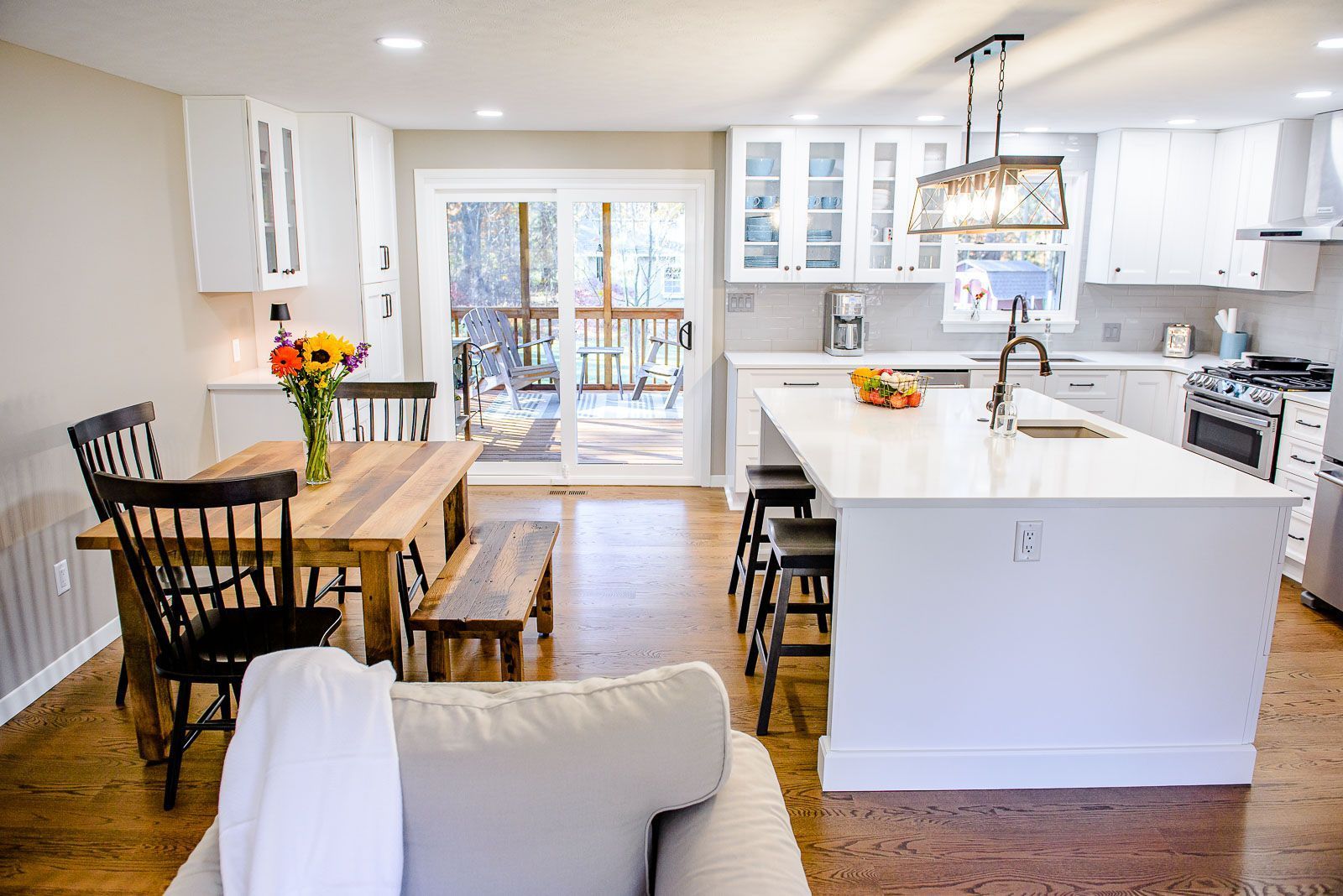
Formal rooms may remain underutilized. Kitchens may feel separated from gathering areas. Circulation paths may interrupt natural movement. Storage solutions may have been added reactively rather than intentionally.
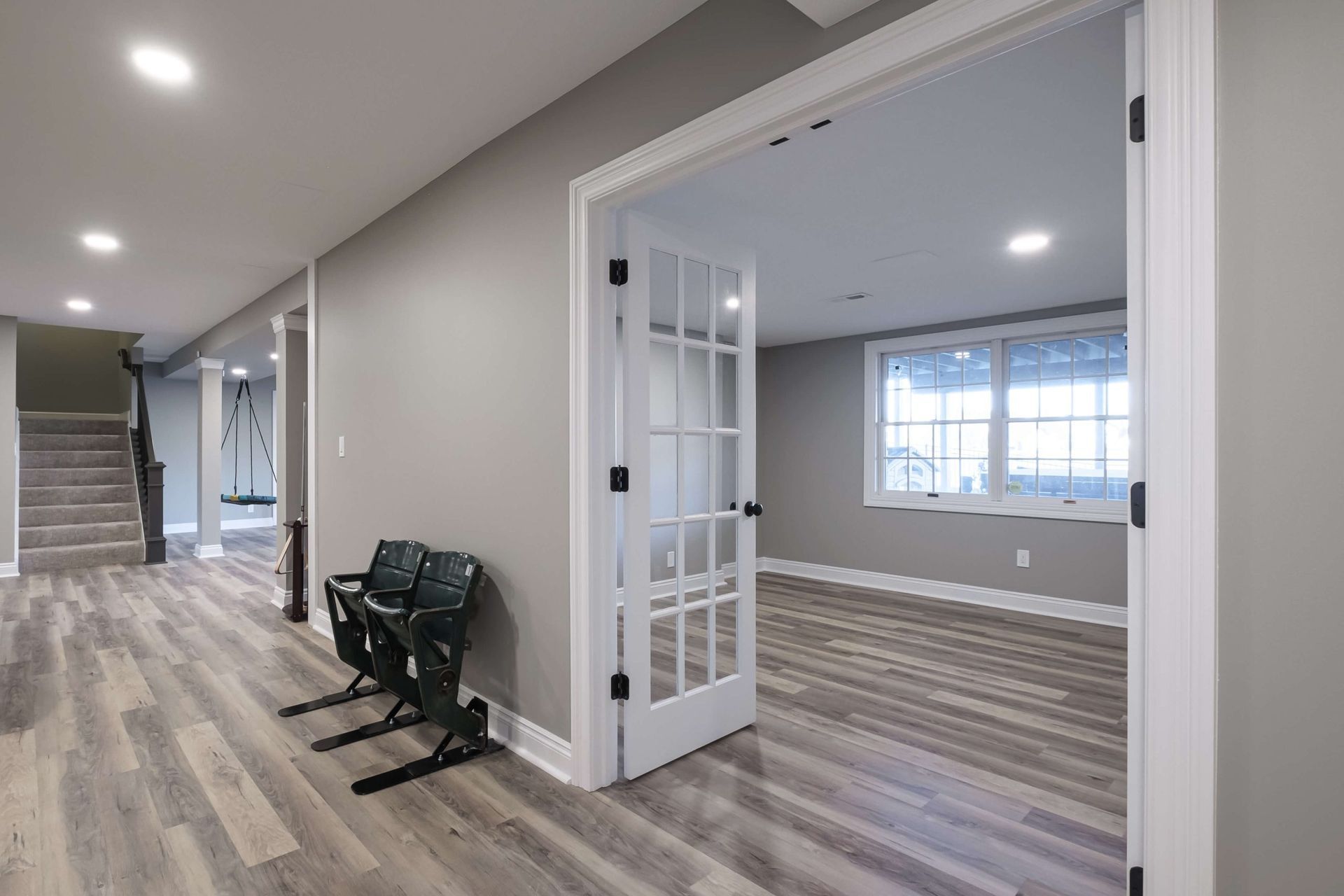
Rather than adjusting individual rooms in isolation, interior remodeling allows the home to be re-evaluated holistically. The objective is not simply to create openness. It is to establish clarity in movement, proportion, and spatial relationships.
Reworking Interior Flow and Circulation
Interior circulation shapes daily experience.
We assess how occupants move through the home, where congestion occurs, and how sightlines connect shared areas. When walls are modified, structural load evaluation ensures that adjustments preserve both safety and architectural proportion.
In some homes, subtle reconfiguration improves flow significantly. In others, more extensive structural restructuring is necessary to remove friction in daily routines.
Purposeful circulation creates interiors that feel intuitive rather than segmented.
Architectural Continuity and Interior Cohesion
Homes remodeled incrementally often lose consistency.
Ceiling heights may shift. Flooring transitions may feel abrupt. Millwork details may vary between spaces. These inconsistencies can subtly disrupt the experience of the home.
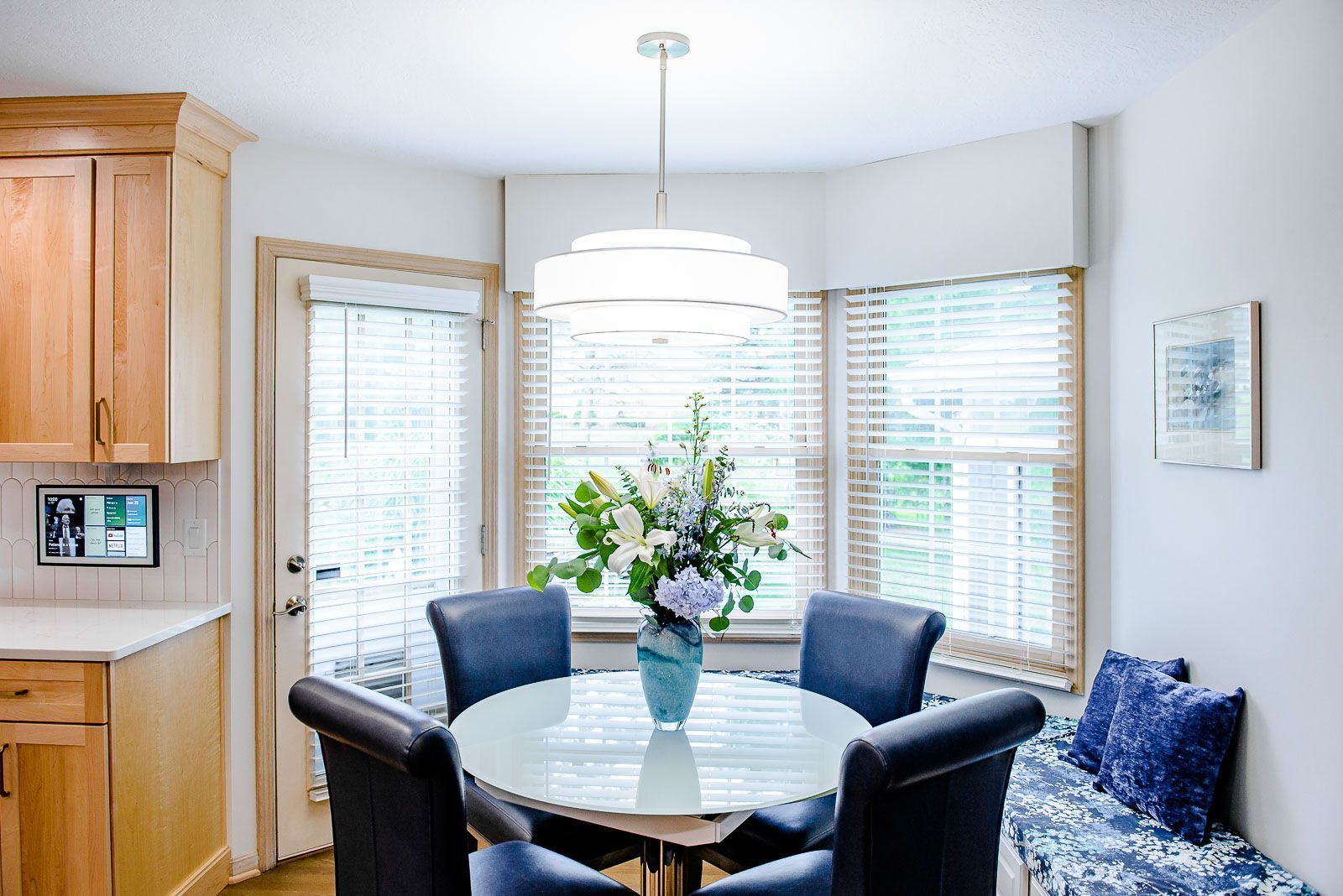
Interior remodeling restores continuity through coordinated planning. Ceiling relationships, trim detailing, material transitions, and lighting strategy are developed together to preserve scale and rhythm.
When proportion and transition are considered intentionally, the interior regains balance and cohesion.
Structural Alignment and System Performance
Interior remodeling frequently requires structural evaluation.
Removing walls, adjusting openings, or reassigning space may influence load-bearing systems. Foundation conditions, framing alignment, and roof structure are reviewed before finalizing design decisions.
Mechanical systems are also examined to support the revised layout. Heating distribution, ventilation planning, insulation strategy, and electrical capacity must align with the new configuration.
Addressing structure and systems early ensures the finished interior performs consistently across seasons.
Integrated Storage and Spatial Efficiency
Storage planning is often overlooked during interior remodeling.
When cabinetry and closets are added after layout decisions are finalized, they can disrupt proportion and circulation. During a coordinated interior remodel, storage is integrated into the architectural framework from the beginning.
Built-in cabinetry, concealed storage zones, and strategically positioned closets enhance usability while preserving visual clarity.
Intentional storage reduces clutter and strengthens spatial efficiency.
Designing for Long-Term Living
Interior remodeling is frequently driven by evolving lifestyle needs.
Families grow. Household routines change. Homeowners may anticipate long-term residence. Circulation patterns can be refined for adaptability. Transitions may be adjusted to improve accessibility over time.
Rather than pursuing short-term updates, interior remodeling becomes a strategic investment in sustained comfort and flexibility.
Our Coordinated Design-Build Process
Interior remodeling involves interconnected structural, mechanical, and architectural decisions.
When design and construction operate independently, misalignment can compromise execution. Our unified design-build model ensures structural evaluation, interior architecture, budgeting alignment, and construction sequencing are developed together.
Anthony Slabaugh Remodeling & Design provides a single point of accountability from feasibility through completion. This integrated approach reduces uncertainty and protects design integrity.
Homeowners exploring more comprehensive structural transformation may also consider our Full Home Renovation services.
Interior Remodeling Planning Overview
| Focus Area | Planning Strategy | Long-Term Benefit |
|---|---|---|
| Circulation Refinement | Wall reconfiguration and sightline alignment | Clearer movement patterns |
| Architectural Continuity | Coordinated detailing and material transitions | Unified interior experience |
| Structural Evaluation | Load-bearing and framing review | Safe modifications |
| Mechanical Coordination | HVAC and lighting alignment | Consistent comfort |
| Storage Integration | Built-in organization planning | Reduced visual clutter |
| Design-Build Process | Unified planning and execution | Predictable outcomes |
Serving Hudson, Akron & Surrounding Areas
Anthony Slabaugh Remodeling & Design works with homeowners throughout Hudson and Akron, as well as nearby communities including Bath, Fairlawn, Stow, Chagrin Falls, Richfield, and Aurora.
Our coordinated design-build process allows us to manage interior remodeling projects across surrounding areas while maintaining consistent structural planning and architectural integration. Each project begins with thoughtful evaluation to ensure improvements align with both the home’s existing framework and the homeowner’s long-term goals.
Frequently Asked Questions About Interior Home Remodeling
What is the difference between interior remodeling and a full home renovation?
Interior remodeling focuses on structural and functional improvements within the existing footprint. A full home renovation may also involve exterior transformation or broader structural expansion.
Does an interior whole house remodel require structural changes?
Often, yes. Reconfiguring walls or improving circulation may require structural analysis to maintain proper load distribution.
Can interior remodeling improve energy efficiency?
Yes. Mechanical upgrades, insulation coordination, and lighting planning can enhance overall performance when integrated properly.
Is interior remodeling limited to layout adjustments?
No. It also involves architectural continuity, system alignment, material cohesion, and long-term livability planning.
Does Anthony Slabaugh Remodeling & Design manage the entire process?
Yes. Interior whole house remodels are executed through our coordinated design-build approach from concept through completion.
Begin Planning Your Interior Transformation
If your home feels disconnected or inefficient, an interior whole house remodel can restore clarity and architectural balance.
Anthony Slabaugh Remodeling & Design works with homeowners in Hudson, Akron, and surrounding areas to create interiors grounded in structural integrity, thoughtful proportion, and coordinated execution.
Schedule a consultation to begin planning an interior transformation designed around how you live today and how you intend to live in the future.