
Home Remodeling Contractor
Hudson, Ohio
Basement Home Gym Remodeling in Hudson, Akron & Surrounding Areas
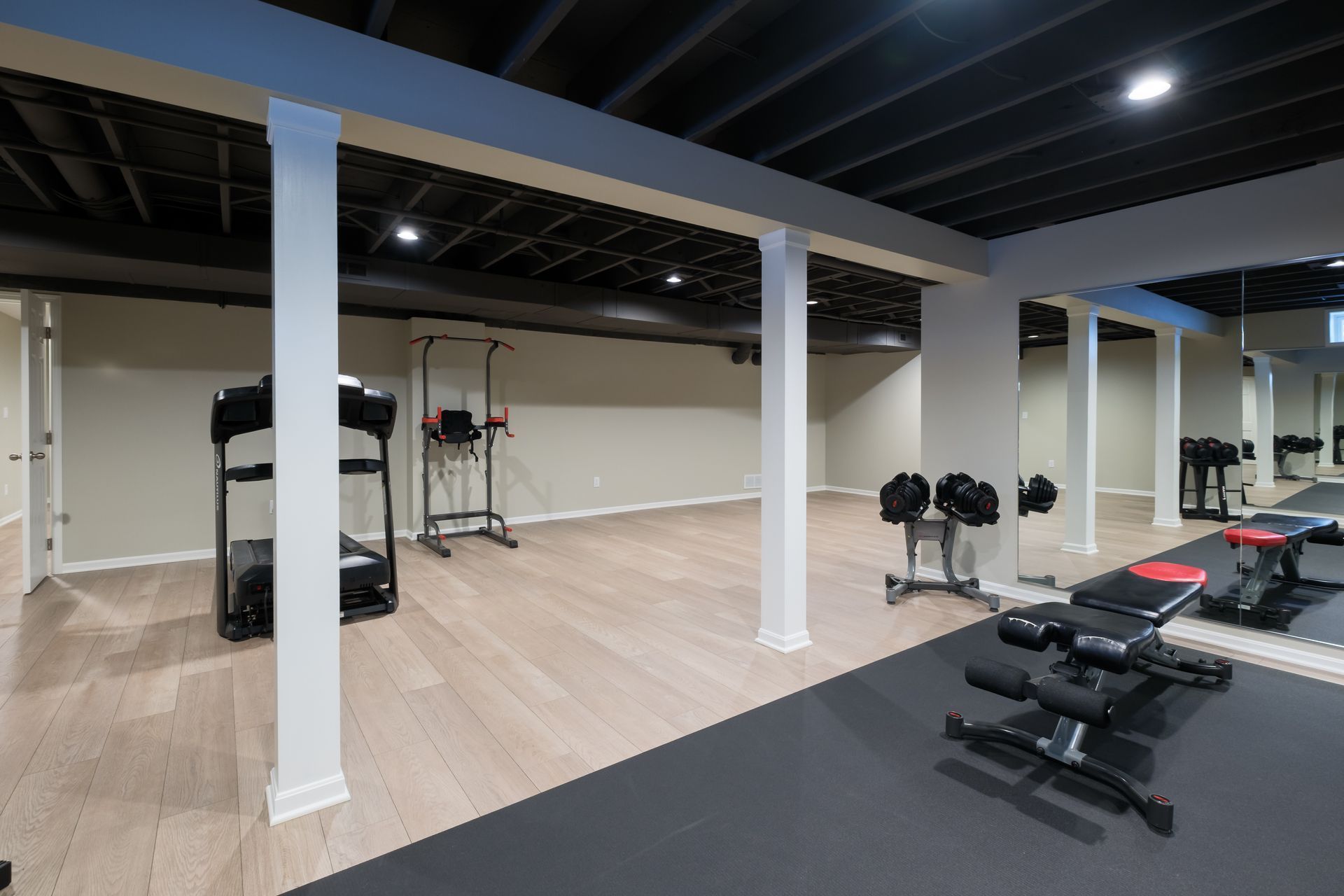
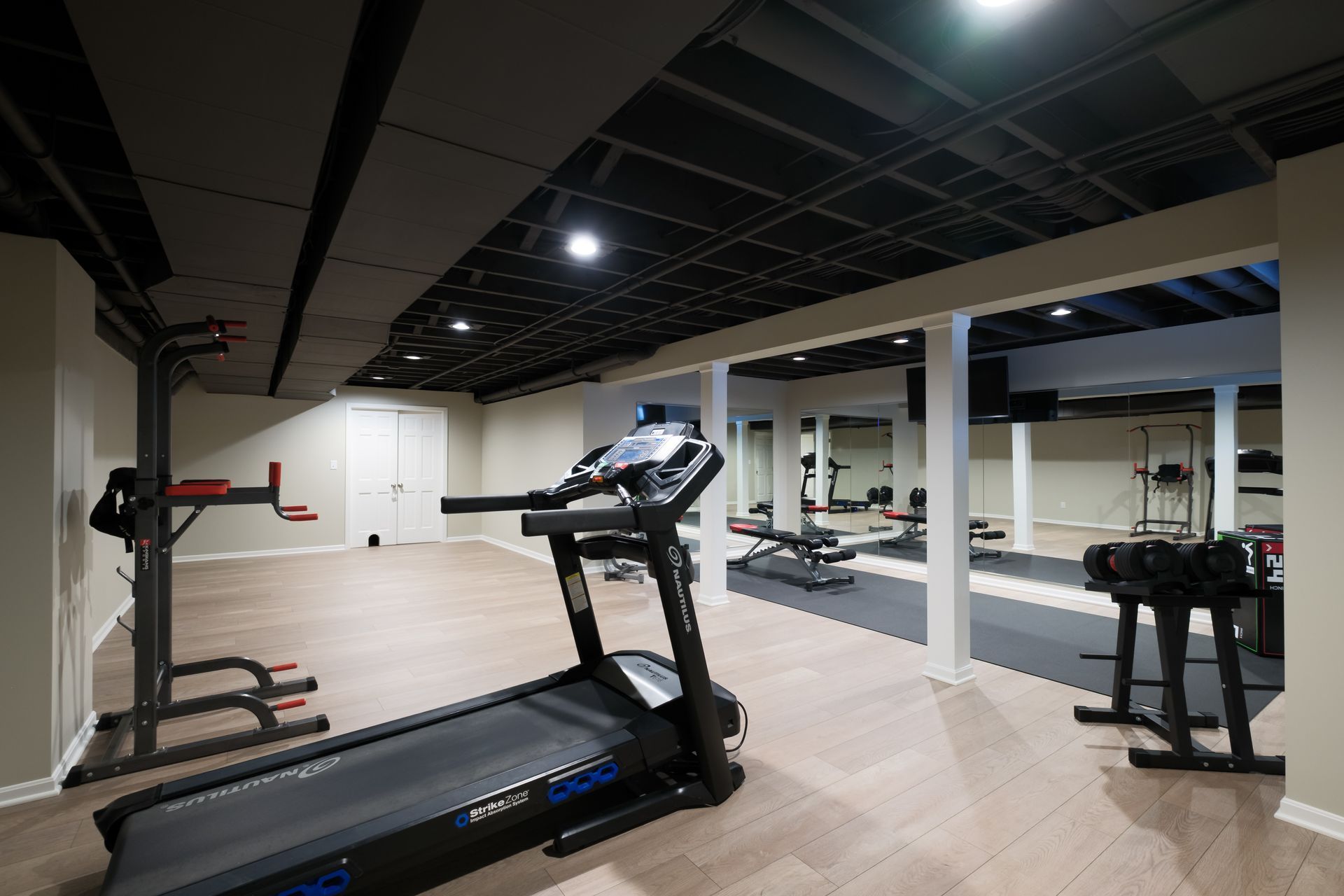
A basement home gym can turn unused lower-level space into a practical area for fitness, movement, and daily wellness.
For many homeowners, the basement offers separation from the main living areas, enough floor space for equipment, and the flexibility to create a dedicated workout environment. When planned carefully, it can support strength training, cardio, stretching, yoga, recovery, or multi-purpose fitness use without disrupting the rest of the home.
Anthony Slabaugh Remodeling & Design helps homeowners in Hudson, Akron, and surrounding areas create basement home gym spaces through a coordinated design-build process. We plan around layout, flooring, ceiling height, lighting, ventilation, equipment clearance, storage, moisture awareness, and long-term durability.
A basement gym should feel functional, comfortable, and intentionally connected to the finished basement plan.
Why Create a Basement Home Gym
A basement home gym gives fitness a dedicated place within the home.
Instead of storing equipment in a bedroom, garage, or unfinished corner, a remodeled lower-level gym creates a defined environment for exercise. This can make workouts easier to maintain because the space is ready when needed.
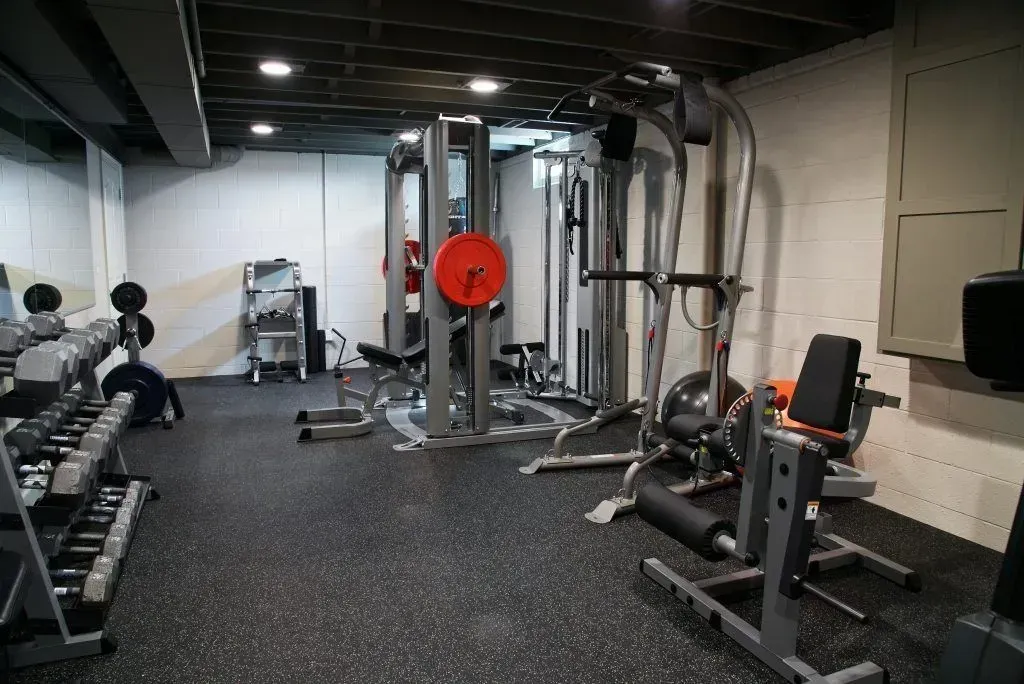
A basement gym may support free weights, machines, treadmills, bikes, mats, mirrors, stretching areas, or compact storage for accessories. The design should reflect the type of exercise the homeowner actually does, not a generic gym layout.
The best fitness spaces are built around real routines.
Layout Planning and Equipment Clearance
A successful basement home gym starts with layout.
Fitness equipment requires clearances for movement, safety, access, and maintenance. A treadmill needs different spacing than free weights. A stretching zone needs open floor area. Wall-mounted storage, mirrors, benches, and machines all affect circulation.
We evaluate stair placement, columns, mechanical areas, ceiling height, windows, utility access, and adjacent basement spaces before planning the layout. If the home gym shares space with a family room, storage zone, or bathroom, transitions must be handled carefully.
The goal is a space that feels open enough to move comfortably.
Flooring for Basement Fitness Spaces
Flooring is one of the most important decisions in a basement home gym.
The surface should support movement, reduce impact, handle equipment, and perform well in a below-grade environment. Depending on the fitness use, flooring may need to accommodate weights, cardio equipment, stretching, or mixed activity.
Material selection should also consider moisture awareness, maintenance, sound transfer, and comfort underfoot. A gym floor should feel durable without making the space feel unfinished or overly industrial.
The right flooring protects both the room and the routines that happen inside it.
Lighting, Mirrors, and Visual Comfort
Basement gyms often have limited natural light, so lighting design matters.
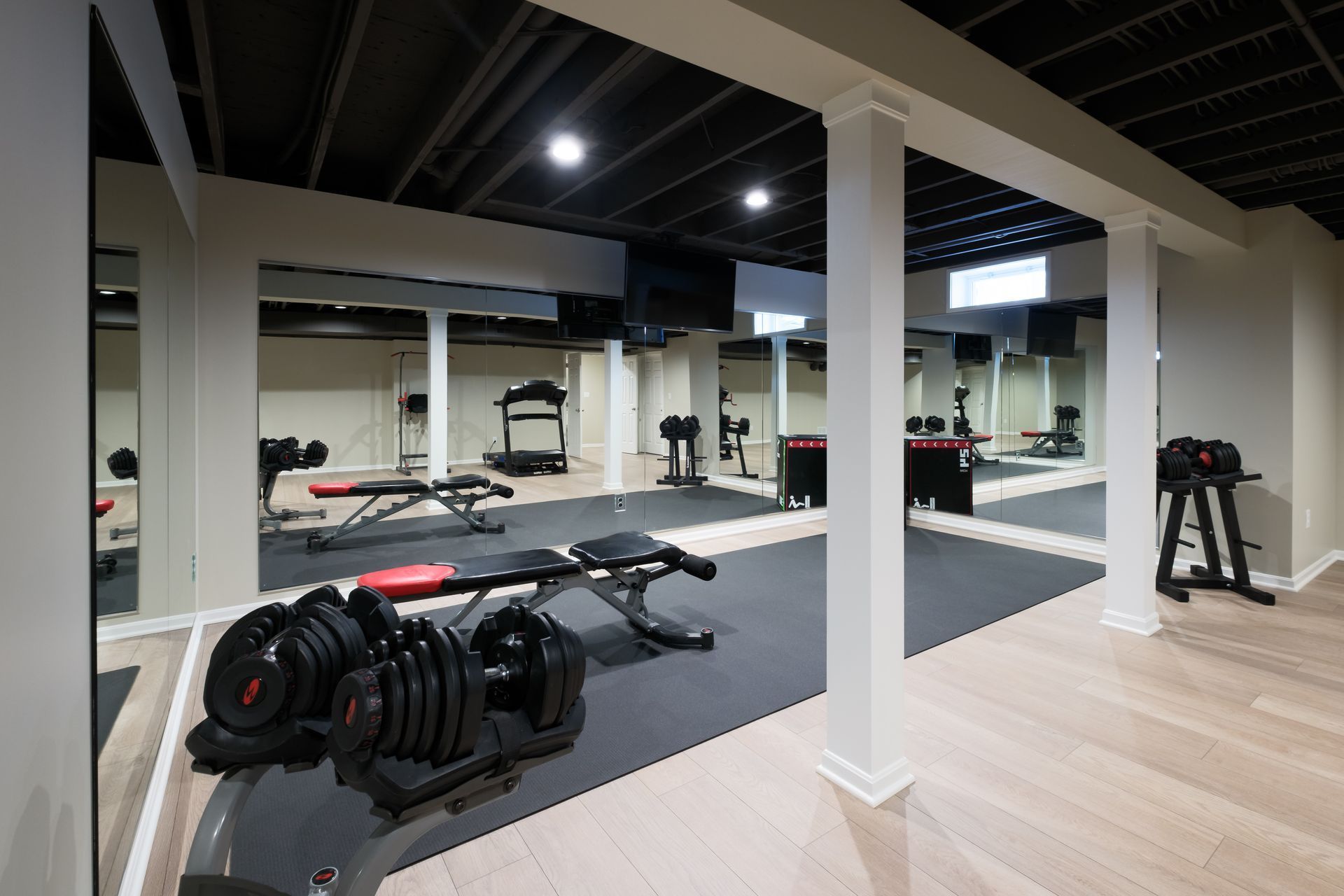
Layered lighting can help the space feel brighter and more energizing. Overhead lighting should provide even visibility without glare. Task or accent lighting may help define zones, especially in multi-use basements.
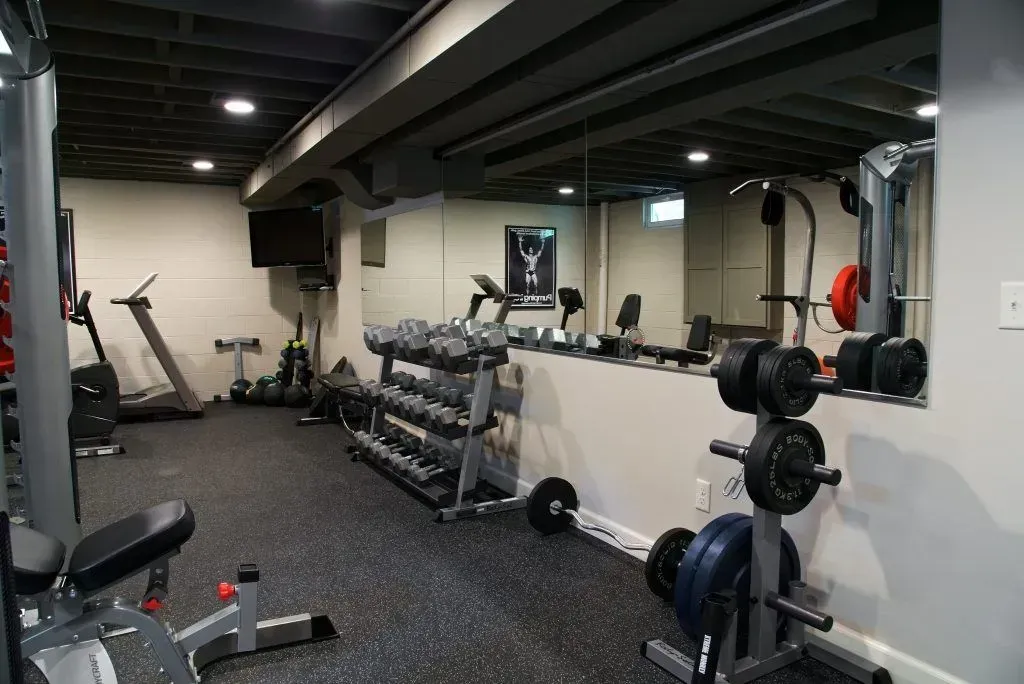
Mirrors can support form checks, improve the sense of openness, and help reflect light. Placement should be intentional so mirrors enhance function without making the room feel crowded or visually distracting.
A good basement gym should feel motivating, not dark or forgotten.
Ventilation, Comfort, and Moisture Awareness
Fitness spaces need comfort planning.
Exercise increases heat and humidity, so airflow, ventilation, and temperature control should be evaluated early.
Basements can also be more prone to dampness, which makes material selection and moisture awareness important.
We consider HVAC distribution, air movement, humidity control, insulation, and any nearby mechanical equipment.
The goal is to create a gym that feels comfortable during use and protects finishes over time.
Comfort is part of performance.
Storage for Equipment and Accessories
A basement home gym works best when equipment has a defined place.
Storage may include wall systems, cabinets, shelving, mat storage, towel storage, or concealed areas for smaller accessories. Without storage planning, resistance bands, shoes, weights, yoga mats, and cleaning supplies can quickly create clutter.
Storage should be accessible but not intrusive. In a shared basement, it should also help the fitness area feel organized when not in use.
A clean layout makes the space easier to use consistently.
Our Design-Build Approach to Basement Home Gyms
Anthony Slabaugh Remodeling & Design manages basement home gym remodeling through a coordinated design-build process.
This allows layout planning, flooring, lighting, ventilation, storage, material selection, and construction execution to remain aligned from the beginning. Instead of simply placing equipment in a finished basement, we plan the room around movement, comfort, durability, and long-term use.
For broader projects, a basement home gym may connect naturally with basement finishing, basement renovation services, basement living spaces, bathroom remodeling, storage planning, or whole home remodeling.
A coordinated approach helps the gym feel like part of the home.
Basement Home Gym Overview
| Design Focus | Planning Priority | Long-Term Benefit |
|---|---|---|
| Fitness Layout | Equipment spacing and movement zones | Safer, easier workouts |
| Flooring | Impact, durability, and moisture awareness | Better long-term performance |
| Lighting | Even brightness and visual comfort | More usable workout space |
| Ventilation | Airflow and humidity control | Improved comfort |
| Storage | Accessories, mats, and equipment | Reduced clutter |
| Design-Build Planning | Unified design and execution | More cohesive finished space |
Serving Hudson, Akron & Surrounding Areas
Anthony Slabaugh Remodeling & Design helps homeowners throughout Hudson and Akron, as well as nearby communities including Bath, Fairlawn, Stow, Chagrin Falls, Richfield, and Aurora, create basement home gyms that support fitness routines while maintaining the comfort and finish quality expected in a well-designed home.
Frequently Asked Questions
Is a basement a good place for a home gym?
Yes. A basement can be a strong location for a home gym because it offers separation, flexible floor space, and room for equipment. The space should be planned around ceiling height, ventilation, flooring, lighting, moisture awareness, and equipment clearances so it feels comfortable and safe for regular use.
What should be included in a basement home gym?
A basement home gym may include durable flooring, layered lighting, mirrors, ventilation improvements, equipment zones, storage, and comfortable circulation. The exact features depend on whether the space will support strength training, cardio equipment, yoga, stretching, recovery, or a combination of different fitness routines.
What type of flooring works best for a basement home gym?
The best flooring depends on the type of exercise and equipment being used. Basement gym flooring should support impact, comfort, durability, and moisture awareness. It should also protect the finished space while helping the gym feel intentional rather than like equipment placed in a leftover room.
How do you make a basement gym feel less dark?
A basement gym can feel brighter with layered lighting, lighter finish selections, mirrors, clean ceiling design, and thoughtful equipment placement. If windows are available, the layout should take advantage of natural light while avoiding glare or awkward shadows during workouts.
How is this different from general basement living space planning?
Basement living space planning focuses broadly on family rooms, guest areas, media rooms, storage, and flexible use. A basement home gym focuses specifically on fitness needs, including flooring, ventilation, equipment clearance, lighting, mirrors, storage, and durability for repeated physical activity.
Begin Planning Your Basement Home Gym
A basement home gym should make fitness more convenient without feeling disconnected from the rest of the home.
Anthony Slabaugh Remodeling & Design helps homeowners in Hudson, Akron, and surrounding areas create lower-level fitness spaces through thoughtful planning, durable materials, comfort-focused design, and coordinated design-build execution.
Schedule a consultation
to begin planning a basement home gym designed around how you move.
CLIENT REVIEWS
Don’t Just Take Our Word For It
See below how our customers react on our ultimate pressure cleaning services