
Why Cabinet Colors Look Different at Home Than in the Showroom

Conflicting plans are not inevitable in remodeling. They result from fragmented structure.
Anthony Slabaugh Remodeling & Design provides design-build home renovation services for homeowners in Hudson, Akron & surrounding areas who value architectural alignment and disciplined execution.
Cabinet color is one of the most important decisions in a kitchen, bathroom, mudroom, or built-in design. It sets the tone for the entire space and influences how countertops, tile, flooring, hardware, and lighting are perceived.
A common concern homeowners have is that a cabinet color looks different at home than it did in the showroom. This does not always mean the wrong color was selected. It often means the color is responding to a different environment.
At
Anthony Slabaugh Remodeling & Design, we help homeowners in Hudson, Akron and surrounding areas evaluate cabinet colors within the full design context. A refined remodel depends on more than choosing a beautiful finish. It requires understanding how that finish will look in the actual home.
Lighting Changes Cabinet Color
Lighting has a major impact on how cabinet colors appear. A finish viewed under showroom lighting may look warmer, cooler, lighter, or darker once it is installed at home.
Natural light changes throughout the day. Morning light may make cabinetry feel softer, while evening light may make the same finish appear deeper. Artificial lighting also matters. Warm bulbs can bring out cream, beige, or brown undertones. Cooler lighting can emphasize gray, blue, or green tones.
This is why cabinet colors should never be judged in isolation. They need to be considered alongside the lighting plan.
Showrooms and Homes Have Different Conditions
Showrooms are designed to display materials clearly, but they rarely match the conditions inside a home. Ceiling height, window placement, wall color, flooring, and surrounding finishes all influence how a cabinet sample is perceived.
A cabinet finish that looks balanced in a showroom may feel different next to existing wood floors, new countertops, or a backsplash with strong undertones.
For homeowners throughout Bath, Fairlawn, and Chagrin Falls, this is why material planning should happen within a coordinated design process, not through isolated product decisions.
Undertones Make a Big Difference
Cabinet colors often contain subtle undertones. White cabinets may lean warm, cool, creamy, gray, or slightly green. Wood stains may reveal red, gold, brown, or ashy undertones depending on the light and surrounding materials.
These undertones become more noticeable when cabinets are placed beside countertops, tile, flooring, and wall paint. If those surrounding materials have competing undertones, the cabinet color may appear different than expected.
At
Anthony Slabaugh Remodeling & Design, we compare selections together so undertone conflicts can be identified before orders are finalized.
Surrounding Materials Affect Perception
Cabinet color does not stand alone. It reacts to every material nearby.
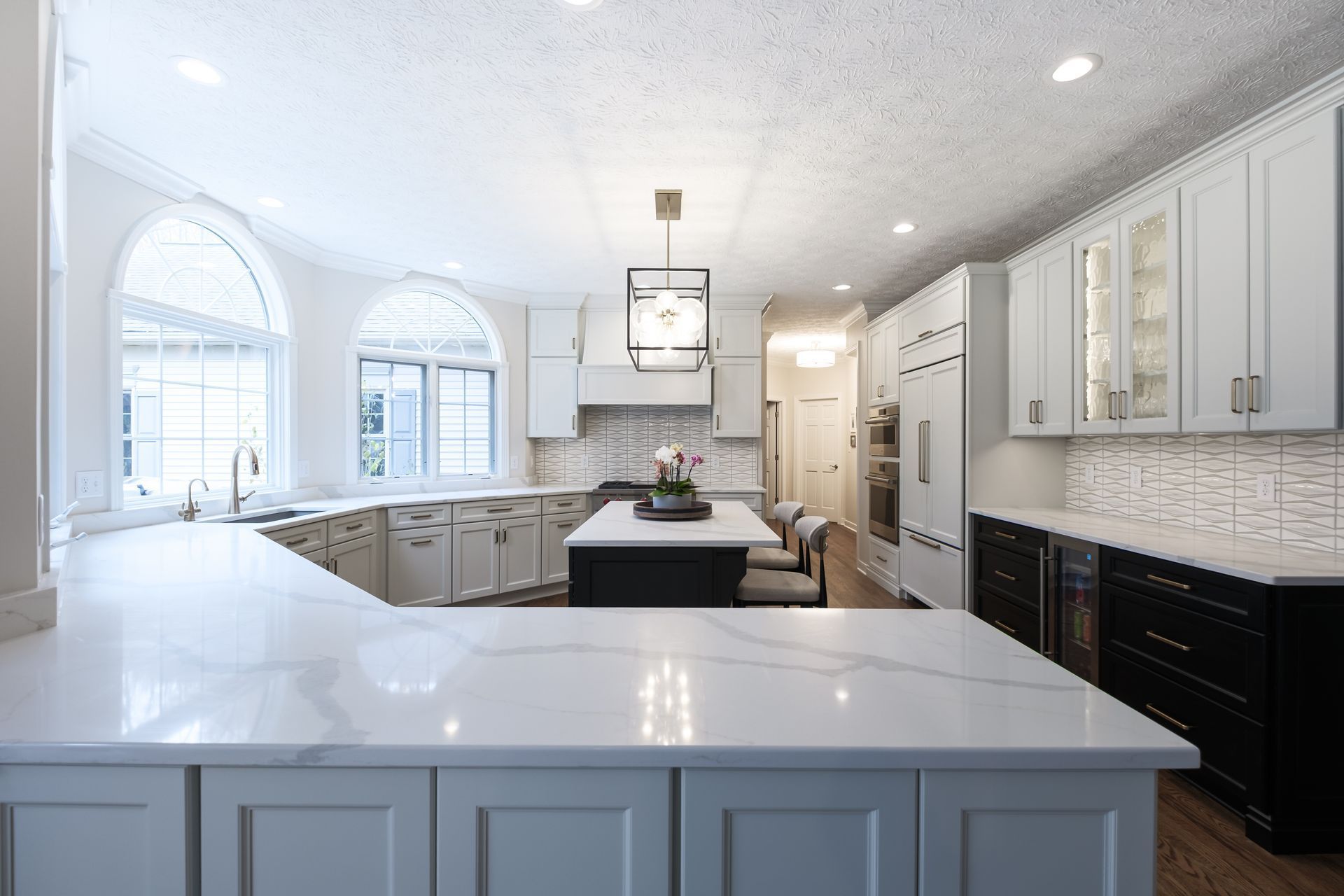
A white cabinet may look crisp beside a cool countertop but creamy beside a warmer tile. A stained cabinet may appear richer next to light flooring and more muted against darker surfaces. Hardware finish can also change the way the cabinet color is perceived.
This is especially important in high-end remodeling, where the goal is not just selecting attractive materials. The goal is creating a balanced composition.
Scale Changes the Way Color Feels
A small cabinet sample can only show part of the finish. Once that color is applied across an entire wall of cabinetry, an island, or a built-in, it may feel stronger than expected.
Large surfaces intensify color. A soft green, blue, gray, or natural wood tone may look subtle as a sample but more dominant once installed throughout the room.
This is why homeowners should evaluate cabinet colors as part of the full design, including the amount of cabinetry planned and the scale of the space.
Cabinet Color Planning Checklist
| Factor | Why It Matters |
|---|---|
| Natural light | Changes color throughout the day |
| Artificial lighting | Can make finishes appear warmer or cooler |
| Countertops | Affect undertone and contrast |
| Tile | Can shift how cabinet color is perceived |
| Flooring | Influences warmth, depth, and balance |
| Wall color | Frames the cabinetry and changes contrast |
| Hardware | Adds another finish that affects the overall look |
This table is useful because cabinet color concerns are rarely caused by one factor. They are usually the result of several design elements working together.
Why Samples Should Be Reviewed Together
Cabinet samples are valuable, but they should be reviewed with other selections. Looking at a cabinet door by itself does not show how it will relate to stone, tile, flooring, lighting, or paint.
At Anthony Slabaugh Remodeling & Design, our planning process helps homeowners compare finishes together before ordering. This helps reduce uncertainty and supports a more refined final result.
The strongest cabinet decisions are made in context.
Visit Our Design Studio in Stow, Ohio
Our Stow, Ohio design studio gives homeowners a place to compare cabinet colors with countertops, tile, flooring, hardware, and lighting considerations. Seeing materials together helps reveal undertones, contrast, and finish relationships that may not be obvious online.
For homeowners in Hudson, Akron and surrounding areas, the design studio supports more confident cabinet decisions before materials are ordered.
Client Feedback on Our Remodeling Process
Homeowners often share that comparing samples together helps them feel more confident about cabinet color decisions. By reviewing cabinetry, lighting, countertops, tile, and flooring early,
Anthony Slabaugh Remodeling & Design helps clients make informed selections with less pressure. We invite you to read our
Google reviews to learn more about their experiences.
Frequently Asked Questions
Why does my cabinet color look different at home?
Cabinet colors often look different at home because lighting, flooring, wall color, countertops, and surrounding materials all affect perception. A color viewed in a showroom may shift warmer, cooler, lighter, or darker once installed in the actual space.
Can lighting change the way cabinets look?
Yes, lighting can significantly change cabinet color. Natural light shifts throughout the day, while artificial lighting can bring out warm or cool undertones. This is why cabinet finishes should be evaluated with the planned lighting whenever possible.
Why do white cabinets sometimes look yellow or gray?
White cabinets can contain warm, cool, creamy, or gray undertones. When placed beside countertops, tile, flooring, or paint with different undertones, those subtle tones become more noticeable. The cabinet may look different even though the finish itself has not changed.
Should I choose cabinet color before countertops?
Cabinet color and countertops should be selected together, not separately. Each material affects the other visually. Reviewing them side by side helps identify undertone conflicts, contrast issues, and finish combinations before either selection is finalized.
Start With Cabinet Colors Planned in Context
A refined remodel depends on cabinet colors that work with the full design, not just in a showroom. Schedule a consultation with Anthony Slabaugh Remodeling & Design or call (330) 940-3237 to plan cabinetry, materials, and lighting with confidence.
Recent Posts
Share this article
CLIENT REVIEWS
Don’t Just Take Our Word For It
See below how our customers react on our ultimate pressure cleaning services