
Custom Basement Gym Ideas: Layout, Flooring, and Ventilation

Conflicting plans are not inevitable in remodeling. They result from fragmented structure.
Anthony Slabaugh Remodeling & Design provides design-build home renovation services for homeowners in Hudson, Akron & surrounding areas who value architectural alignment and disciplined execution.
A custom basement gym can make fitness more convenient without taking over the main living areas of the home. The lower level can be a strong location for a workout room, but it needs more planning than simply placing equipment in an open corner.
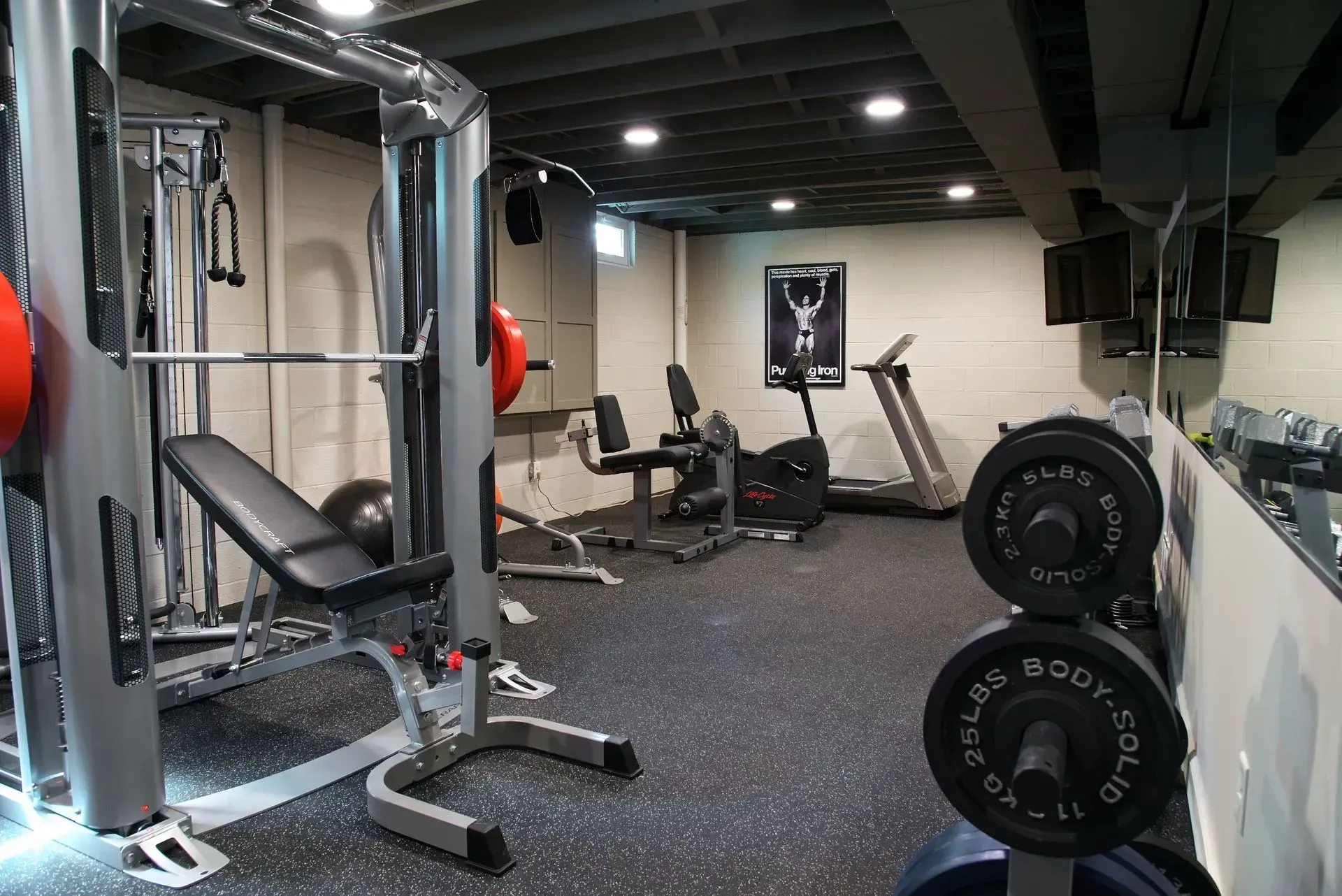
The best basement gym ideas consider equipment clearance, flooring, ventilation, lighting, mirrors, storage, ceiling height, and how the fitness space connects to the rest of the basement. A well-designed gym should feel durable, comfortable, and intentionally built for the way the homeowner trains.
At
Anthony Slabaugh Remodeling & Design, we help homeowners in Hudson, Akron and surrounding areas design basement living spaces that support daily routines while maintaining a refined, finished look.
Start With the Type of Exercise
A basement workout room should be planned around the activities it needs to support. Strength training, cardio, yoga, stretching, Pilates, cycling, and functional training all require different clearances and surfaces.
A treadmill or bike may need dedicated electrical access and ceiling clearance. Free weights need durable flooring and space around the equipment. A stretching or yoga area may need a quieter zone with softer lighting.
For homeowners throughout Bath, Fairlawn, and Chagrin Falls, defining the training style early helps the basement gym feel practical instead of crowded.
Plan Equipment Clearance First
Equipment placement affects the entire room. Before flooring, mirrors, lighting, or storage are selected, the layout should confirm that machines, benches, racks, mats, and walking paths all have enough space.
A basement gym can feel cramped if equipment is placed too close together. It can also feel unfinished if everything floats without structure. The strongest layouts create clear exercise zones while preserving safe movement through the room.
At
Anthony Slabaugh Remodeling & Design, gym layouts are planned around real use, not just available square footage.
Choose Flooring for Impact and Comfort
Basement gym flooring should support the type of activity taking place. Impact, traction, comfort, moisture awareness, and durability all matter.
A fitness area may need a surface that handles weights, movement, stretching, and frequent cleaning. If the gym connects to a family room, media area, or hallway, the transition between flooring materials should also be planned carefully.
The goal is flooring that performs well without making the basement feel like a commercial workout space.
Think About Ventilation and Air Movement
Home gym ventilation is an important part of comfort. Exercise creates heat and humidity, and basements can feel still if airflow is not considered.
Ventilation planning may include HVAC review, air movement, fan placement, room layout, and how the gym connects to nearby spaces. A fitness room should feel fresh and comfortable during use, not closed off or heavy.
This is especially important when the basement gym is enclosed or located near other living areas.
Basement Gym Planning Guide
| Gym Detail | Why It Matters |
|---|---|
| Equipment clearance | Supports safe movement and comfortable workouts |
| Impact flooring | Helps protect the floor and improve workout comfort |
| Ventilation | Supports air movement, comfort, and daily use |
| Lighting | Helps the room feel bright, focused, and finished |
| Mirrors | Support form, depth, and visual openness |
| Storage | Keeps mats, weights, bands, and accessories organized |
This table is useful because a custom basement gym depends on performance, comfort, and finish coordination working together.
Use Mirrors With Restraint
Mirrors can help a basement fitness room feel larger and support workout form. However, too many mirrors can make the space feel overly commercial.
A more refined approach uses mirrors where they are useful, such as near a stretching area, weight zone, or open workout wall. Trim, lighting, and wall finishes can help mirrors feel integrated instead of simply attached.
The gym should feel custom, not like borrowed studio space.
Plan Storage for Fitness Accessories
A home gym can quickly collect mats, bands, dumbbells, towels, shoes, jump ropes, foam rollers, and cleaning supplies. Without storage, these items can make the room feel cluttered.
Built-in cabinets, open shelving, wall storage, or closed storage zones can help keep accessories organized. Storage should be convenient enough for daily use but refined enough to fit the rest of the basement.
A clean gym is easier to use consistently.
Coordinate Lighting With the Workout Zones
Lighting should support focus and comfort. A basement gym may need brighter light for movement, balanced light near mirrors, and softer light if the space also supports stretching or recovery.
Fixture placement should account for ceiling height, equipment location, mirrors, and possible glare. Lighting should make the room feel energized without being harsh.
Visit Our Design Studio in Stow, Ohio
Our Stow, Ohio design studio gives homeowners a place to review basement flooring, lighting, cabinetry, finishes, storage, and layout ideas together. Seeing these selections in context helps clarify how a custom basement gym can feel durable, comfortable, and refined.
Client Feedback on Our Remodeling Process
Homeowners often share that early planning helps them feel more confident about specialized lower-level spaces. By reviewing gym layout, equipment needs, flooring, ventilation, lighting, mirrors, storage, and finish coordination together,
Anthony Slabaugh Remodeling & Design helps clients make decisions with clarity instead of pressure.
Frequently Asked Questions
What should I consider when designing a basement gym?
Start with the type of exercise, equipment size, ceiling height, flooring, ventilation, lighting, and storage. A basement gym should provide enough clearance for movement while still feeling connected to the rest of the finished lower level.
What flooring works best for a basement gym?
Basement gym flooring should be selected for impact, traction, comfort, cleaning, and lower-level conditions. The right material depends on whether the space supports weights, cardio, stretching, yoga, or a mix of workout styles.
Does a basement gym need ventilation?
Yes, ventilation matters because exercise creates heat and humidity. Air movement, HVAC planning, fan placement, and room layout should be reviewed so the gym feels comfortable during workouts and does not feel closed off.
How do you make a basement gym look custom?
A basement gym looks custom when equipment zones, mirrors, lighting, flooring, storage, and finishes are planned together. The goal is to create a workout space that performs well without feeling overly commercial or disconnected from the home.
Start With a Basement Gym Designed Around How You Train
A refined basement gym should support movement, comfort, storage, and ventilation while feeling connected to the rest of the home. Schedule a consultation with Anthony Slabaugh Remodeling & Design or call (330) 940-3237 to plan your basement living space with confidence.
Recent Posts
Share this article
CLIENT REVIEWS
Don’t Just Take Our Word For It
See below how our customers react on our ultimate pressure cleaning services