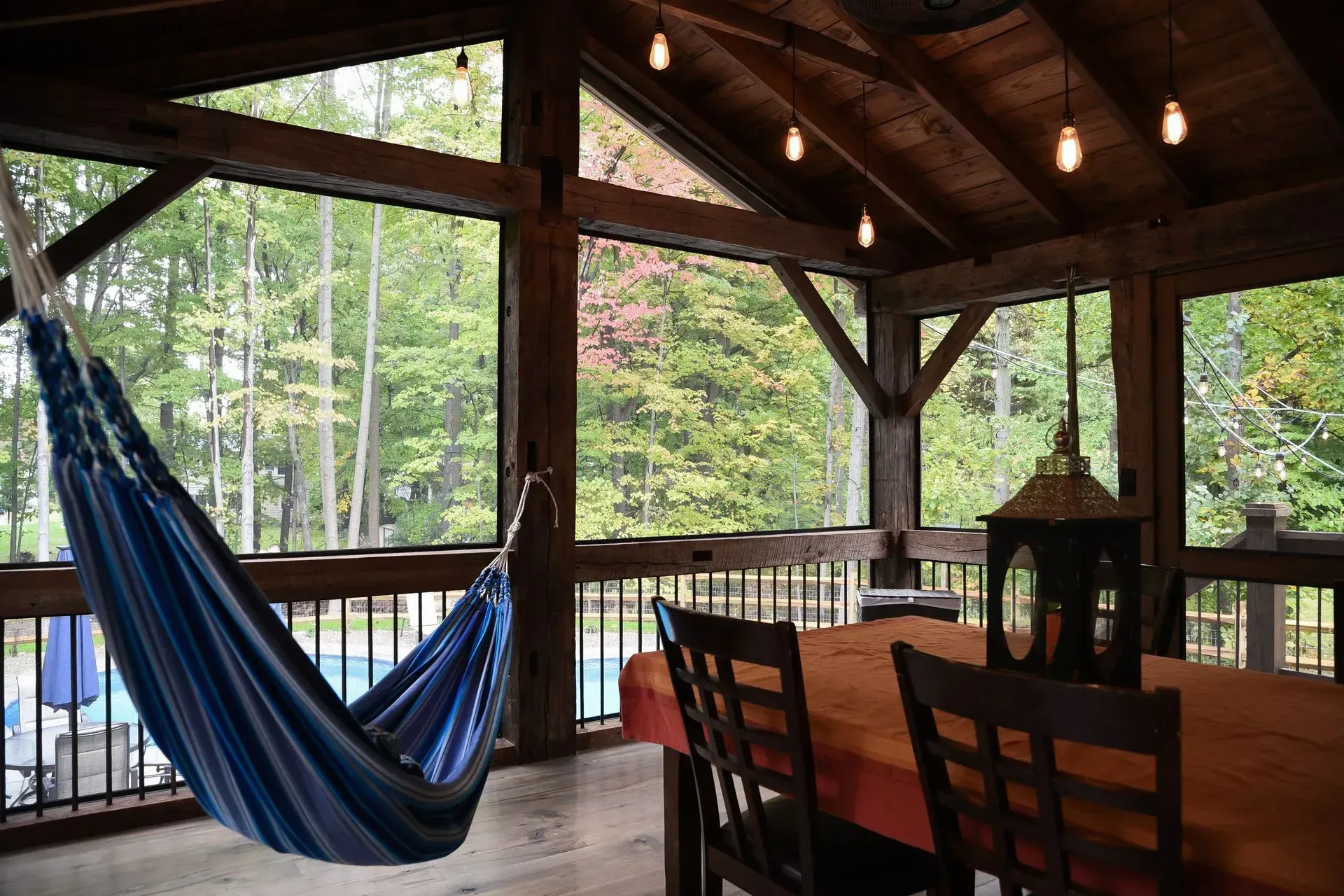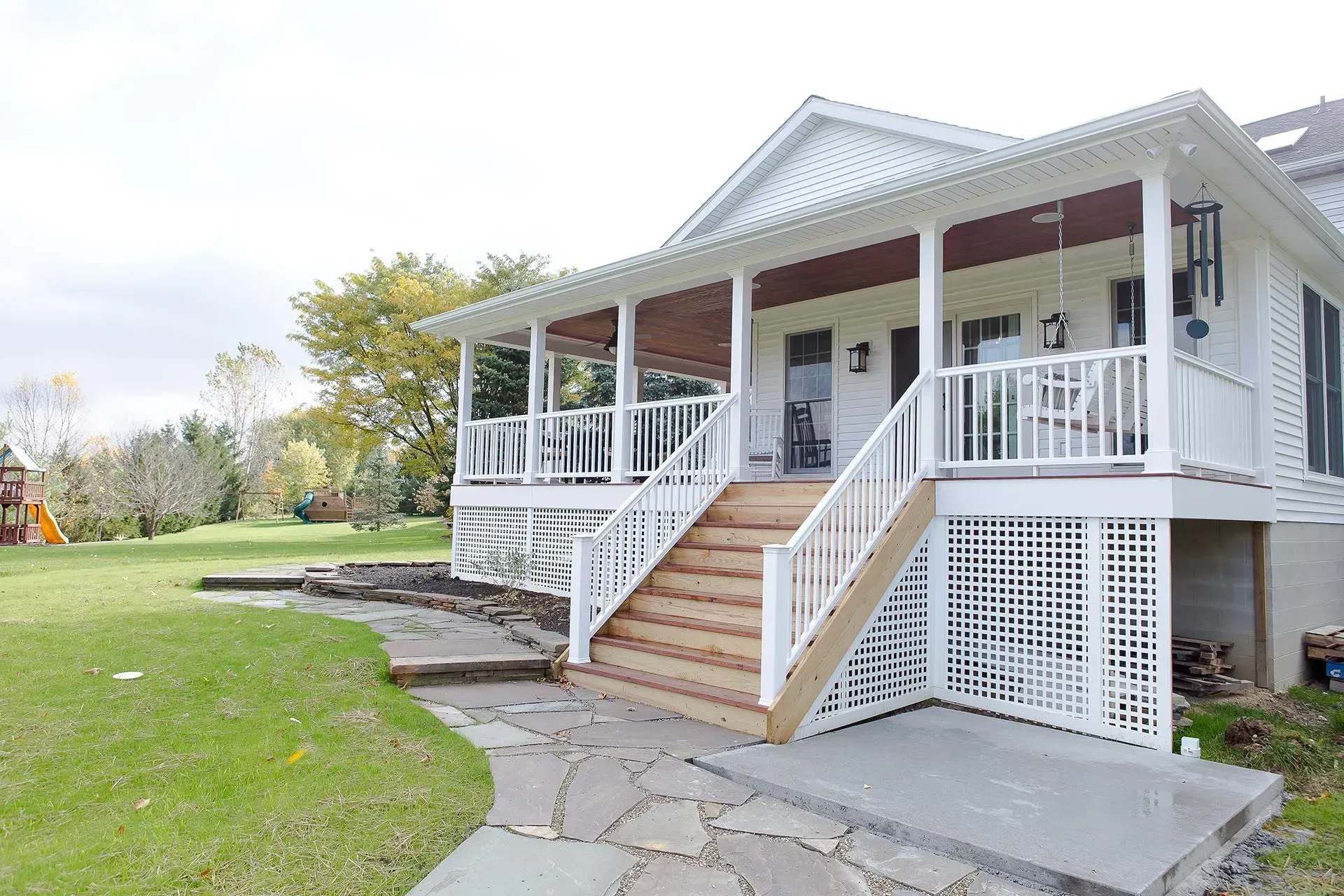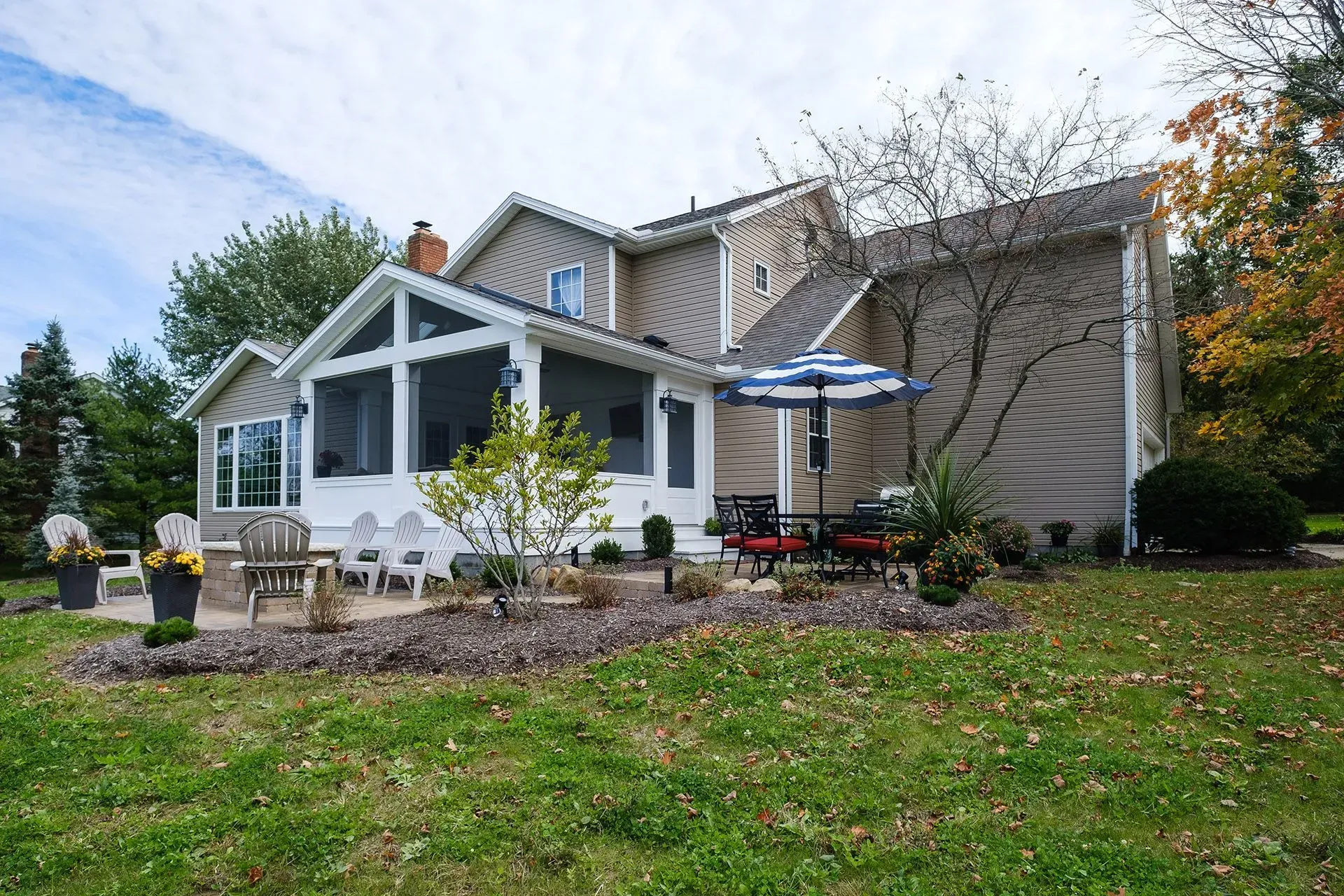

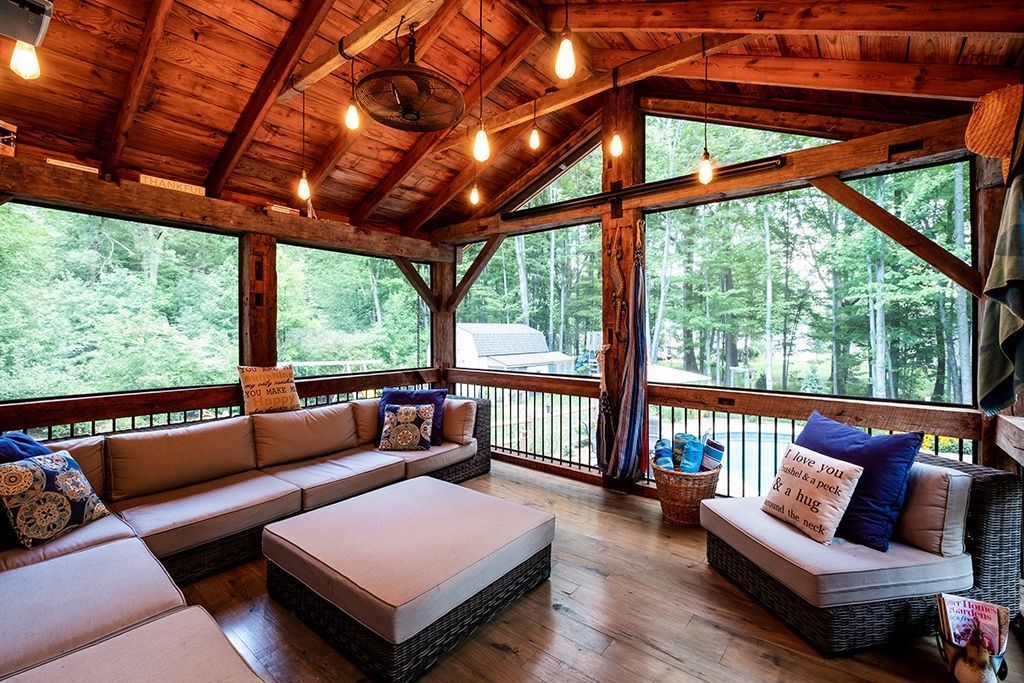
Adding square footage to a home appears straightforward on paper.
Extend the footprint.
Expand the kitchen.
Add a family room.
Create a primary suite.
What makes additions complex is not the new space itself. It is the connection point between the existing home and the new structure.
The success of an addition depends on how well old and new systems align.
In Hudson, Akron & surrounding areas, many homes were built decades ago. Framing standards differ. Mechanical systems have evolved. Foundations vary in depth and composition.
An integrated design-build model ensures that additions function as seamless extensions rather than attached appendages.
Alignment must be structural, mechanical, and architectural.
Why Additions Fail When Coordination Is Fragmented
In traditional remodeling models, addition design may proceed separately from structural and construction sequencing.
Common problems include:
- Floor levels that do not align perfectly
- Rooflines that shift proportion unexpectedly
- Structural loads transferred unevenly
- Mechanical systems unable to support new square footage
- Exterior transitions that feel visually disconnected
These issues rarely stem from poor workmanship. They arise from incomplete integration.
Design-build coordination eliminates handoff gaps.
Structural Alignment Between Old and New
The most critical connection point in any addition is structural.
When new framing meets existing structure, the following must be evaluated:
- Foundation compatibility
- Load path continuity
- Beam sizing and placement
- Lateral bracing integration
- Differential settlement potential
In homes throughout Bath and Chagrin Falls, foundation conditions may differ between original construction and later modifications.
An integrated design-build team evaluates structural compatibility before drawings are finalized.
| Structural Integration | Risk Without Coordination | Design-Build Resolution |
|---|---|---|
| Foundation depth | Uneven settlement | Early soil and footing review |
| Load transfer | Stress concentration at connection | Engineered redistribution |
| Floor framing | Height misalignment | Global leveling strategy |
| Roof integration | Roof pitch mismatch | Coordinated framing plan |
| Lateral stability | Shear imbalance | Unified structural detailing |
Structure must be resolved holistically.
For further structural insight, visit our Structural Home Remodeling page.
Mechanical Systems: Hidden Integration Challenges
Mechanical systems often present the most subtle integration challenges.
An addition may require:
- Expanded HVAC capacity
- Additional duct runs
- Electrical panel upgrades
- Plumbing stack extension
- Ventilation recalibration
If these elements are addressed after framing begins, soffits and bulkheads may be introduced reactively.
Integrated design-build planning evaluates mechanical load and routing during layout development.
This sequencing protects ceiling height and spatial proportion.
Architectural Continuity Beyond Finishes
Many homeowners focus on matching finishes between old and new.
True continuity extends deeper.
Architectural alignment involves:
- Ceiling height relationships
- Opening proportions
- Window scaling
- Sightline continuity
- Circulation flow
An addition should feel inevitable, not appended.
Integrated design-build ensures that structural, spatial, and aesthetic decisions are evaluated simultaneously.
For a broader overview of coordinated remodeling leadership, visit our Design-Build Remodeling page.
Managing Differential Movement
Older structures and new additions may behave differently over time.
Moisture content, framing lumber age, and foundation conditions can influence movement.
Integrated planning anticipates:
- Expansion joint placement
- Structural reinforcement strategies
- Moisture mitigation at connection points
- Material compatibility
Addressing these factors early reduces long-term maintenance risk.
Budget Alignment for Additions
Additions often introduce cost variability when integration complexities are discovered mid-project.
Unexpected structural reinforcement or mechanical upgrades can shift scope.
An integrated design-build approach aligns:
- Structural evaluation
- System capacity review
- Architectural massing
- Construction sequencing
before pricing is finalized.
Predictability strengthens financial confidence.
Construction Sequencing at the Connection Point
The junction between old and new requires precise sequencing.
Integrated leadership ensures:
- Structural tie-ins are reinforced before finish transitions
- Weatherproofing is secured prior to interior work
- Mechanical extensions align with framing modifications
- Inspection scheduling reflects structural milestones
This coordination reduces exposure and schedule volatility.
Emotional Confidence During Major Additions
Additions affect daily life.
When connection points are uncertain, homeowners may worry about:
- Structural reliability
- Exterior cohesion
- Interior balance
- Budget stability
Design-build integration reduces these concerns by embedding coordination into every phase.
Homeowners who begin construction with clear structural and mechanical alignment typically experience fewer mid-project adjustments.
Confidence grows when execution reflects planning.
Frequently Asked Questions
Why are additions more complex than interior remodels?
Because they require integration between existing and new structural, mechanical, and architectural systems.
Does design-build improve addition stability?
Yes. Coordinated engineering and construction leadership reduce connection-point risk.
Can additions affect structural integrity of the original home?
Yes, if load paths are not evaluated early.
How does integration protect architectural continuity?
By aligning proportion, massing, and spatial transitions during planning.
When should structural evaluation occur for an addition?
Before design documents are finalized and before excavation begins.
Client Feedback on Our Coordinated Addition Process
Homeowners frequently share that the seamless integration between their existing home and new addition exceeded expectations. By aligning structure, systems, and architectural proportion early, they experienced fewer adjustments and greater stability throughout construction. We invite you to read our Google reviews to learn more about their experiences.
Seamless Expansion Requires Structured Integration
An addition should not feel like an attachment. It should feel like an evolution.
Anthony Slabaugh Remodeling & Design provides integrated design-build solutions for homeowners in Hudson, Akron & surrounding areas who value disciplined coordination between existing and new structures.