
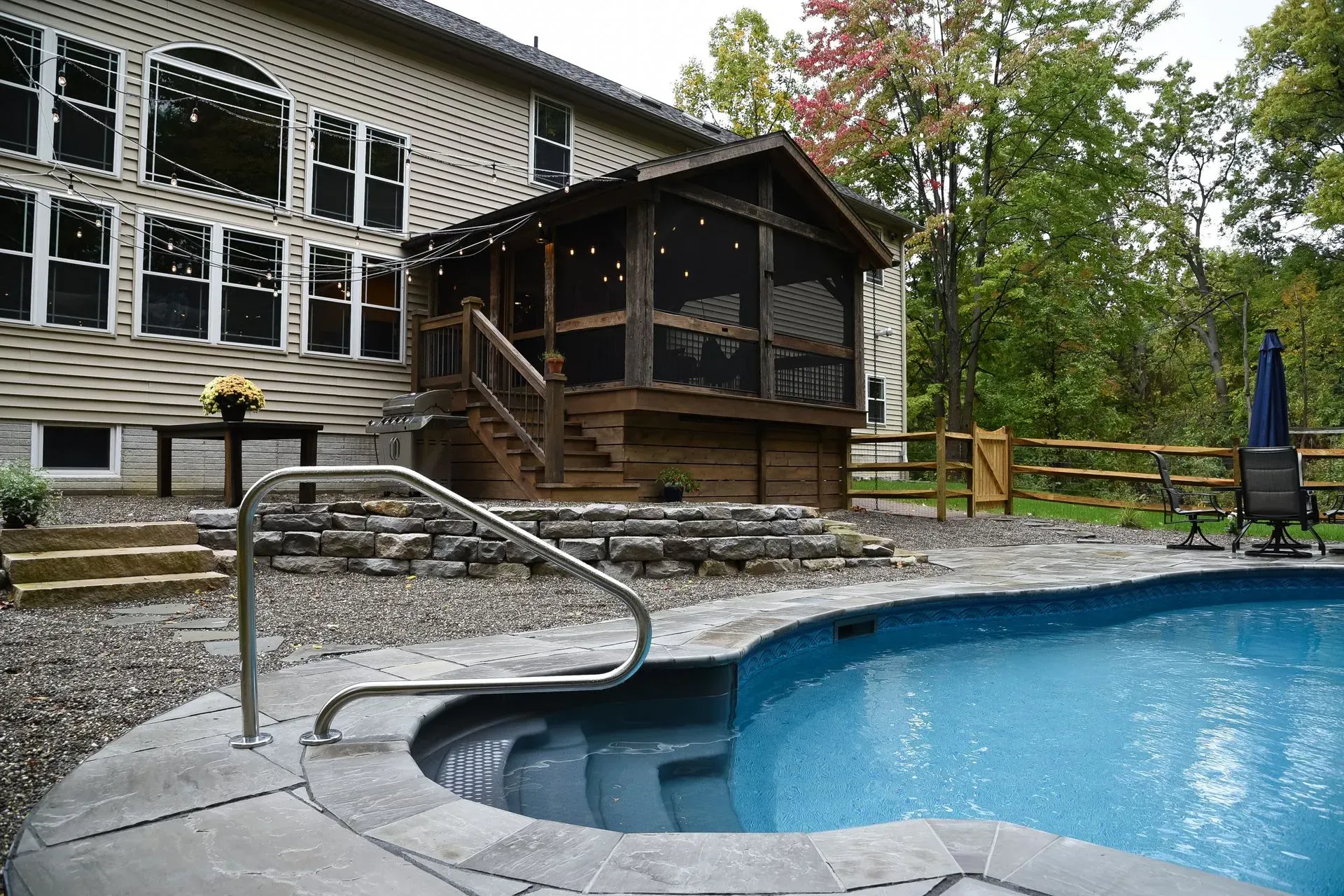
Designing Transitions Between Old and New Spaces

One of the most telling signs of a well-executed remodel is how naturally old and new spaces connect. When transitions are thoughtfully designed, the home feels cohesive and intentional. When they are not, even high-quality finishes can feel disjointed.


At Anthony Slabaugh Remodeling & Design, we view transitions as a critical part of the remodeling process. Whether the project involves an addition, a phased remodel, or updating select areas of the home, the goal is always the same. New spaces should feel like they belong.


We work with homeowners in Hudson, Brecksville, Fairlawn, Richfield, and surrounding communities, guiding projects that prioritize continuity, flow, and long-term livability.

Transitions Are About Experience, Not Just Appearance

Transitions are often thought of as visual details, but they affect how a home is experienced every day.


Good transitions support:


  • Natural movement through the home
  • Visual continuity
  • Consistent comfort from space to space


Poor transitions interrupt flow and make spaces feel separate rather than connected.

Start With the Big Picture

Seamless transitions begin with planning. Understanding how spaces relate to one another allows design decisions to support the entire home rather than individual rooms.


This includes evaluating:

  • Circulation paths
  • Sightlines
  • Ceiling heights
  • Natural light patterns


When these elements are considered early, transitions feel effortless rather than forced.

Floor Transitions Set the Foundation

Flooring changes are one of the most noticeable transition points in a home.


Thoughtful floor transitions:


  • Align materials intentionally
  • Avoid abrupt changes
  • Support movement between spaces


Consistency or carefully planned variation helps spaces flow together without feeling repetitive.

Ceiling and Wall Details Matter

Transitions are not limited to what is underfoot. Ceiling lines, trim profiles, and wall finishes all play a role in how spaces connect.


Maintaining consistent proportions or intentionally echoing details from existing spaces helps old and new areas feel related.

Aligning Old and New Layouts

When new spaces are added or existing ones reconfigured, layout alignment is critical.


Doorways, hallway widths, and room proportions should feel natural in relation to the rest of the home. When alignment is overlooked, even beautiful spaces can feel disconnected.

Material Continuity Creates Cohesion

Materials act as visual connectors between spaces.


This does not mean everything must match. It means materials should relate through tone, texture, or scale. Balanced material choices allow new areas to complement existing ones without imitation.

Lighting Helps Blend Spaces

Lighting plays a subtle but powerful role in transitions.


Consistent lighting strategies help:


  • Maintain visual rhythm
  • Reduce contrast between spaces
  • Support comfort throughout the home


When lighting is planned holistically, transitions feel smoother and more intentional.

Craftsmanship Defines the Transition Quality

Transitions are where craftsmanship is most visible. Small misalignments, inconsistent details, or poorly executed joints stand out immediately.


Precision in execution ensures:


  • Clean intersections
  • Consistent detailing
  • A refined, finished feel


Quality craftsmanship allows transitions to disappear rather than draw attention.

Craftsmanship Defines the Transition Quality

Transitions are where craftsmanship is most visible. Small misalignments, inconsistent details, or poorly executed joints stand out immediately.


Precision in execution ensures:

  • Clean intersections
  • Consistent detailing
  • A refined, finished feel


Quality craftsmanship allows transitions to disappear rather than draw attention.

Why Design-Build Matters for Transitions

Designing transitions requires coordination across planning, design, and construction. A design-build approach keeps these elements aligned.


When one team oversees the entire process:


  • Transitions are planned, not improvised
  • Materials are coordinated early
  • Execution matches the design intent


This integration is essential for cohesive results.

Transition Design at a Glance

Transition Area Design Focus Result
Flooring Alignment and flow Seamless movement
Walls and ceilings Proportion and detail Visual continuity
Layout Natural connections Comfortable circulation
Materials Related tones and textures Cohesive design
Lighting Balanced illumination Smooth transitions
Craftsmanship Precision execution Refined finish

Why Homeowners Value Seamless Transitions

A home with well-designed transitions feels complete. Spaces connect naturally. Movement feels intuitive. The home reads as one unified environment rather than a collection of projects completed at different times.


These qualities are often felt more than seen, but they define the success of a remodel.

A Cohesive Approach to Remodeling

At Anthony Slabaugh Remodeling & Design, we believe transitions deserve as much attention as the spaces themselves. Our design-build process allows us to plan connections thoughtfully and execute them with care.


Homeowners in Hudson, Brecksville, Fairlawn, Richfield, and nearby communities have trusted Anthony Slabaugh Remodeling & Design since 1997 to deliver remodeling experiences built on planning, craftsmanship, and cohesion.

Frequently Asked Questions

  • Why are transitions important in remodeling?

    They affect how spaces connect and how the home feels as a whole.

  • Do transitions matter in small remodels?

    Yes. Even minor updates benefit from thoughtful transitions.

  • Should new spaces match existing ones exactly?

    No. They should relate, not replicate.

  • Can transitions be planned after construction starts?

    They are most effective when planned early.

  • Does Anthony Slabaugh Remodeling & Design plan transitions as part of the design process?

    Yes. Transition planning is a key part of our design-build approach.

Ready to Create a More Cohesive Home?

If you are planning a remodel and want new spaces to feel naturally connected to your home, Anthony Slabaugh Remodeling & Design is here to help.


Our design-build process ensures transitions are planned intentionally and executed with precision.


Contact Anthony Slabaugh Remodeling & Design to schedule a consultation and take the next step toward a remodel that feels cohesive from room to room.

Recent Posts


In-Law Suite Addition Timeline: What to Expect From Start to Finish
By Anthony Slabaugh January 29, 2026
Learn the typical in-law suite addition timeline, from planning and design through construction, and what factors influence each phase.
How Much Does an In-Law Suite Addition Cost?
By Anthony Slabaugh January 29, 2026
Learn what affects in-law suite addition cost, from layout and structure to accessibility and planning, with guidance from Anthony Slabaugh Remodeling & Design.
Is an In-Law Suite Addition Right for Your Home?
By Anthony Slabaugh January 29, 2026
Learn key planning factors to decide if an in-law suite addition is right for your home, including layout, privacy, and long-term living considerations.
Attached vs Detached In-Law Suite Additions
By Anthony Slabaugh January 29, 2026
Compare attached and detached in-law suite additions and learn which option best fits your home, lifestyle, and long-term living goals.
In-Law Suite Floor Plan Ideas That Balance Privacy and Comfort
By Anthony Slabaugh January 29, 2026
Explore in-law suite floor plan ideas that balance privacy, comfort, and long-term living with thoughtful layout planning from Anthony Slabaugh Remodeling & Design.
How to Plan a Whole-House Remodel Step by Step
By Anthony Slabaugh January 21, 2026
Learn how to plan a whole-house remodel step by step, from defining goals to coordinating design and construction through a design-build process.
The Benefits of Hiring a Design-Build Firm
By Anthony Slabaugh January 21, 2026
Discover the benefits of hiring a design-build firm and how a one-team remodeling approach creates clarity, efficiency, and better results.
Move vs Improve: A Financial Analysis for Homeowners
By Anthony Slabaugh January 21, 2026
Compare moving vs improving your home and learn how remodeling, equity, and long-term planning factor into smarter homeowner decisions.
5 Questions to Ask Before Hiring a Design-Build Remodeler
By Anthony Slabaugh January 21, 2026
Learn the five most important questions to ask before hiring a design-build remodeler and how the answers reveal experience, planning, and trust.
Planning a Home Addition: 5 Tips for a Seamless Expansion
By Anthony Slabaugh January 21, 2026
Learn five essential tips for planning a home addition, including layout coordination, design-build planning, and long-term home integration.

In-Law Suite Addition Timeline: What to Expect From Start to Finish
By Anthony Slabaugh January 29, 2026
Learn the typical in-law suite addition timeline, from planning and design through construction, and what factors influence each phase.
How Much Does an In-Law Suite Addition Cost?
By Anthony Slabaugh January 29, 2026
Learn what affects in-law suite addition cost, from layout and structure to accessibility and planning, with guidance from Anthony Slabaugh Remodeling & Design.
Is an In-Law Suite Addition Right for Your Home?
By Anthony Slabaugh January 29, 2026
Learn key planning factors to decide if an in-law suite addition is right for your home, including layout, privacy, and long-term living considerations.
Attached vs Detached In-Law Suite Additions
By Anthony Slabaugh January 29, 2026
Compare attached and detached in-law suite additions and learn which option best fits your home, lifestyle, and long-term living goals.
In-Law Suite Floor Plan Ideas That Balance Privacy and Comfort
By Anthony Slabaugh January 29, 2026
Explore in-law suite floor plan ideas that balance privacy, comfort, and long-term living with thoughtful layout planning from Anthony Slabaugh Remodeling & Design.
How to Plan a Whole-House Remodel Step by Step
By Anthony Slabaugh January 21, 2026
Learn how to plan a whole-house remodel step by step, from defining goals to coordinating design and construction through a design-build process.
More Posts