
The Transition Zone Strategy: How Mudrooms Keep Clutter Out of the Main Home

Conflicting plans are not inevitable in remodeling. They result from fragmented structure.
Anthony Slabaugh Remodeling & Design provides design-build home renovation services for homeowners in Hudson, Akron & surrounding areas who value architectural alignment and disciplined execution.
A mudroom is more than a storage wall near an entrance. When designed well, it becomes a transition zone between outdoors and indoors. It manages shoes, coats, bags, pet supplies, sports gear, seasonal items, and daily clutter before those items spread into the kitchen, hallway, or living room.
The best mudrooms are not planned around benches and cubbies alone. They are planned around behavior. How people enter the home, where they drop items, what they need to grab on the way out, and how much clutter the homeowner wants visible all shape the final design.
At
Anthony Slabaugh Remodeling & Design, we help homeowners in Hudson, Akron and surrounding areas plan custom mudrooms through a refined design-build process that considers daily movement, storage, materials, and visual order together.
What Is a Mudroom Transition Zone?
A mudroom transition zone is the space that helps the household shift from outside activity to indoor living. It creates a structured place for shoes, bags, coats, mail, keys, pet items, and seasonal gear before those items reach the main home.
This zone is especially valuable when the garage, side door, or back entry is used more often than the front door. Without a clear transition zone, the most-used entry can quickly become the most cluttered area of the home.
For homeowners throughout Bath, Fairlawn, and Chagrin Falls, a well-planned transition zone can make the entire first floor feel more organized.
Start With the Real Entry Pattern
Mudroom design should begin by studying how the home is actually used. Some families enter through the garage. Others use a side door, patio entrance, or connection near the kitchen.
The layout should support that entry pattern. If shoes come off near the door, storage should be nearby. If backpacks land on the bench, hooks and cubbies should be placed within easy reach. If pets come in from the yard, towel storage and pet supplies should be part of the plan.
At
Anthony Slabaugh Remodeling & Design, mudrooms are planned around real routines, not generic storage concepts.
Control What Stays Visible
One of the most important design decisions is how much should remain visible. Open hooks, lockers, and cubbies make daily access easier, but they can also show clutter. Closed cabinets and drawers create a calmer look, but they require users to put items away more intentionally.
The best solution often uses both. Open storage can support fast-moving daily items, while closed cabinetry conceals overflow, seasonal gear, cleaning supplies, or pet accessories.
A refined mudroom should feel practical without looking chaotic.
Create a Drop Zone With Purpose
Every household needs a place for small daily items. Keys, sunglasses, mail, chargers, wallets, leashes, and school papers often create clutter because they do not have a specific home.
A mudroom transition zone can include a landing drawer, small counter area, charging drawer, message zone, or concealed cabinet for these items. The goal is to keep them accessible without allowing them to spread into the kitchen.
Small details can make the first floor feel much cleaner.
Mudroom Transition Zone Planning Guide
| Transition Need | Design Solution |
|---|---|
| Shoes and boots | Bench storage, lower drawers, cubbies, or closed cabinets |
| Coats and bags | Hooks, lockers, tall cabinets, or mixed storage |
| Keys and mail | Drop drawer, small counter, or concealed organizer |
| Pet items | Hooks, towel storage, pull-outs, or dedicated cabinet zone |
| Sports gear | Tall storage, baskets, or seasonal cabinet space |
| Daily clutter | Combination of open access and closed storage |
This table is useful because transition-zone design should match the way items move through the home.
Protect the Main Living Spaces
A mudroom helps protect nearby rooms from clutter, dirt, and visual disruption. This is especially important when the mudroom connects directly to a kitchen, family room, or main hallway.
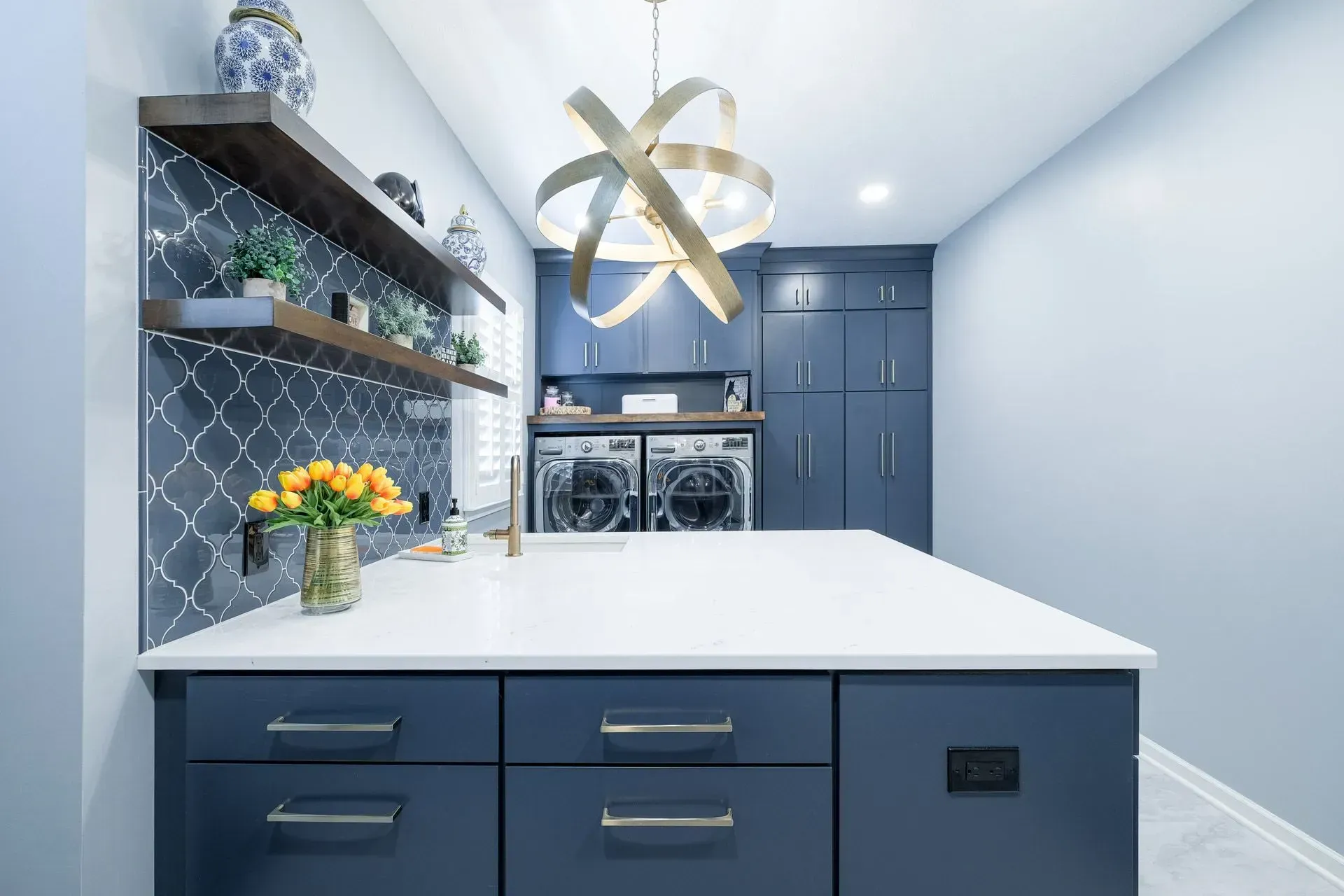
Flooring, cabinetry, wall finishes, and storage should be selected for frequent use. Durable surfaces, washable finishes, and strong hardware help the space perform without feeling purely utilitarian.
At Anthony Slabaugh Remodeling & Design, material selections are reviewed with the full design so the mudroom feels connected to the home’s style.
Plan Circulation, Not Just Storage
A mudroom can have beautiful cabinetry and still feel frustrating if movement is tight. Door swings, bench placement, cabinet depth, walkway width, and traffic flow all matter.
The transition zone should allow people to enter, remove items, store them, and continue into the home without congestion. This is especially important during busy mornings, after school, or when multiple people enter at once.
A strong mudroom design makes movement feel natural.
Visit Our Design Studio in Stow, Ohio
Our Stow, Ohio design studio gives homeowners a place to review cabinetry, storage layouts, materials, hardware, flooring, and design details together. Seeing these elements in context helps clarify how a mudroom transition zone should support both function and visual order.
For homeowners in Hudson, Akron and surrounding areas, the design studio supports a more confident custom mudroom planning process.
Client Feedback on Our Remodeling Process
Homeowners often share that early planning helps them feel more confident about how their mudroom will function after construction. By reviewing entry patterns, storage needs, materials, traffic flow, and household routines early,
Anthony Slabaugh Remodeling & Design helps clients make decisions with clarity instead of pressure. We invite you to read our
Google reviews to learn more about their experiences.
Frequently Asked Questions
What is a mudroom transition zone?
A mudroom transition zone is the area that manages movement between outdoors and indoors. It provides a place for shoes, coats, bags, pet supplies, keys, and daily clutter before those items move into kitchens, hallways, or living spaces.
How does a mudroom keep clutter out of the main home?
A mudroom keeps clutter contained by giving everyday items a specific place near the entry. Hooks, lockers, drawers, cabinets, benches, and drop zones help prevent shoes, bags, mail, and seasonal gear from spreading into the rest of the home.
Should a mudroom have open or closed storage?
Most mudrooms work best with both open and closed storage. Open hooks and cubbies support quick access, while closed cabinets and drawers conceal visual clutter. The right balance depends on daily routines and how visible the mudroom is from nearby rooms.
When should mudroom storage be planned?
Mudroom storage should be planned during the design phase before cabinetry, flooring, electrical details, and wall layouts are finalized. Early planning helps the transition zone support real household behavior instead of becoming a collection of disconnected storage pieces.
Start a Mudroom Designed Around Real Movement
A refined mudroom should manage the transition between outdoors and indoors while keeping the main home calmer and more organized. Schedule a consultation with Anthony Slabaugh Remodeling & Design or call (330) 940-3237 to plan a custom mudroom with confidence.
Recent Posts
Share this article
CLIENT REVIEWS
Don’t Just Take Our Word For It
See below how our customers react on our ultimate pressure cleaning services