
Adding a second story changes how a home functions in fundamental ways, and no decision shapes that experience more than staircase placement. A staircase is not just a connection between floors. It influences interior flow, privacy, natural light, and how comfortable the home feels every day.
At Anthony Slabaugh Remodeling & Design, staircase placement is treated as an architectural decision, not an afterthought. Through our design-build process, we help homeowners determine where a staircase belongs so the second-story addition feels intentional, balanced, and fully integrated into the home.
Why Staircase Placement Matters More Than Homeowners Expect
A poorly placed staircase can disrupt the main level, reduce usable space, and make the home feel awkward or disconnected. A well-placed staircase feels natural and often improves circulation throughout the home.
Because a second-story addition introduces vertical movement, staircase planning must consider
how people naturally move through the main level, where visual connections should exist, how privacy is maintained between floors, and how light travels through the home. These factors are why staircase placement is one of the most important early planning decisions.
Central Staircase Locations for Balanced Flow
In many homes, placing the staircase near the center of the main level creates balanced circulation. This approach allows easy access to the second floor without isolating it from daily activity.
Central staircases often work well when:
- The main level already has a clear circulation path
- The home has enough width to absorb the stair footprint
- Equal access from multiple rooms is desired
When designed thoughtfully, a central staircase can enhance flow rather than interrupt it.
Staircases Near Existing Hallways
Locating a staircase near an existing hallway is often one of the most efficient solutions. This approach builds on established circulation paths and minimizes disruption to primary living spaces.
This option works well when the home already has a defined hallway, privacy between floors is important, and the second story includes bedrooms or other private spaces. Using an existing hallway can make the staircase feel like a natural extension of the original home rather than a major alteration.
Integrating Staircases Near Living Areas
In some homes, placing the staircase near a living or family room creates a strong visual connection between floors. This can make the home feel open and cohesive when handled carefully.
This approach requires thoughtful design so the staircase does not dominate the room, furniture layouts remain functional, and noise separation between levels is maintained. When executed well, a staircase in a living area can become an architectural feature rather than a disruption.
Staircase Placement Near Entry Areas
Placing a staircase near the front entry can provide direct access to the second floor without cutting through main living spaces. This option often supports privacy and clear separation between public and private zones.
This placement can be effective when the entry area has sufficient space, the second floor includes private bedrooms, and homeowners prefer to minimize traffic through living areas. Careful design ensures the entry remains welcoming and uncluttered.
How Staircase Placement Affects Interior Flow
Interior flow is not just about movement from one space to another. It is about how rooms connect visually and functionally throughout the day.
Staircase placement influences sightlines across the main level, noise transfer between floors, ease of navigation, and overall comfort. The right placement allows movement to feel intuitive rather than forced or awkward.
Structural Considerations that Influence Stair Location
Not every staircase location is structurally feasible. Load-bearing walls, framing systems, and floor openings all influence where a staircase can be placed safely.
This is why staircase planning must be coordinated with structural evaluation. At Anthony Slabaugh Remodeling & Design, structural requirements and layout decisions are addressed together so staircase placement supports both design intent and long-term safety.
Staircase Design and Long-Term Usability
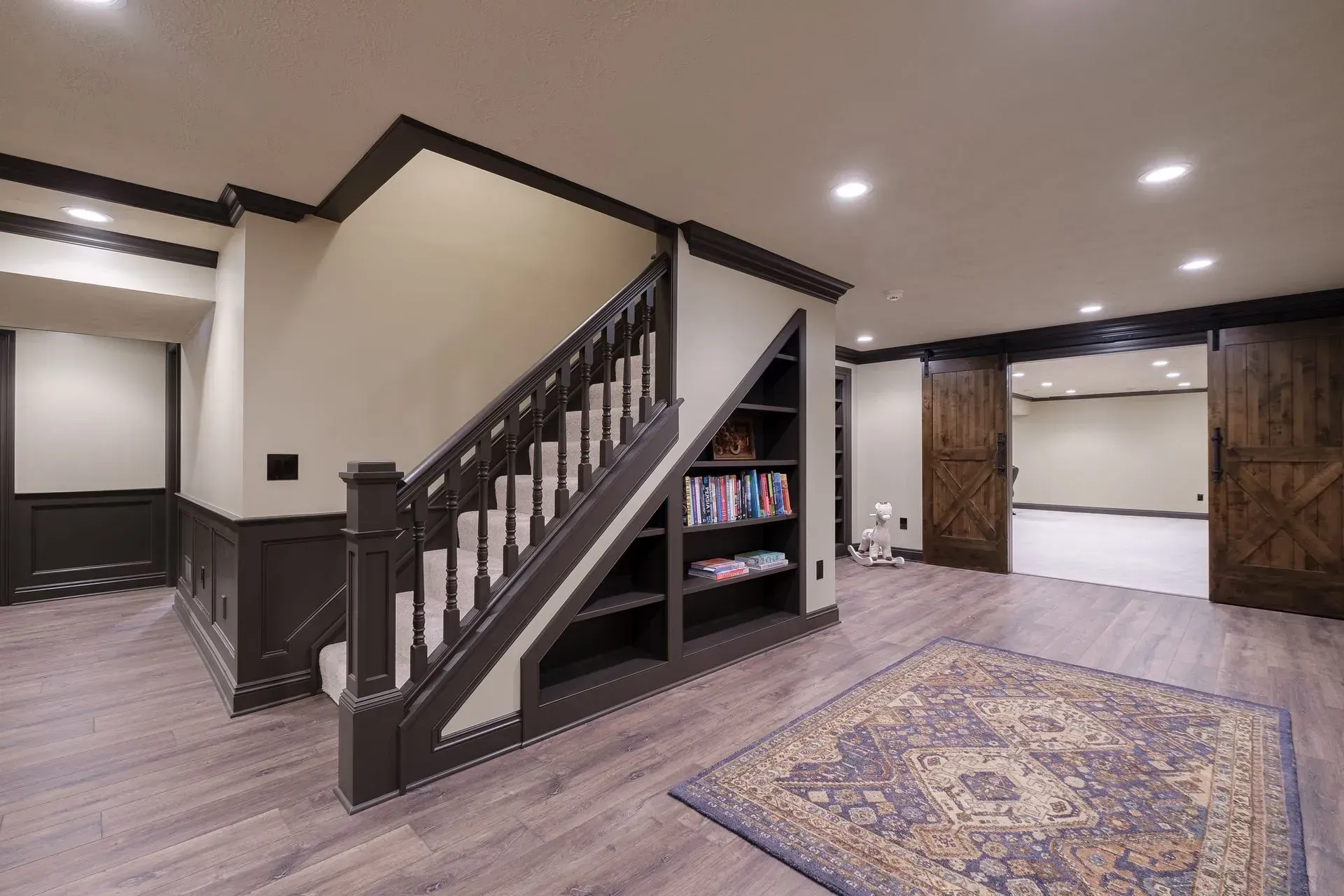
Beyond placement, staircase design affects how the home feels over time. Tread depth, riser height, landings, and handrail design all contribute to comfort and usability.
When planning for long-term living, staircase comfort becomes just as important as aesthetics. Addressing these details early allows the staircase to remain comfortable and functional for years to come.
Staircase Planning Through a Design-Build Process
Staircase placement clearly demonstrates why a design-build approach matters. When design and construction are separated, stair locations are often chosen late, leading to compromised layouts.
Our integrated process allows staircase placement to be evaluated alongside structural feasibility, interior layout, second-story room configuration, and construction sequencing. This coordination results in better outcomes and fewer surprises during construction.
For homeowners considering vertical expansion, our Second-Story Additions page provides additional insight into how layout and structure work together.
Staircase Placement Options at a Glance
- Central staircases provide balanced access and improved circulation
- Hallway-based staircases offer natural integration and privacy
- Living-area staircases create visual connection when carefully designed
- Entry-adjacent staircases support clear zoning and separation
Common Staircase Planning Mistakes to Avoid
One common mistake is prioritizing square footage over flow. Another is placing the staircase wherever space is easiest to remove rather than where it makes sense long term.
Thoughtful planning helps avoid awkward circulation, reduced usable space, visual clutter, and noise issues. Early evaluation prevents these challenges before they become permanent.
Second-Story Additions Planning Resources
If you are still exploring your options, these related guides may help:
Frequently Asked Questions
Is there a best location for a staircase in every home?
No. The best location depends on layout, structure, and how the home is used.
Does staircase placement affect cost?
Yes. Structural changes and layout modifications influence overall scope and investment.
Can staircase placement improve privacy?
Yes. Strategic placement helps separate public and private spaces.
Should staircase planning happen before second-story design?
Stair placement and second-story layout should be planned together.
Does Anthony Slabaugh Remodeling & Design help plan staircase placement?
Yes. Staircase planning is a core part of our design-build process.
Ready to Plan a Second-Story Addition That Feels Right?
Staircase placement plays a major role in how a second-story addition feels and functions. With thoughtful planning, it can enhance flow, comfort, and long-term usability rather than compromise it.
Anthony Slabaugh Remodeling & Design helps homeowners plan second-story additions with clarity and intention. If you are considering expanding upward and want guidance grounded in experience, we invite you to start a conversation with our team.