
Compact Waterproofing: Why Smaller Spaces Require Greater Precision

Conflicting plans are not inevitable in remodeling. They result from fragmented structure.
Anthony Slabaugh Remodeling & Design provides design-build home renovation services for homeowners in Hudson, Akron & surrounding areas who value architectural alignment and disciplined execution.
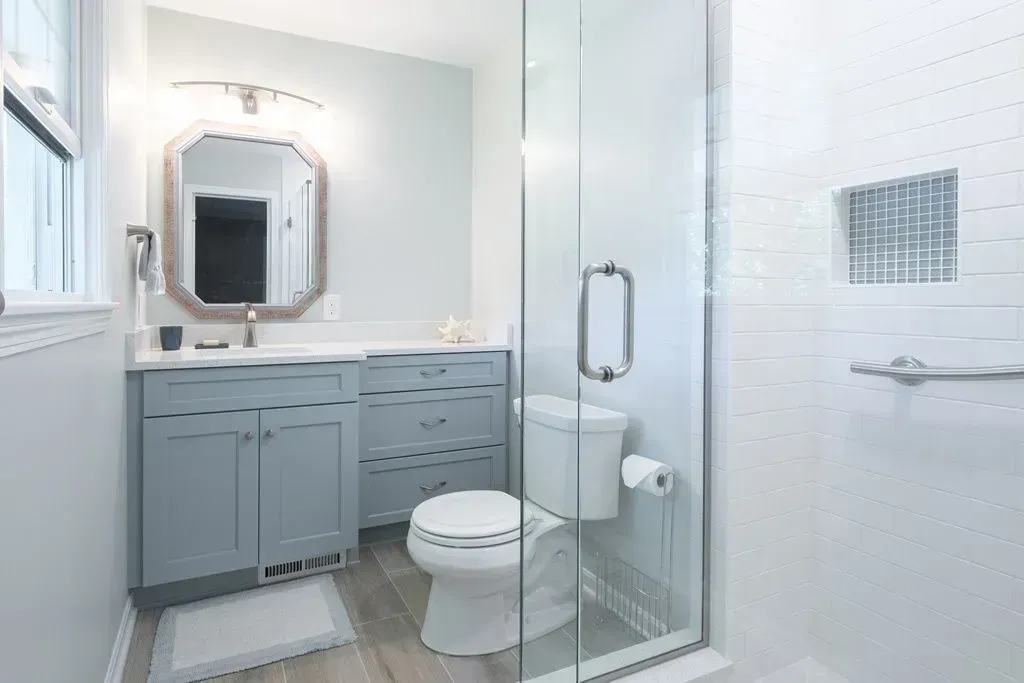
Small bathrooms are often viewed as simpler remodeling projects. With less square footage, it is easy to assume that construction is more straightforward. In reality, smaller spaces demand a higher level of precision, especially when it comes to waterproofing.
Water is more concentrated in compact environments. Showers, tub areas, and wet zones are closer to surrounding surfaces, which increases the risk of moisture spreading if not properly controlled.
At Anthony Slabaugh Remodeling & Design, we approach small bathroom remodeling in Hudson, Akron and surrounding areas with a focus on precision waterproofing. Every surface, transition, and detail is designed to protect the structure and ensure long-term performance.
Smaller spaces require tighter control.
Why Waterproofing Is More Challenging in Small Bathrooms
In larger bathrooms, water exposure is spread across a wider area. In smaller bathrooms, moisture is concentrated within a tighter footprint.
This increases the likelihood that water will reach adjacent walls, floors, and fixtures if the system is not properly designed. Minor installation inconsistencies become more significant because there is less room for error.
In homes throughout Bath, Fairlawn, and Chagrin Falls, many waterproofing issues in small bathrooms can be traced back to assumptions that less space means less complexity.
Precision becomes more critical as space decreases.
What “Tanking” Means in Modern Bathroom Design
In high-performance bathroom construction, the concept of “tanking” refers to creating a fully sealed waterproof enclosure within wet areas. This approach treats the entire zone as protected rather than relying on surface materials alone.
Tanking systems typically include continuous waterproof membranes that extend across floors, walls, and transitions. These systems are designed to prevent water from penetrating beyond the finished surfaces.
At Anthony Slabaugh Remodeling & Design, tanking is used to create a controlled environment where moisture is contained and managed effectively.
Containment defines performance.
Continuous Waterproofing in Tight Layouts
In small bathrooms, waterproofing cannot be limited to isolated areas. Because elements are positioned closer together, the system must be continuous.
This means that floors, walls, corners, and transitions are all connected within a single waterproof layer. Even minor gaps can allow moisture to spread beyond the intended area.
In homes throughout Hudson and Aurora, continuous waterproofing is what separates long-lasting installations from those that develop issues over time.
Continuity prevents failure.
Seams and Transitions Become Critical
Seams and transitions are always important in waterproofing, but they become even more critical in compact spaces. With less separation between elements, these areas are exposed more frequently.
Corners, joints, and connections between materials must be sealed with precision to maintain the integrity of the system. Small errors in these areas can lead to long-term damage.
At Anthony Slabaugh Remodeling & Design, these details are treated as key structural components rather than minor finishing steps.
Details carry greater weight in smaller spaces.
Managing Water Movement in Limited Space
Water movement must be carefully controlled in a small bathroom. Without proper slope and drainage, water can spread beyond the intended area more easily.
The design must ensure that water flows efficiently toward drains without pooling or migrating to adjacent surfaces. This requires precise coordination between layout, slope, and waterproofing systems.
In homes throughout Pepper Pike and Hunting Valley, this level of control is essential for maintaining both performance and cleanliness.
Flow must be guided with accuracy.
Why Standard Methods Often Fall Short
Many standard remodeling approaches rely on surface-level solutions that do not fully protect the underlying structure. In small bathrooms, these methods are more likely to fail due to concentrated moisture exposure.
Without a fully integrated system, water can bypass tile and grout, reaching areas that are not properly sealed.
At Anthony Slabaugh Remodeling & Design, we avoid these limitations by using systems designed for complete moisture protection rather than partial coverage.
Performance requires a system, not a shortcut.
Aligning Waterproofing With Layout Design
Waterproofing must be coordinated with the layout from the beginning. Fixture placement, spacing, and drainage all influence how moisture is managed.
When these elements are aligned, the system functions efficiently. When they are not, even a well-installed waterproofing system can be compromised.
Our design-build approach ensures that waterproofing is integrated into the overall design rather than added after decisions are made.
Integration ensures consistency.
The Role of Design-Build Precision
Small bathrooms leave little room for adjustment once construction begins. This makes early planning essential.
At Anthony Slabaugh Remodeling & Design, our design-build process ensures that waterproofing systems, layout, and installation methods are coordinated from the start. This reduces risk and improves long-term performance.
Precision during planning leads to reliability in execution.
Visit Our Design Studio in Stow, Ohio
Understanding waterproofing in smaller bathrooms requires seeing how systems work together. At Anthony Slabaugh Remodeling & Design, our Stow, Ohio design studio allows homeowners from Hudson, Akron and surrounding areas to explore design strategies that prioritize performance.
We help clients make informed decisions that protect both their home and their investment.
Clarity leads to better outcomes.
Frequently Asked Questions
Why is waterproofing more important in small bathrooms?
Waterproofing is more critical in small bathrooms because moisture is concentrated in a limited area. This increases the risk of water spreading to adjacent surfaces. Proper systems ensure that water is contained and managed effectively, protecting the structure from damage.
What does tanking mean in bathroom construction?
Tanking refers to creating a fully waterproof enclosure within wet areas using continuous membranes. This approach prevents water from penetrating beyond the finished surfaces and provides a higher level of protection compared to surface-level methods.
Can small waterproofing mistakes cause major problems?
Yes, even small inconsistencies in waterproofing can lead to significant issues over time. In compact spaces, moisture has less distance to travel before reaching vulnerable areas. Precision is essential to prevent long-term damage.
How is water controlled in a small bathroom?
Water is controlled through proper slope, drainage placement, and continuous waterproofing systems. These elements work together to direct water efficiently and prevent it from spreading beyond intended areas.
When should waterproofing be planned in a remodel?
Waterproofing should be planned during the early design phase. This allows layout, drainage, and installation methods to be coordinated properly. Early planning ensures the system performs as intended and avoids complications later.
Start With a Clear Plan
Small bathrooms require precision at every level. Schedule a consultation with Anthony Slabaugh Remodeling & Design or call (330) 940-3237 to create a space where waterproofing, layout, and long-term performance are fully aligned.
Recent Posts


Share this article
CLIENT REVIEWS
Don’t Just Take Our Word For It
See below how our customers react on our ultimate pressure cleaning services