
Basement Ceiling Ideas That Work Around Ductwork, Beams, and Low Clearances

Conflicting plans are not inevitable in remodeling. They result from fragmented structure.
Anthony Slabaugh Remodeling & Design provides design-build home renovation services for homeowners in Hudson, Akron & surrounding areas who value architectural alignment and disciplined execution.
Basement ceilings often determine how finished the entire lower level feels. Ductwork, beams, pipes, wiring, low clearances, and mechanical access can all affect the layout, lighting, and overall comfort of the space.
The best basement ceiling ideas do not try to ignore these conditions. They work with them. A thoughtful design can conceal what should be hidden, preserve access where needed, and make the finished basement feel intentional rather than shaped by awkward obstacles.
At
Anthony Slabaugh Remodeling & Design, we help homeowners in Hudson, Akron and surrounding areas plan basement finishing through a design-build process that considers structure, mechanical systems, lighting, and finished details together.
Start With Existing Ceiling Conditions
Before choosing a ceiling finish, the existing basement conditions should be reviewed. Ceiling height, beams, ductwork, plumbing lines, electrical runs, shutoffs, and access points all influence what is possible.
Some areas may support a smooth drywall ceiling. Others may require soffits, access panels, or a different ceiling treatment. The goal is to create a finished look while respecting the systems that need to remain accessible.
For homeowners throughout Bath, Fairlawn, and Chagrin Falls, early ceiling review can help avoid last-minute design compromises.
Work Around Ductwork With Intentional Soffits
Basement ductwork often creates the biggest ceiling challenge. If soffits are added without a design plan, they can make the basement feel chopped up or visually heavy.
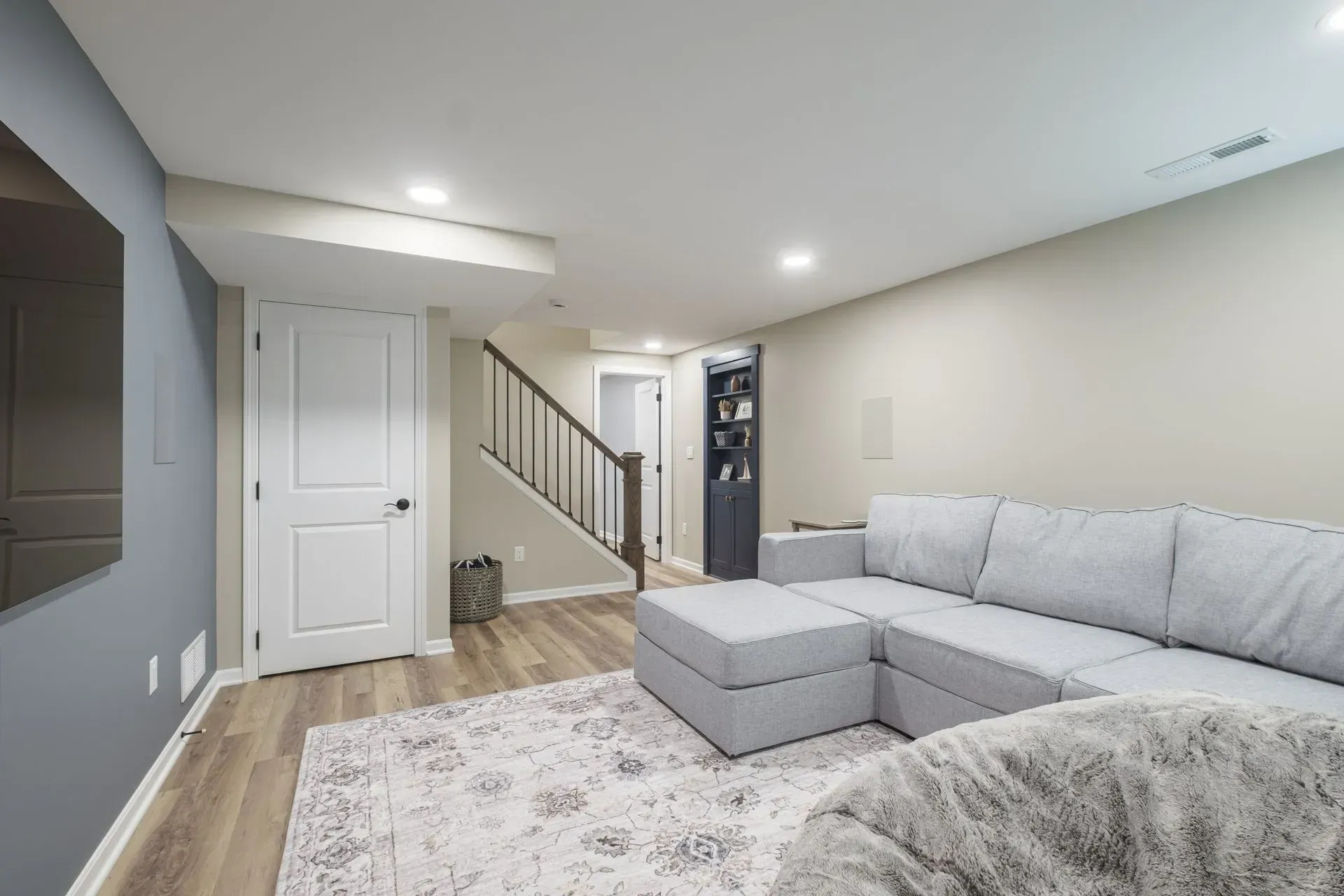
A better approach is to make soffits look intentional. They can align with room divisions, define seating areas, conceal mechanical lines, or support lighting placement. When planned carefully, a soffit can feel like part of the architecture instead of a workaround.
At
Anthony Slabaugh Remodeling & Design, ceiling details are reviewed with the full room layout so ductwork does not control the design by default.
Plan Around Beams and Low Clearances
Structural beams and low ceiling areas need careful planning. In some basements, beams can be wrapped cleanly and integrated into the ceiling design. In others, the layout may need to place seating, storage, or circulation where the ceiling height feels most comfortable.
Low basement ceiling ideas often depend on proportion. A room can still feel finished when ceiling lines, lighting, wall colors, and flooring are coordinated. The goal is to reduce visual interruption and make the lower level feel balanced.
Preserve Access to Mechanical Systems
A finished basement still needs access to important systems. Shutoffs, valves, junction boxes, plumbing connections, HVAC components, and other service points should not be permanently buried behind finishes.
Access panels, mechanical rooms, removable panels, or carefully planned storage areas can help keep these systems reachable without making the ceiling look unfinished.
This is one of the key reasons basement finishing requires careful design-build planning.
Basement Ceiling Planning Guide
| Ceiling Condition | Design Consideration |
|---|---|
| Ductwork | Soffits, ceiling transitions, lighting alignment, and access |
| Beams | Wrapping, trim details, room layout, and proportion |
| Low clearances | Furniture placement, lighting type, and visual balance |
| Plumbing lines | Access planning and ceiling finish coordination |
| Electrical runs | Fixture placement, switches, and future service needs |
| Mechanical access | Panels, utility zones, or concealed access points |
This table is useful because finished basement ceilings need to balance appearance, access, and existing systems.
Choose Lighting With Ceiling Height in Mind
Lighting should be planned with ceiling clearances before the ceiling is closed. Recessed lighting may work in some areas, while lower-clearance spaces may need a different fixture strategy.
Fixture placement should also account for soffits, beams, seating areas, stair landings, and activity zones. A lower basement can feel more comfortable when lighting is layered and evenly distributed.
A finished basement should feel warm and usable, not dark or compressed.
Avoid Making the Ceiling Too Busy
When a basement has multiple obstructions, the ceiling design can quickly become cluttered. Too many level changes, inconsistent soffits, random access panels, or uneven lighting can make the space feel less refined.
The strongest solution is usually the cleanest one. Ceiling lines should be simplified where possible, access should be planned discreetly, and lighting should support the room layout.
A refined basement ceiling should solve problems without drawing attention to them.
Visit Our Design Studio in Stow, Ohio
Our Stow, Ohio design studio gives homeowners a place to review layout ideas, storage options, lighting, finishes, cabinetry, and basement material selections together. Seeing these decisions in context helps clarify how mechanical access can be worked into a finished basement design.
Client Feedback on Our Remodeling Process
Homeowners often share that early planning helps them feel more confident about complex lower-level spaces. By reviewing ceiling height, ductwork, beams, access points, lighting, and layout options together,
Anthony Slabaugh Remodeling & Design helps clients make decisions with clarity instead of pressure.
Frequently Asked Questions
What is the best ceiling option for a finished basement?
The best basement ceiling option depends on ceiling height, ductwork, beams, access needs, and the desired finished look. Some spaces work well with drywall, while others need soffits, access panels, or a more flexible ceiling approach.
How do you hide basement ductwork?
Basement ductwork is often hidden with soffits, ceiling transitions, or framed ceiling details. The best approach makes the ductwork look intentional while preserving access where needed and maintaining as much comfortable ceiling height as possible.
What can you do with low basement ceilings?
Low basement ceilings can feel more comfortable with clean ceiling lines, thoughtful lighting, lighter finishes, and careful furniture placement. The layout should avoid making low-clearance areas feel crowded and should use proportion to create visual balance.
Should basement ceilings include access panels?
Yes, access panels may be needed for valves, shutoffs, junction boxes, plumbing, or mechanical components. These access points should be planned during design so they remain functional without making the finished ceiling look unfinished.
Start With a Basement Layout That Respects the Home’s Systems
A refined finished basement should make ductwork, beams, lighting, and access points feel planned rather than patched together. Schedule a consultation with Anthony Slabaugh Remodeling & Design or call (330) 940-3237 to plan basement finishing with confidence.
Recent Posts
Share this article
CLIENT REVIEWS
Don’t Just Take Our Word For It
See below how our customers react on our ultimate pressure cleaning services