
Basement Entertainment Lighting Ideas for Movies, Sports, Games, and Hosting

Conflicting plans are not inevitable in remodeling. They result from fragmented structure.
Anthony Slabaugh Remodeling & Design provides design-build home renovation services for homeowners in Hudson, Akron & surrounding areas who value architectural alignment and disciplined execution.
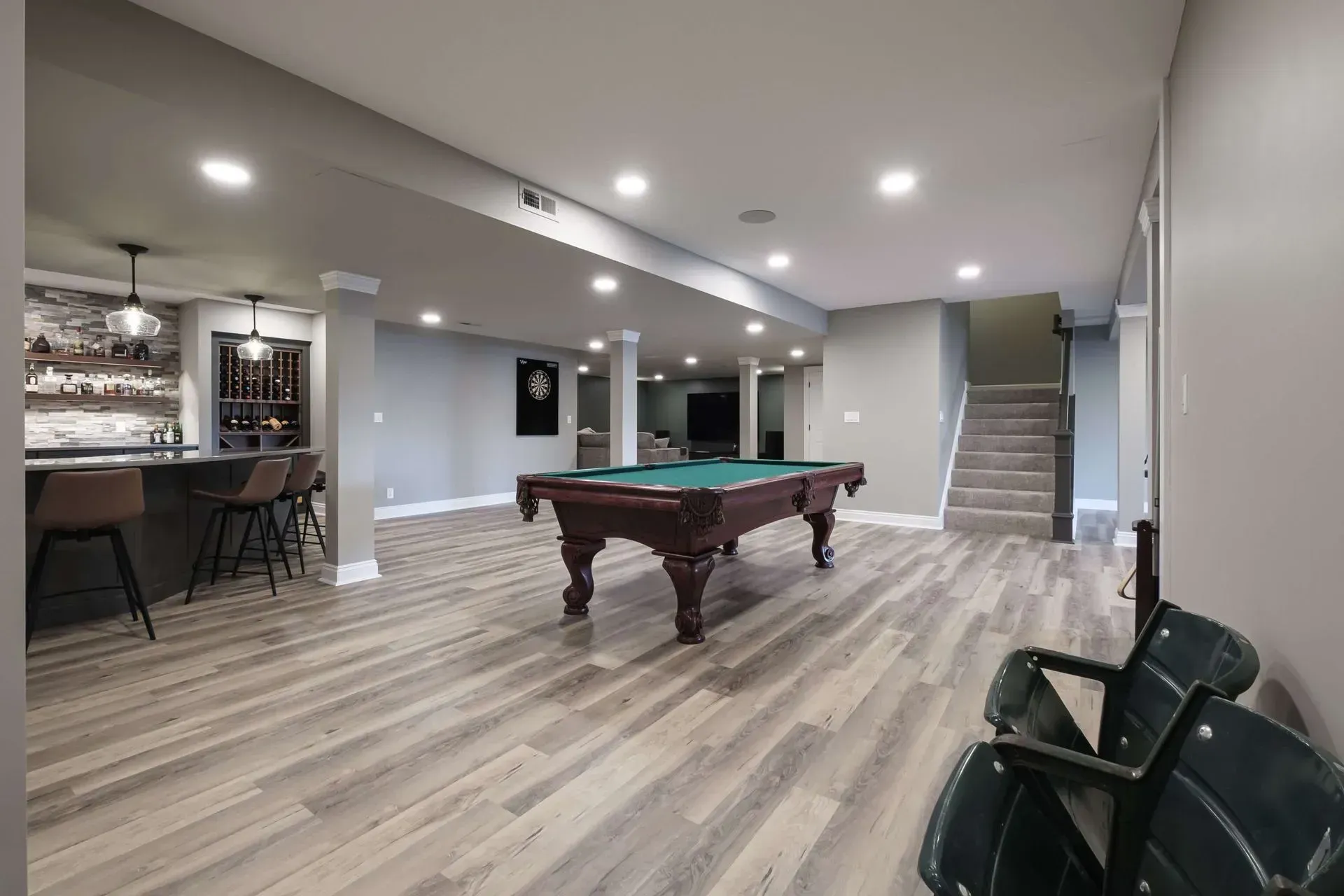
A basement entertainment room needs lighting that can shift with the way the space is used. Movie night, game day, billiards, board games, wet bar serving, and casual hosting all require different lighting levels.
The best basement entertainment lighting ideas go beyond adding recessed lights across the ceiling. A refined lower-level design uses layered lighting, dimming control, zone planning, glare management, and accent details to make the room feel comfortable for every kind of gathering.
At
Anthony Slabaugh Remodeling & Design, we help homeowners in Hudson, Akron and surrounding areas design basement entertainment rooms with lighting, layout, seating, storage, and finishes planned together.
Start With the Entertainment Scenes
Before choosing fixtures, define the main activities the room needs to support. A basement media room lighting plan for movies will look different from lighting for a wet bar, game table, or lounge area.
Movie nights may need soft, low-level lighting. Sports and game-day gatherings often need brighter, more balanced light. Billiards, card tables, or board games need focused visibility. Bar areas need task lighting for serving and cleanup.
For homeowners throughout Bath, Fairlawn, and Chagrin Falls, thinking in scenes helps the entertainment room feel adaptable instead of one-dimensional.
Use Layered Lighting Instead of One Bright Plan
Dimmable basement lighting works best when different fixture types serve different purposes. Recessed lighting can provide general brightness. Wall sconces or accent lighting can add warmth. Cabinet lighting can support a bar or media wall. Task lighting can help game areas function well.
When all lighting is treated the same, the basement may feel flat, harsh, or too dark for certain activities. A layered plan gives the homeowner more control and makes the space easier to use.
At
Anthony Slabaugh Remodeling & Design, lighting is reviewed with seating, media placement, cabinetry, and ceiling details before finishes are finalized.
Control Glare Around Screens
Lighting around a screen wall should be planned carefully. Fixtures placed directly in front of or above a screen may create glare. Bright reflections can make movies, sports, or gaming less comfortable.
Basement media room lighting should support the viewing experience without leaving the rest of the room unusable. Low-level lighting, dimmers, wall lighting, and indirect accent lighting can help the space feel comfortable while keeping the screen visible.
A good lighting plan supports the experience instead of competing with it.
Give Game Areas Enough Visibility
Basement game room lighting needs more brightness and focus than a movie area. Billiards, cards, board games, shuffleboard, and table games all require visibility and clear sightlines.
Fixture placement should account for table size, player movement, ceiling height, and nearby seating. Lighting should support the activity without creating glare or blocking movement through the room.
Game areas should feel comfortable and useful, not like an afterthought.
Basement Entertainment Lighting Guide
| Lighting Zone | Best Planning Focus |
|---|---|
| Media area | Low glare, dimming control, and soft ambient light |
| Wet bar | Task lighting, cabinet lighting, and warm accent light |
| Game table | Focused visibility and comfortable brightness |
| Lounge seating | Warm, relaxed lighting for conversation |
| Walkways | Safe movement between zones without harsh brightness |
| Built-ins | Accent lighting that adds depth and highlights storage |
This table is useful because entertainment lighting should support different scenes within the same lower-level space.
Make the Wet Bar Feel Warm and Functional
Basement bar lighting should balance mood and usefulness. A bar needs enough light for serving, cleanup, glassware, and counter use, but it should still feel warm and refined during gatherings.
Under-cabinet lighting, accent lighting, pendant lighting, and recessed lighting may all play a role depending on the design. If the bar is near a media area, lighting controls should help the bar stay usable without distracting from the screen.
Add Safe, Subtle Path Lighting
Entertainment rooms often become dim during movies or evening hosting. Subtle pathway lighting can help people move from seating to the bar, bathroom, stairs, or game area without turning on bright overhead lights.
This can be handled through low-level lighting, stair lighting, wall lighting, or carefully placed accent lighting. The goal is safety and comfort without disrupting the room’s atmosphere.
Coordinate Lighting With Ceiling Conditions
Basement ceilings often include beams, soffits, ductwork, or lower-clearance areas. Lighting should be planned around these conditions instead of forced into a basic grid.
Fixture placement, trim details, access needs, and ceiling transitions all affect how polished the room feels. A design-build approach helps coordinate lighting with the realities of the lower level.
Visit Our Design Studio in Stow, Ohio
Our Stow, Ohio design studio gives homeowners a place to review lighting, cabinetry, hardware, flooring, wall finishes, bar details, and media wall options together. Seeing these selections in context helps clarify how lighting can support movies, sports, games, and hosting.
Client Feedback on Our Remodeling Process
Homeowners often share that early planning helps them feel more confident about lower-level entertainment spaces. By reviewing lighting scenes, dimmers, media placement, game areas, bar lighting, ceiling details, and finish coordination together,
Anthony Slabaugh Remodeling & Design helps clients make decisions with clarity instead of pressure.
Frequently Asked Questions
What lighting works best for a basement entertainment room?
Layered lighting works best because entertainment rooms support multiple activities. Recessed lighting, wall lighting, cabinet lighting, bar lighting, accent lighting, and dimmers can help the space adjust for movies, sports, games, and hosting.
How do you avoid glare on a basement TV or media wall?
Plan fixture placement around the screen. Avoid bright lights aimed directly at the TV or reflected into seating areas. Dimmers, indirect light, wall lighting, and carefully placed recessed lights can help control glare.
Does a basement wet bar need separate lighting?
Yes, a wet bar usually benefits from separate lighting. Task lighting supports serving and cleanup, while accent or cabinet lighting helps the bar feel warm and finished during gatherings or movie nights.
How should game room lighting be planned?
Game room lighting should provide enough visibility for billiards, cards, board games, or table games without harsh glare. Fixture placement should account for table size, player movement, ceiling height, and nearby seating.
Start With Entertainment Lighting Designed Around Every Scene
A refined basement entertainment room should support movies, sports, games, bar areas, hosting, and safe movement with lighting that feels intentional. Schedule a consultation with Anthony Slabaugh Remodeling & Design or call (330) 940-3237 to plan your basement entertainment room with confidence.
Recent Posts
Share this article
CLIENT REVIEWS
Don’t Just Take Our Word For It
See below how our customers react on our ultimate pressure cleaning services