
Custom Basement Media Walls That Organize Technology Without Visual Clutter

Conflicting plans are not inevitable in remodeling. They result from fragmented structure.
Anthony Slabaugh Remodeling & Design provides design-build home renovation services for homeowners in Hudson, Akron & surrounding areas who value architectural alignment and disciplined execution.
A basement entertainment room often depends on technology, but the technology should not take over the design. Televisions, speakers, gaming systems, remotes, streaming devices, routers, cords, chargers, and media accessories can quickly make a lower-level space feel cluttered if they are not planned into the room.
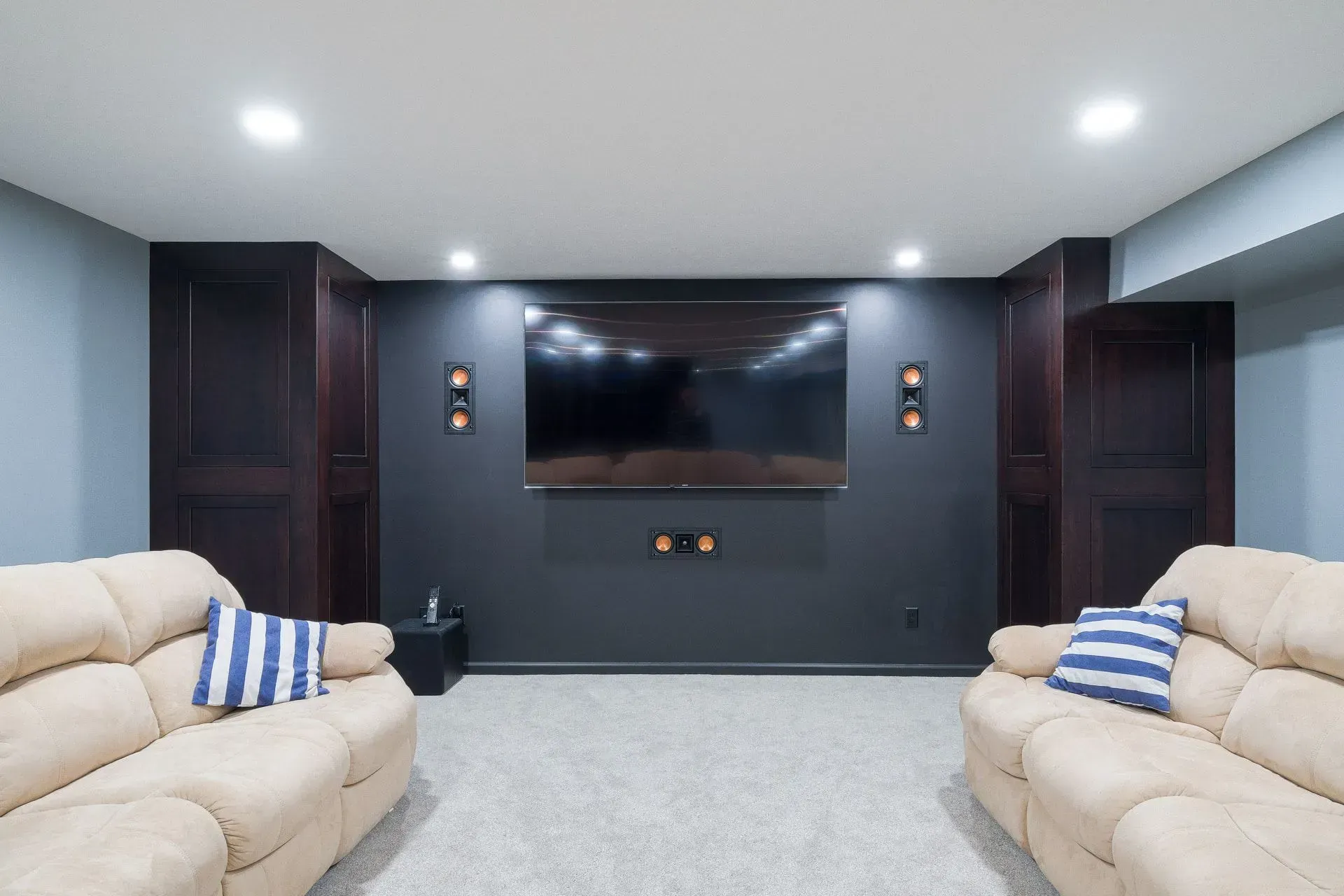
A custom basement media wall helps organize entertainment equipment while giving the room a refined focal point. The goal is not simply to mount a TV. It is to create a built-in entertainment center that supports viewing, storage, sound, lighting, and finish coordination.
At
Anthony Slabaugh Remodeling & Design, we help homeowners in Hudson, Akron and surrounding areas design basement entertainment rooms with custom cabinetry, technology planning, lighting, and storage built into the process.
Start With the Equipment
Before designing a basement TV wall, identify what the media wall needs to support. A room used for movies, sports, gaming, music, and hosting may need space for speakers, consoles, controllers, receivers, remotes, charging, storage, and display.
Equipment needs should be planned before cabinetry and wall details are finalized. Speaker placement, outlet locations, cord paths, ventilation, screen size, and access all affect the final design.
For homeowners throughout Bath, Fairlawn, and Chagrin Falls, this early planning helps the entertainment room feel polished instead of improvised.
Design the Media Wall Around the Room
A custom basement media wall should fit the room, not overpower it. The size of the TV, built-ins, shelves, cabinetry, and surrounding wall details should be balanced with seating distance, ceiling height, walkway space, and nearby activity zones.
A large media wall can anchor a basement lounge, but too much cabinetry can make the room feel heavy. A more refined approach may combine closed storage, selective open shelving, integrated lighting, and clean trim details.
At
Anthony Slabaugh Remodeling & Design, media wall planning is reviewed with seating, circulation, lighting, and the overall entertainment layout.
Hide Wires and Technology Early
Cord management is one of the most important parts of a finished media wall. Visible wires, exposed power strips, and tangled cords can make even beautiful cabinetry feel unfinished.
A custom design may include concealed outlets, wire pathways, access panels, cabinet ventilation, charging areas, and storage for gaming systems or AV components. These details should be planned before walls, built-ins, and finishes are completed.
Clean technology planning helps the room feel calm and organized.
Balance Open Shelving and Closed Storage
Open shelving can add personality to a media wall, but it should be used with restraint. Too many exposed items can create visual noise, especially around a screen.
Closed storage works well for remotes, controllers, games, blankets, electronics, manuals, and accessories. Open shelves can be reserved for a few display pieces, books, or decor that support the overall design.
The best media room storage makes daily use easier while keeping the room visually refined.
Custom Basement Media Wall Guide
| Media Wall Detail | Why It Matters |
|---|---|
| Screen placement | Supports comfortable viewing and room balance |
| Closed cabinetry | Hides gaming systems, remotes, cords, and accessories |
| Speaker planning | Helps technology feel integrated into the design |
| Wire management | Prevents visible clutter around the TV and cabinets |
| Ventilation access | Supports enclosed electronics and service needs |
| Accent lighting | Adds depth without distracting from the screen |
This table is useful because a custom media wall needs to support technology, storage, viewing comfort, and design quality at the same time.
Plan for Gaming and Streaming Devices
Basement entertainment rooms often serve more than one type of viewing. Gaming systems, streaming devices, controllers, sound equipment, and charging stations may all need dedicated storage.
If the media wall does not account for these items, they usually end up on shelves, floors, or open surfaces. A refined built-in entertainment center gives each item a place while keeping access convenient.
The media wall should work for everyday use, not just look clean in photos.
Coordinate Lighting With the Screen Wall
Lighting around a media wall should support comfort and reduce distraction. Cabinet lighting, accent lighting, dimmable recessed lights, and wall lighting can all help create atmosphere.
The placement should avoid glare on the screen and harsh reflections. Lighting should also help the room transition from movie nights to sports, gaming, or casual hosting.
A media wall feels more finished when lighting is part of the design.
Keep the Media Wall Connected to Nearby Spaces
A basement media wall may be visible from a wet bar, game area, lounge, hallway, or stair landing. Its finishes should connect with the surrounding basement design.
Cabinet color, hardware, wall finish, trim, flooring, and lighting should feel coordinated. The media wall can be the focal point, but it should not feel like a separate project from the rest of the entertainment room.
Visit Our Design Studio in Stow, Ohio
Our Stow, Ohio design studio gives homeowners a place to review cabinetry, hardware, lighting, wall finishes, storage options, and layout ideas together. Seeing these selections in context helps clarify how a custom basement media wall can organize technology without visual clutter.
Client Feedback on Our Remodeling Process
Homeowners often share that early planning helps them feel more confident about entertainment spaces with built-ins and technology. By reviewing screen placement, equipment, wiring, storage, lighting, and finish coordination together,
Anthony Slabaugh Remodeling & Design helps clients make decisions with clarity instead of pressure.
Frequently Asked Questions
What should a custom basement media wall include?
A custom basement media wall may include TV placement, closed cabinetry, speaker planning, wire management, gaming storage, accent lighting, and access for AV equipment. The best design depends on how the entertainment room is used.
How do you hide wires in a basement media wall?
Wire management should be planned before the wall and cabinetry are finished. Concealed outlets, wire pathways, access panels, cabinet ventilation, and hidden storage can help keep cords and equipment out of view.
Are built-in entertainment centers good for basements?
Yes, built-in entertainment centers can work well in basements because they organize technology, storage, and display space while creating a refined focal point. They should be designed around seating, screen size, lighting, and room flow.
How do you keep a basement TV wall from looking cluttered?
Use a balance of closed storage, limited open shelving, clean wire management, and coordinated finishes. Keeping remotes, controllers, speakers, and accessories stored helps the media wall feel polished and easy to use.
Start With a Media Wall Designed Around the Whole Room
A refined basement media wall should support technology, storage, lighting, and entertainment without adding visual clutter. Schedule a consultation with Anthony Slabaugh Remodeling & Design or call (330) 940-3237 to plan your basement entertainment room with confidence.
Recent Posts
Share this article
CLIENT REVIEWS
Don’t Just Take Our Word For It
See below how our customers react on our ultimate pressure cleaning services