
Basement Entertainment Room Layout Ideas for Media, Games, and Gathering

Conflicting plans are not inevitable in remodeling. They result from fragmented structure.
Anthony Slabaugh Remodeling & Design provides design-build home renovation services for homeowners in Hudson, Akron & surrounding areas who value architectural alignment and disciplined execution.
A basement entertainment room should make hosting feel comfortable, natural, and easy. The space may need to support movie nights, sports, game tables, conversation, snacks, drinks, and casual family time, all within the same lower level.
The best basement entertainment room layout ideas begin with flow. Before choosing furniture, media walls, or finishes, the room should be planned around how people enter, gather, sit, watch, play, and move through the space.
At
Anthony Slabaugh Remodeling & Design, we help homeowners in Hudson, Akron and surrounding areas design basement entertainment rooms with layout, lighting, seating, storage, and finish coordination planned together.
Start With the Main Entertainment Purpose
Every entertainment room has a different priority. Some homeowners want a media-first basement with a large screen and comfortable seating. Others want a game room layout with billiards, cards, board games, or a lounge-style gathering area.
The room may also need to support hosting before and after the main activity. Guests may gather near the stairs, move toward a wet bar, sit around a game table, or spread into multiple zones during larger gatherings.
For homeowners throughout Bath, Fairlawn, and Chagrin Falls, defining the primary use early helps the lower level feel intentional instead of crowded.
Create Zones for Media, Games, and Conversation
A basement entertainment room often works best when it has clear zones. A media area may anchor one side of the room. A game table may need open clearance. A lounge area may support conversation away from the screen. A bar or beverage area may serve guests without interrupting seating.
These zones do not always require walls. Furniture placement, lighting, ceiling details, built-ins, rugs, cabinetry, and flooring transitions can define areas while keeping the room open.
At
Anthony Slabaugh Remodeling & Design, zoning is planned so the basement supports hosting without feeling overbuilt.
Plan Seating Around Sightlines and Flow
Seating should be planned around both viewing and conversation. A basement media room layout that only focuses on the screen may not work well for hosting. A layout that only supports conversation may make movies or sports uncomfortable.
The best seating plan considers screen views, walking paths, table placement, guest capacity, and how people move between zones. Sectionals, lounge chairs, built-in benches, or mixed seating may all work depending on the space.
Clear circulation keeps the room comfortable even when several people are using it.
Leave Room Around Game Areas
Game areas need more clearance than many homeowners expect. Billiards, ping pong, cards, shuffleboard, and board games all require space for movement, seating, and storage.
If a game table is placed too close to walls, furniture, columns, or a bar, the room can feel tight. The layout should account for how the game is played, where people stand, and how guests move around the activity.
A refined entertainment room gives games enough room to feel enjoyable, not squeezed in.
Basement Entertainment Layout Guide
| Layout Area | Planning Priority |
|---|---|
| Media zone | Screen visibility, seating depth, lighting control, and sound |
| Game area | Clearance, movement, table access, and nearby storage |
| Lounge zone | Conversation, comfort, and connection to other areas |
| Wet bar or beverage area | Serving access without blocking circulation |
| Built-in storage | Organized space for games, equipment, and accessories |
| Main walkway | Clear movement from stairs to each entertainment zone |
This table is useful because basement entertainment layouts depend on how people gather, move, watch, and play.
Keep the Bar or Beverage Area From Blocking the Room
A wet bar or beverage area can support hosting, but it should not interrupt the main flow. Guests should be able to access drinks or snacks without walking through the media seating or game area.
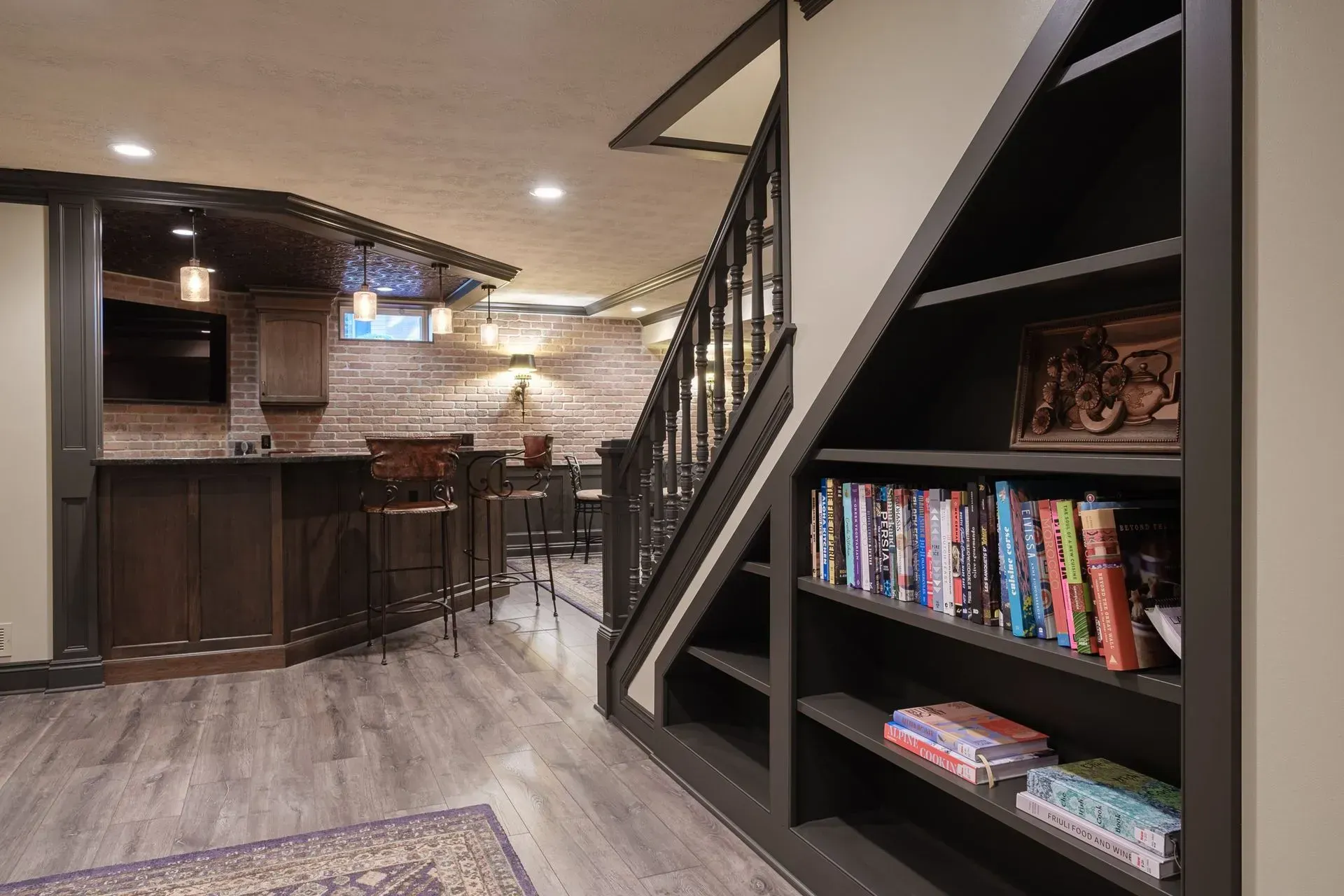
The bar may work best along a side wall, near a transition zone, or close to the stair path depending on the basement. Cabinetry, lighting, storage, and counter space should all be planned around how the room will function during gatherings.
Convenience should not come at the expense of comfort.
Use Built-Ins to Organize Entertainment Needs
Basement entertainment rooms often collect remotes, speakers, gaming systems, board games, blankets, glassware, and serving pieces. Built-ins can help keep these items organized without adding clutter.
A media wall, game storage cabinet, shelving, or closed cabinetry can support the layout while making the room feel more finished. Storage should be close to the activity it serves.
Coordinate Lighting With Each Zone
Lighting should shift with the room’s activities. Movies may need dim, controlled lighting. Game tables need better visibility. Bar areas need task lighting. Conversation zones need warmth and comfort.
A layered lighting plan helps the entertainment room move between uses without feeling flat or overly dark.
Visit Our Design Studio in Stow, Ohio
Our Stow, Ohio design studio gives homeowners a place to review cabinetry, flooring, lighting, hardware, countertops, storage, and finish selections together. Seeing these choices in context helps clarify how a basement entertainment layout can support media, games, and gathering.
Client Feedback on Our Remodeling Process
Homeowners often share that early planning helps them feel more confident about lower-level entertainment spaces. By reviewing layout, seating, game clearance, media placement, lighting, storage, and finish coordination together, Anthony Slabaugh Remodeling & Design helps clients make decisions with clarity instead of pressure.
Frequently Asked Questions
What is the best layout for a basement entertainment room?
The best layout depends on how the space will be used. Media seating, game areas, lounge zones, wet bars, storage, and walkways should be planned together so guests can move comfortably and each area has a clear purpose.
How do you separate media and game areas in a basement?
Media and game areas can be separated with furniture placement, lighting, built-ins, rugs, ceiling details, or flooring transitions. Full walls are not always needed when the layout creates clear zones and comfortable circulation.
How much space do basement game areas need?
Game areas need enough clearance for movement, seating, and play. Billiards, ping pong, cards, and other activities all require different spacing, so the game type should be selected before furniture and storage are finalized.
Can a basement entertainment room include a wet bar?
Yes, a wet bar can work well when it is placed outside the main seating and game circulation. The bar should support hosting with convenient access, storage, lighting, and counter space without overcrowding the room.
Start With an Entertainment Layout Designed for Hosting
A refined basement entertainment room should support media, games, conversation, storage, and comfortable movement. Schedule a consultation with Anthony Slabaugh Remodeling & Design or call (330) 940-3237 to plan your basement entertainment room with confidence.
Recent Posts
Share this article
CLIENT REVIEWS
Don’t Just Take Our Word For It
See below how our customers react on our ultimate pressure cleaning services