
Best Flooring for a Basement Home Gym: What Homeowners Should Consider

Conflicting plans are not inevitable in remodeling. They result from fragmented structure. 


Anthony Slabaugh Remodeling & Design provides design-build home renovation services for homeowners in Hudson, Akron & surrounding areas who value architectural alignment and disciplined execution. 


If you are planning a renovation and want drawings that translate directly into construction without conflict, begin with a unified design-build model designed to eliminate misalignment before it begins.

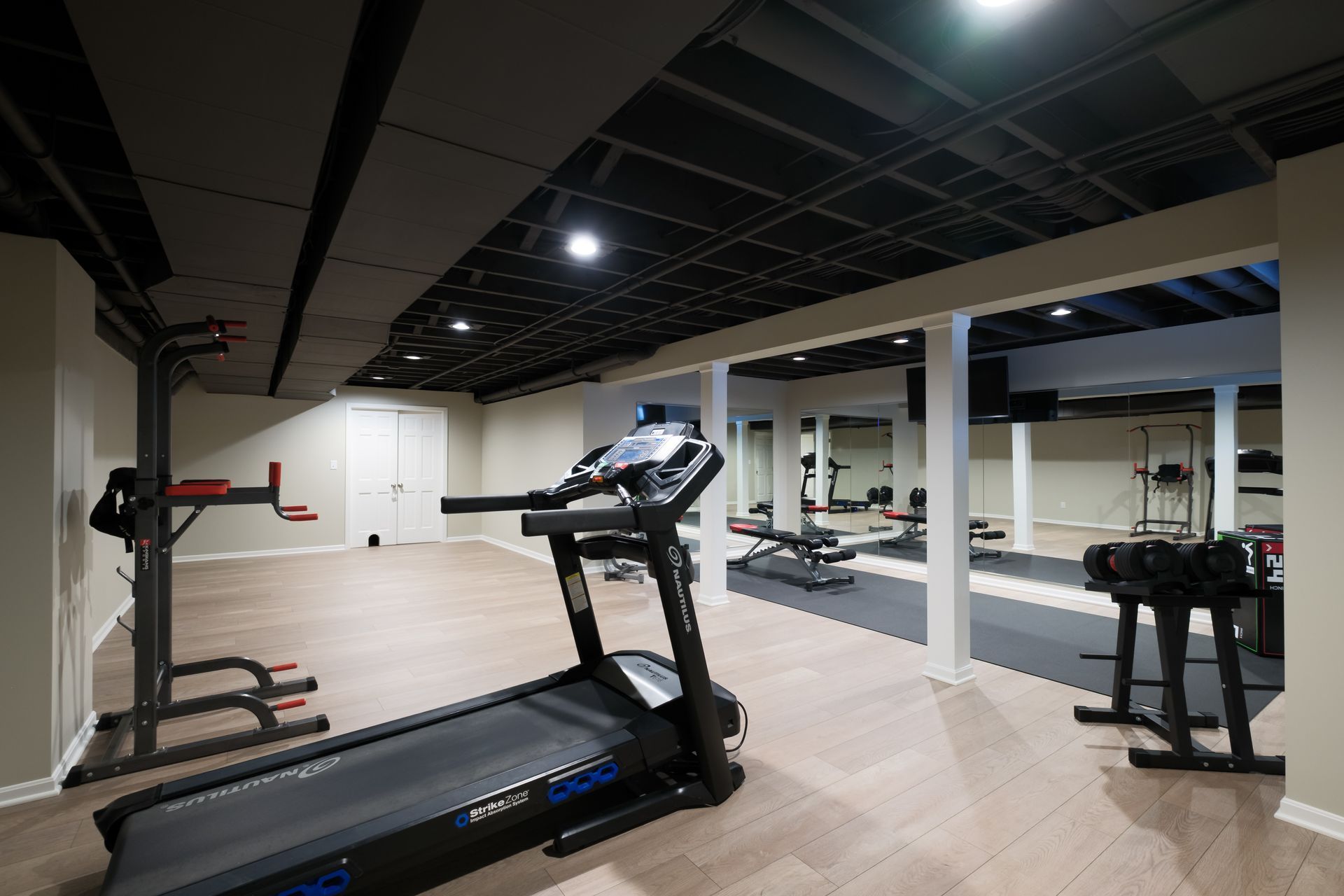
A basement home gym needs flooring that can do more than look finished. It must support movement, equipment, impact, comfort, moisture awareness, and the overall design of the lower level.


The best flooring for basement home gym spaces depends on how the room will be used. A strength zone with weights has different needs than a cardio area, stretching space, or multipurpose fitness room. The right flooring should feel comfortable underfoot while helping the gym perform well during daily use.


At Anthony Slabaugh Remodeling & Design, we help homeowners in Hudson, Akron and surrounding areas design basement home gyms with flooring, layout, lighting, ventilation, and finish details planned together.

Start With the Type of Workout  

Flooring should be selected around the way the homeowner trains. Free weights, cardio machines, yoga, stretching, functional movement, and resistance training each create different demands.


A weight area may need impact resistance and stability. A stretching zone may need comfort. A cardio area may need durability under equipment. If the gym supports multiple types of exercise, flooring may need to balance performance and appearance.


For homeowners throughout Bath, Fairlawn, and Chagrin Falls, this planning helps the gym feel custom instead of adapted after the fact.

Consider Impact and Equipment Weight  

Basement gym flooring should account for dropped weights, heavy machines, benches, racks, and repeated movement. Impact absorbing flooring can help support durability and comfort, but the best solution depends on the equipment being used.


Heavy equipment also affects layout. Flooring should work with the placement of racks, cardio machines, storage, mirrors, and walkways. A thoughtful plan helps the room feel stable, organized, and ready for regular use.


At Anthony Slabaugh Remodeling & Design, flooring is reviewed with equipment spacing, storage, and circulation so the gym functions as a complete space.

Think About Moisture Awareness  

Basements require careful flooring decisions because lower-level conditions can differ from the main floor. Moisture resistant gym flooring may be appropriate in some situations, but flooring should be selected with the existing basement conditions in mind.


Before choosing materials, it is important to consider moisture history, slab conditions, ventilation, and how the gym connects to nearby rooms. This helps reduce the chance of selecting a floor that looks right but does not fit the lower-level environment.


A gym floor should support both performance and long-term comfort.

Plan for Sound and Vibration  

A basement fitness room can create sound through footsteps, weights, machines, and movement. Flooring can influence how the room sounds and feels, especially when the gym is near a home office, guest suite, media room, or family space.


Sound control depends on more than flooring alone. Wall placement, ceiling conditions, doors, equipment type, and room layout also matter. Still, flooring is an important part of creating a gym that feels comfortable for the whole household.

Basement Home Gym Flooring Guide  

Flooring Need Why It Matters
Impact support Helps protect the floor during weight training
Equipment stability Keeps machines, benches, and racks feeling secure
Comfort underfoot Supports stretching, mobility, and daily workouts
Moisture awareness Helps flooring suit lower-level conditions
Sound control Reduces harsh noise from movement and equipment
Design continuity Connects the gym to the finished basement

This table is useful because basement gym flooring needs to support both workout performance and finished-home design.

Match Flooring to the Gym Zones   

A basement gym may not need the same flooring everywhere. A strength area, cardio zone, stretching space, and storage area may each have different needs.


In some designs, one flooring type works throughout the room. In others, a carefully planned transition between surfaces may support different activities. Transitions should feel clean and intentional, especially if the gym connects to a hallway, family room, or office.


The goal is to support the workout without making the space feel pieced together.

Coordinate Flooring With Mirrors and Lighting  

Flooring affects how light moves through the gym and how the room feels visually. Darker flooring may feel grounded and performance-focused. Lighter tones may help the space feel more open. The right choice depends on lighting, wall color, mirrors, ceiling height, and equipment.


Mirrors can amplify light and make the gym feel larger, but they can also highlight clutter or harsh contrasts. Flooring, mirrors, and lighting should be planned together.

Keep Storage in the Flooring Plan  

Storage and flooring are connected. Mats, dumbbells, bands, foam rollers, towels, and cleaning supplies need a home, and storage should be placed where the floor can support frequent use.


A storage wall, built-in cabinet, or equipment zone can keep accessories from spreading across the room. Flooring should work around these locations so the gym remains easy to clean and use.

Visit Our Design Studio in Stow, Ohio

Our Stow, Ohio design studio gives homeowners a place to review flooring, lighting, cabinetry, storage, hardware, and finish selections together. Seeing materials in context helps clarify which gym flooring approach fits the basement’s function, comfort, and overall design.

Client Feedback on Our Remodeling Process

Homeowners often share that early planning helps them feel more confident about specialized spaces like basement gyms. By reviewing flooring, equipment needs, impact, moisture awareness, sound, lighting, storage, and finishes together, Anthony Slabaugh Remodeling & Design helps clients make decisions with clarity instead of pressure.

Frequently Asked Questions    

  • What is the best flooring for a basement home gym?

    The best flooring for a basement home gym depends on the workouts, equipment, impact level, moisture considerations, and comfort needs. Strength training, cardio, stretching, and multipurpose fitness spaces may each call for different flooring priorities.

  • Does basement gym flooring need to be moisture resistant?

    Moisture awareness is important in any basement flooring decision. The right gym flooring should be selected after considering lower-level conditions, ventilation, slab history, and how the space will be used.

  • What flooring is best for weights in a basement gym?

    Weight areas typically need flooring that supports impact, stability, and durability. The exact approach depends on the type of weights, equipment placement, room layout, and how the gym connects to nearby finished spaces.

  • Can basement gym flooring reduce noise?

    Flooring can help reduce some harsh sound from movement and equipment, but sound control also depends on walls, ceilings, doors, equipment type, and layout. A complete plan works better than relying on flooring alone.

Start With Gym Flooring Designed Around Real Use   

A refined basement gym should have flooring that supports impact, comfort, moisture awareness, sound, storage, and the overall design of the lower level. Schedule a consultation with Anthony Slabaugh Remodeling & Design or call (330) 940-3237 to plan your basement home gym with confidence.

Recent Posts

Basement Egress Window Installation Process | ASRD
By Anthony Slabaugh Remodeling & Design June 23, 2026
Learn what happens during basement egress window installation, from excavation and foundation cutting to drainage, waterproofing, and finish integration.
Basement Bedroom Natural Light With Egress Windows | ASRD
By Anthony Slabaugh Remodeling & Design June 23, 2026
Learn how an egress window can improve basement bedroom natural light, comfort, ventilation, and livability in Hudson, Akron and surrounding areas.
Basement Egress Window Well and Drainage Planning | ASRD
By Anthony Slabaugh Remodeling & Design June 23, 2026
Learn how basement egress window wells, drainage, grading, and moisture planning support safer, more comfortable lower-level bedrooms.
Basement Bedroom Egress Window Guide for Homeowners | ASRD
By Anthony Slabaugh Remodeling & Design June 23, 2026
Learn when a basement bedroom egress window is needed, how it supports safety, and what homeowners should consider before planning a lower-level bedroom.
Basement Egress Window Installation Process | ASRD
By Anthony Slabaugh Remodeling & Design June 23, 2026
Learn what happens during basement egress window installation, from excavation and foundation cutting to drainage, waterproofing, and finish integration.
Basement Bedroom Natural Light With Egress Windows | ASRD
By Anthony Slabaugh Remodeling & Design June 23, 2026
Learn how an egress window can improve basement bedroom natural light, comfort, ventilation, and livability in Hudson, Akron and surrounding areas.
Basement Egress Window Well and Drainage Planning | ASRD
By Anthony Slabaugh Remodeling & Design June 23, 2026
Learn how basement egress window wells, drainage, grading, and moisture planning support safer, more comfortable lower-level bedrooms.

Share this article

CLIENT REVIEWS

Don’t Just Take Our Word For It

See below how our customers react on our ultimate pressure cleaning services