
How to Improve Ventilation and Comfort in a Basement Home Gym

Conflicting plans are not inevitable in remodeling. They result from fragmented structure. 


Anthony Slabaugh Remodeling & Design provides design-build home renovation services for homeowners in Hudson, Akron & surrounding areas who value architectural alignment and disciplined execution. 


If you are planning a renovation and want drawings that translate directly into construction without conflict, begin with a unified design-build model designed to eliminate misalignment before it begins.

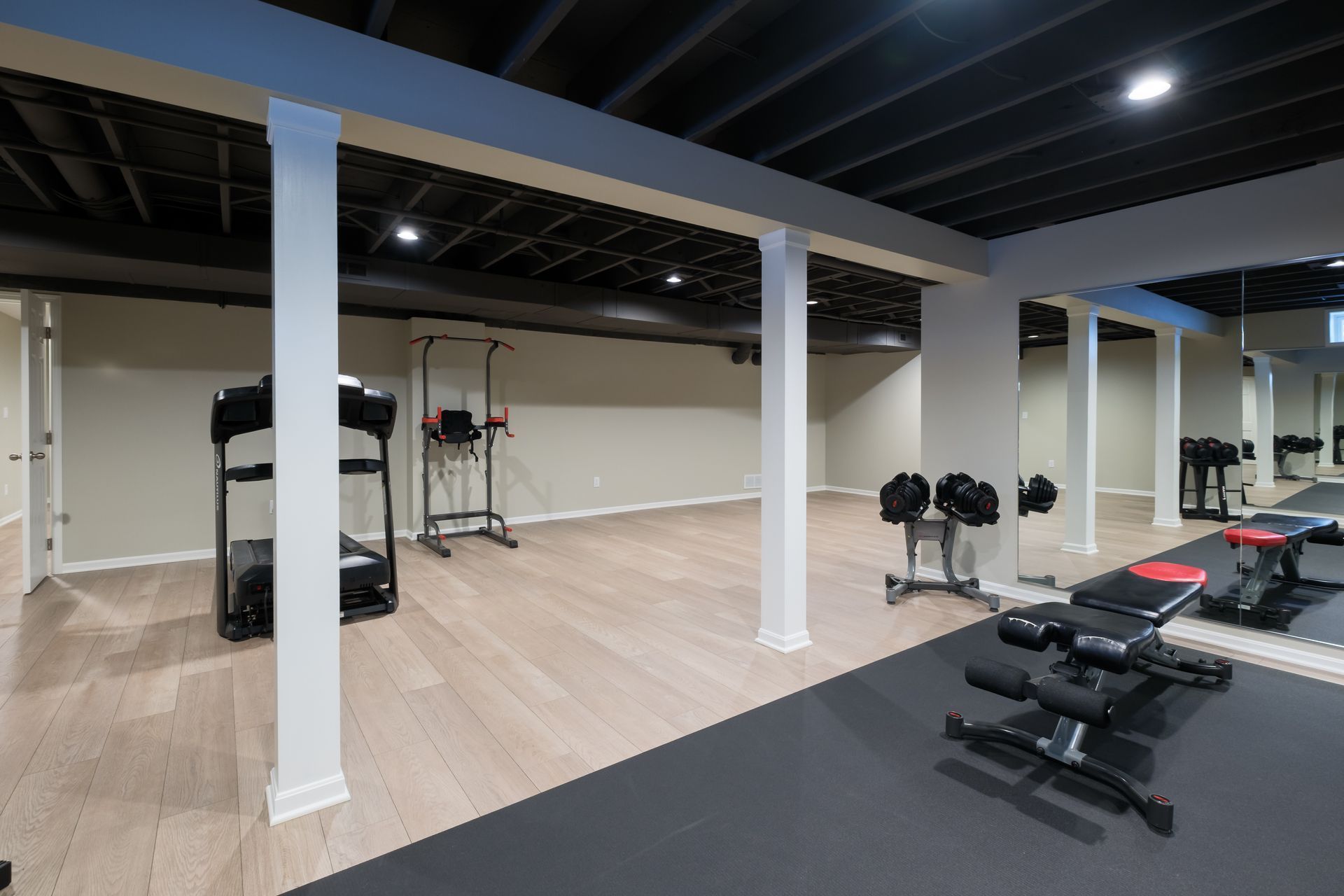
A basement home gym should feel comfortable enough to use regularly. Even with the right equipment and flooring, the space can become unpleasant if it feels stuffy, humid, cold, warm, or poorly connected to the rest of the home.


Basement gym ventilation matters because exercise changes how the room feels. Workouts create heat, movement, moisture, and odor. If airflow, temperature, humidity, flooring, and room layout are not planned together, the gym may feel less inviting than it should.


At Anthony Slabaugh Remodeling & Design, we help homeowners in Hudson, Akron and surrounding areas design basement home gyms with comfort, performance, ventilation, and finish quality considered from the beginning.

Start With How the Gym Will Be Used  

Ventilation needs depend on the type of workout. A stretching room, strength-training zone, cycling area, treadmill space, or high-intensity workout room may each feel different during use.


Cardio equipment can create more heat. Strength areas may need comfort during longer sessions. Stretching and recovery zones may need a calmer atmosphere. If more than one person uses the gym, airflow and temperature planning become even more important.


For homeowners throughout Bath, Fairlawn, and Chagrin Falls, comfort planning helps the gym feel like a true part of the home, not a leftover basement room with equipment inside.

Review Airflow Before Finishes Are Finalized  

Basement workout room ventilation should be discussed before walls, ceilings, mirrors, flooring, and built-ins are completed. Once the room is enclosed or finished, improving airflow can become more complicated.


A design-build plan may look at the location of the gym, the room size, ceiling conditions, doors, HVAC supply and return locations, and how air moves between nearby spaces. The goal is to avoid a gym that feels closed off or heavy during use.


At Anthony Slabaugh Remodeling & Design, ventilation is reviewed with layout, flooring, lighting, and storage so the room functions as a complete fitness space.

Watch for Humidity and Musty Basement Concerns  

Basement gym humidity should not be ignored. Exercise can add warmth and moisture to the room, and lower levels may already have different moisture conditions than the main floor.


A gym that feels musty, damp, or heavy may need more than cosmetic changes. Moisture awareness, airflow, ventilation, flooring choices, and room layout should all be evaluated before selecting finishes.


This does not mean every basement has the same issue. It means comfort planning should be specific to the home.

Plan Temperature Around Exercise  

Temperature comfort in a basement gym is different from temperature comfort in a media room or guest suite. A room that feels fine while sitting may feel too warm during cardio or too cold during stretching.


Planning should consider workout intensity, room enclosure, flooring, ceiling height, air movement, and whether the gym connects to other basement spaces. Some gyms may feel best with a more open connection. Others may need a defined room with carefully planned airflow.


Comfort should be based on how the room is used, not only how it looks.

Basement Gym Ventilation and Comfort Guide  

Comfort Factor Why It Matters
Airflow Helps the room feel fresher during workouts
Temperature Supports cardio, strength training, and stretching comfort
Humidity awareness Helps reduce damp or musty lower-level concerns
Room layout Affects how air moves through the gym
Flooring Influences comfort, cleaning, and moisture awareness
Storage Keeps gear organized so airflow and movement stay clear

This table is useful because basement gym comfort depends on several planning decisions working together.

Keep Equipment and Storage From Blocking Air Movement  

Gym equipment can affect airflow. Large machines, tall storage, wall-mounted racks, mirrors, and built-ins should be placed so they do not interfere with vents, returns, doors, or circulation paths.


Storage is especially important. Mats, towels, foam rollers, shoes, weights, and bands can collect quickly. When accessories spread across the room, they can make the gym feel crowded and harder to clean.


A comfortable gym should feel organized, breathable, and easy to move through.

Choose Finishes That Support Comfort  

Finishes affect how a basement gym feels. Flooring, wall materials, lighting, mirrors, trim, and storage all influence comfort and atmosphere.


A flooring material should support the workout style while respecting lower-level conditions. Lighting should feel bright enough for movement but not harsh. Mirrors should be placed where they help with form and openness without making the room feel overly commercial.


Comfort is both physical and visual.

Coordinate Ventilation With Nearby Basement Spaces  

Many basement gyms are located near offices, guest suites, family rooms, or media rooms. Ventilation and comfort planning should consider those nearby spaces too.


A gym that opens to a media room may need a different strategy than a fully enclosed fitness room. A gym near an office may need more attention to sound, airflow, and separation. A gym near a guest suite may need comfort planning that protects both spaces.


The basement should work as a connected lower level, not a set of unrelated rooms.

Visit Our Design Studio in Stow, Ohio

Our Stow, Ohio design studio gives homeowners a place to review flooring, lighting, cabinetry, mirrors, storage, and finish selections together. Seeing these choices in context helps clarify how ventilation and comfort details can be built into a basement home gym.

Client Feedback on Our Remodeling Process

Homeowners often share that early planning helps them feel more confident about specialized spaces like basement gyms. By reviewing airflow, humidity, temperature comfort, flooring, equipment layout, storage, and finishes together, Anthony Slabaugh Remodeling & Design helps clients make decisions with clarity instead of pressure.

Frequently Asked Questions    

  • Why does my basement gym feel stuffy?

    A basement gym may feel stuffy because of limited airflow, room enclosure, humidity, equipment placement, or poor connection to nearby spaces. Exercise adds heat and moisture, so ventilation should be planned around how the gym is actually used.

  • How do you improve ventilation in a basement workout room?

    Start by reviewing airflow, room layout, HVAC locations, doors, ceiling conditions, and nearby spaces. A comfortable basement workout room depends on how air moves through the gym during exercise, not just how the room looks when empty.

  • Does humidity matter in a basement gym?

    Yes, humidity matters because exercise can add warmth and moisture to the room. Basement gym humidity should be considered when selecting flooring, finishes, ventilation, and storage so the space feels comfortable and easier to maintain.

  • How do you make a basement gym more comfortable?

    Comfort comes from airflow, temperature planning, moisture awareness, flooring, lighting, mirrors, storage, and clear movement zones. A basement gym should be designed around workout intensity, room size, and how the space connects to the home.

Start With a Basement Gym That Feels Comfortable to Use   

A refined basement gym should support airflow, comfort, humidity awareness, storage, movement, and daily workouts. Schedule a consultation with Anthony Slabaugh Remodeling & Design or call (330) 940-3237 to plan your basement home gym with confidence.

Recent Posts

Basement Egress Window Installation Process | ASRD
By Anthony Slabaugh Remodeling & Design June 23, 2026
Learn what happens during basement egress window installation, from excavation and foundation cutting to drainage, waterproofing, and finish integration.
Basement Bedroom Natural Light With Egress Windows | ASRD
By Anthony Slabaugh Remodeling & Design June 23, 2026
Learn how an egress window can improve basement bedroom natural light, comfort, ventilation, and livability in Hudson, Akron and surrounding areas.
Basement Egress Window Well and Drainage Planning | ASRD
By Anthony Slabaugh Remodeling & Design June 23, 2026
Learn how basement egress window wells, drainage, grading, and moisture planning support safer, more comfortable lower-level bedrooms.
Basement Bedroom Egress Window Guide for Homeowners | ASRD
By Anthony Slabaugh Remodeling & Design June 23, 2026
Learn when a basement bedroom egress window is needed, how it supports safety, and what homeowners should consider before planning a lower-level bedroom.
Basement Egress Window Installation Process | ASRD
By Anthony Slabaugh Remodeling & Design June 23, 2026
Learn what happens during basement egress window installation, from excavation and foundation cutting to drainage, waterproofing, and finish integration.
Basement Bedroom Natural Light With Egress Windows | ASRD
By Anthony Slabaugh Remodeling & Design June 23, 2026
Learn how an egress window can improve basement bedroom natural light, comfort, ventilation, and livability in Hudson, Akron and surrounding areas.
Basement Egress Window Well and Drainage Planning | ASRD
By Anthony Slabaugh Remodeling & Design June 23, 2026
Learn how basement egress window wells, drainage, grading, and moisture planning support safer, more comfortable lower-level bedrooms.

Share this article

CLIENT REVIEWS

Don’t Just Take Our Word For It

See below how our customers react on our ultimate pressure cleaning services