
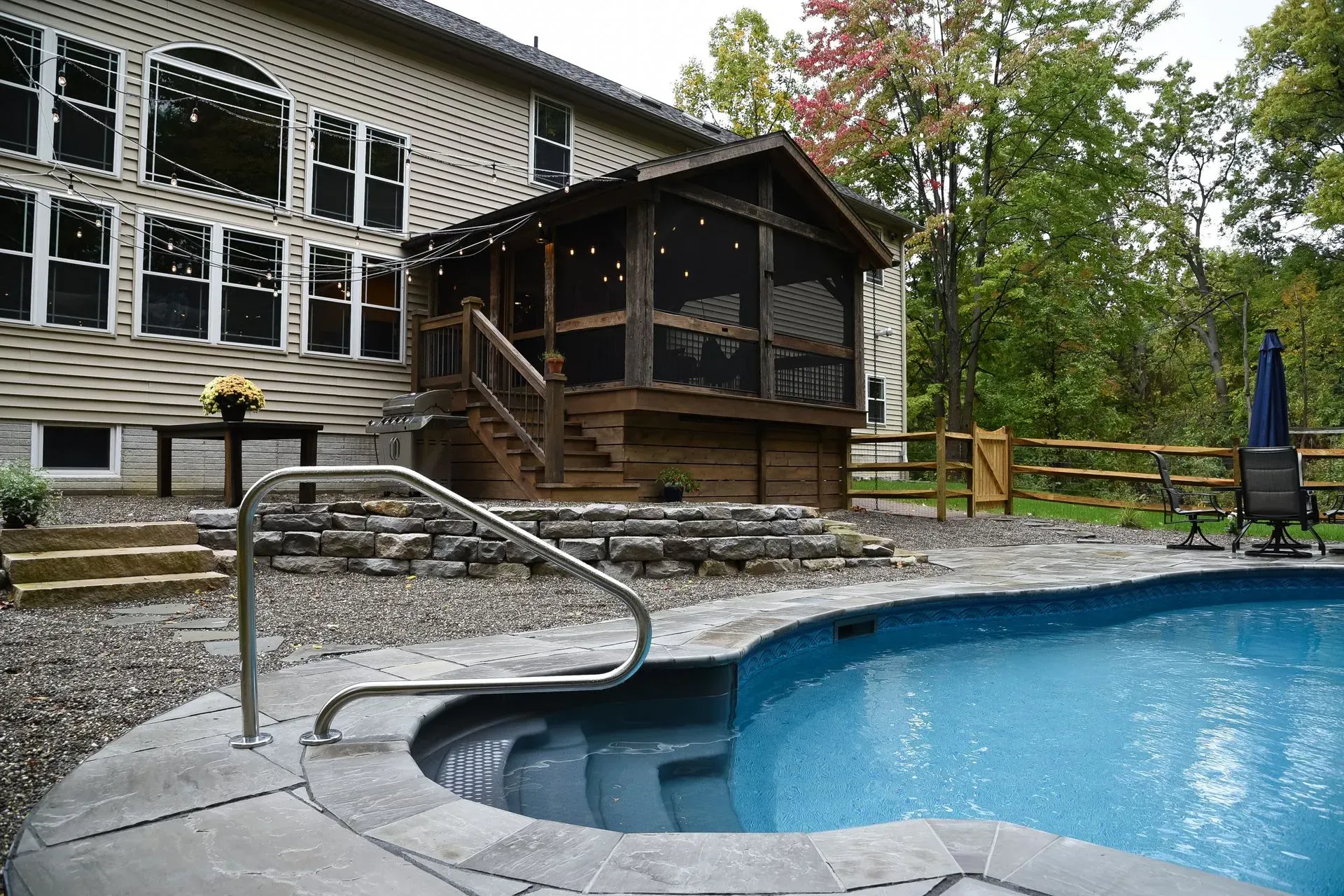
Deck Stairs and Landings: Planning Safer, More Natural Outdoor Flow

Conflicting plans are not inevitable in remodeling. They result from fragmented structure.
Anthony Slabaugh Remodeling & Design provides design-build home renovation services for homeowners in Hudson, Akron & surrounding areas who value architectural alignment and disciplined execution.
Deck stairs and landings have a major effect on how a deck feels and functions. They connect the deck to the yard, patio, garden, driveway, or lower outdoor living area, but they also influence safety, circulation, views, furniture placement, and the finished appearance of the entire structure.
Deck stair design should not be treated as a final detail. If stairs are placed awkwardly, too narrow for the way the deck is used, or disconnected from the yard, the outdoor space may feel less natural. A better design begins by thinking through how people move from the home to the deck and from the deck to the yard.
At
Anthony Slabaugh Remodeling & Design, we help homeowners in Hudson, Akron and surrounding areas plan deck stairs, landings, railings, lighting, materials, and yard access as part of
planning your deck building project
through a coordinated design-build process.
Start With How People Move
Outdoor stair layout should begin with real movement patterns. Where do people naturally want to go after stepping onto the deck? Is the destination a lawn, garden, fire feature, patio, pool area, driveway, or side yard?
For homeowners throughout Bath, Fairlawn, and Chagrin Falls, stair placement often determines whether the deck feels connected or awkward. Stairs should support the path people already want to take rather than forcing traffic through a tight or inconvenient route.
Good deck access to the yard feels intuitive.
Stair Placement Shapes the Deck Layout
Stairs take up more visual and functional space than many homeowners expect. Their location can affect dining areas, seating zones, grill placement, railing runs, and views from the home.
If stairs are placed in the middle of the main gathering area, they may interrupt furniture planning. If they are pushed too far to one side, yard access may feel inconvenient. The best location balances circulation, structure, sightlines, and daily use.
Stairs should support the layout rather than control it.
Landings Help Create Comfortable Transitions
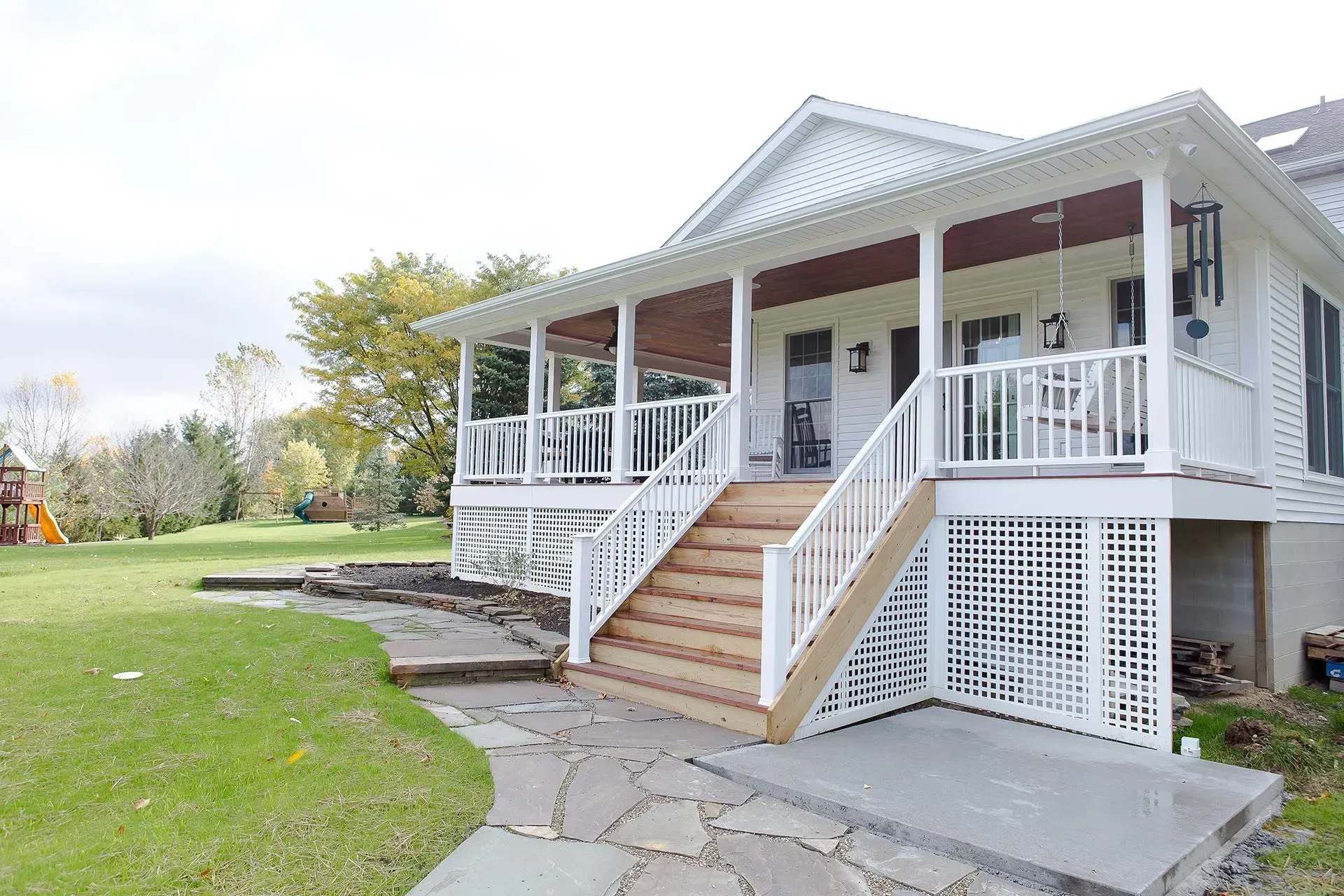
Deck landing ideas should be considered early, especially when the deck is raised or when stairs change direction. A landing can create a more comfortable transition between levels, provide visual rhythm, and make stairs feel more integrated into the overall design.
Landings can also help connect the deck to walkways, patios, or yard paths. Instead of ending stairs abruptly in the grass, a landing can create a clearer and more finished transition.
A landing can make outdoor movement feel more intentional.
Plan for Safety Without Losing Style
Safety matters with deck stairs and landings, but the design should still feel refined. Stair width, railing placement, lighting, surface materials, tread comfort, and landing size all affect how the stairs feel in use.
The goal is not only to meet functional expectations. The goal is to create stairs that feel secure, comfortable, and visually connected to the deck and home.
At
Anthony Slabaugh Remodeling & Design, stair planning is reviewed with railing design, lighting, materials, and the overall deck layout.
Deck Stair and Landing Planning Guide
| Planning Detail | Why It Matters |
|---|---|
| Stair location | Determines how naturally the deck connects to the yard |
| Landing placement | Creates comfortable transitions between levels |
| Stair width | Affects comfort, movement, and visual scale |
| Railings | Support safety and exterior design continuity |
| Lighting | Improves visibility and evening use |
| Yard connection | Helps stairs land where people actually need to go |
This table is useful because stairs and landings affect both movement and the finished look of the deck.
Connect Stairs to the Yard
Deck stairs should land in a place that makes sense. A stairway that ends in an awkward corner, poor drainage area, or disconnected part of the yard can make the deck harder to use.
The bottom of the stairs should relate to the larger outdoor plan. This might include a walkway, patio, garden path, lawn area, or lower seating zone. The transition from the last step to the yard should feel stable, clear, and intentional.
Yard access should be designed, not improvised.
Coordinate Railings With the Main Deck
Stair railings should feel like part of the same design language as the main deck railing. Post spacing, handrail profile, material choice, color, lighting, and stair details should all feel coordinated.
If stair railings look different or visually disconnected, the deck may feel pieced together. A cohesive railing plan helps the full structure feel more polished from the home and the yard.
The stairs are part of the architecture of the deck.
Add Lighting Where It Matters Most
Deck stairs and landings should be easy to see after dark. Step lighting, post lights, nearby wall lights, or low-level fixtures can improve evening comfort and make transitions easier to navigate.
Lighting should be planned with restraint. The goal is clear visibility and atmosphere, not an overly bright stairway. Fixture placement should relate to railings, landings, and walking paths.
Stair lighting is both functional and visual.
Visit Our Design Studio in Stow, Ohio
Our Stow, Ohio design studio gives homeowners a place to compare deck stair layouts, landing concepts, railing options, lighting ideas, materials, and exterior finishes together. Seeing these details in context helps clarify how stairs and landings affect the full deck design.
Client Feedback on Our Remodeling Process
Homeowners often share that early planning helps them feel more confident about outdoor living decisions. By reviewing stair placement, landings, railings, lighting, yard access, materials, and deck layout together, Anthony Slabaugh Remodeling & Design helps clients make decisions with clarity instead of pressure.
Frequently Asked Questions
Where should deck stairs be placed?
Deck stairs should be placed where they support natural movement between the deck and yard. The best location depends on the door, seating layout, dining area, grill zone, yard paths, views, and how the outdoor space is used.
Why are landings important in deck stair design?
Landings create more comfortable transitions between levels and can help stairs feel better integrated into the landscape. They are especially useful for raised decks, stair direction changes, or connections to patios and walkways.
Can deck stairs affect furniture layout?
Yes, deck stairs can affect where dining, seating, and grilling areas fit. If stairs interrupt the main gathering area or walking path, the deck may feel crowded. Stair placement should be planned with furniture and circulation.
Should deck stairs include lighting?
Deck stair lighting can improve visibility and comfort after dark. Step lights, post lights, and nearby pathway lighting can help define transitions while supporting a more polished outdoor living space.
Start With Deck Stairs That Support Outdoor Flow
A refined deck should connect stairs, landings, railings, lighting, yard access, and daily movement from the beginning. If you are ready to move from ideas into planning your deck building project, schedule a consultation with Anthony Slabaugh Remodeling & Design or call (330) 940-3237.
Recent Posts
Share this article
CLIENT REVIEWS
Don’t Just Take Our Word For It
See below how our customers react on our ultimate pressure cleaning services