
How to Make a Finished Basement Feel Like Part of the Main Home

Conflicting plans are not inevitable in remodeling. They result from fragmented structure. 


Anthony Slabaugh Remodeling & Design provides design-build home renovation services for homeowners in Hudson, Akron & surrounding areas who value architectural alignment and disciplined execution. 


If you are planning a renovation and want drawings that translate directly into construction without conflict, begin with a unified design-build model designed to eliminate misalignment before it begins.

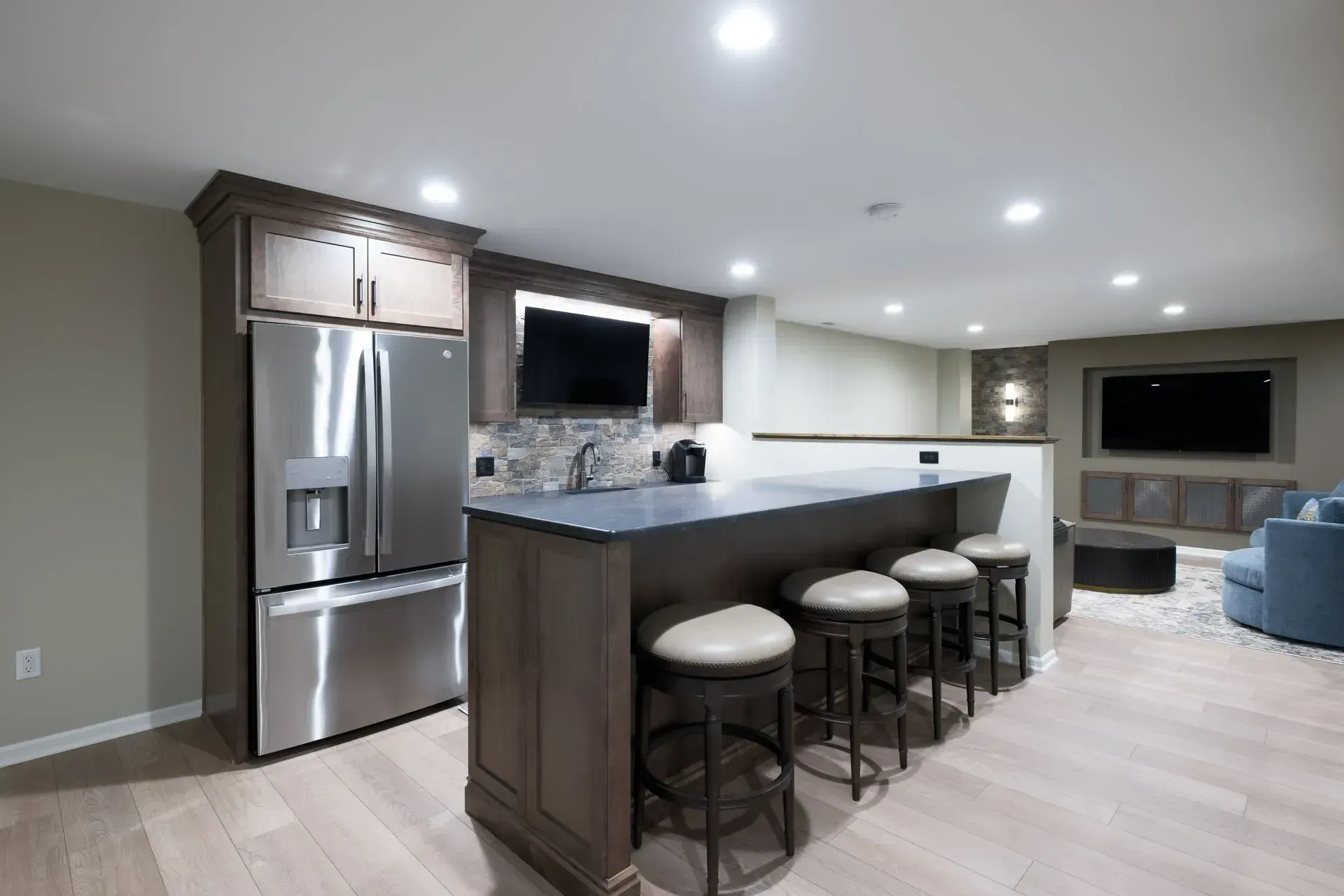
A finished basement should not feel like a separate lower-level project. When planned well, it should feel like a natural extension of the main home, with thoughtful lighting, trim, flooring transitions, stair details, and finish coordination.


The difference between a basic finished basement and a refined lower-level living space often comes down to continuity. The basement can serve a different purpose than the main floor, but it should still feel connected in quality, style, and detail.


At Anthony Slabaugh Remodeling & Design, we help homeowners in Hudson, Akron and surrounding areas plan finished basement designs that feel comfortable, intentional, and aligned with the rest of the home.

Start With the Stair Transition  

The staircase is the first connection between the main level and the basement. If the stair feels unfinished, dated, or disconnected, the lower level can feel separate before anyone reaches the finished space.


Stair railings, treads, risers, wall finishes, lighting, trim, and landing details should be reviewed as part of the basement design. Even simple refinements can make the transition feel more intentional.


For homeowners throughout Bath, Fairlawn, and Chagrin Falls, the stair connection is often one of the strongest ways to make a finished basement feel more integrated.

Coordinate Flooring Transitions  

Flooring has a major effect on whether the basement feels connected to the rest of the home. The basement floor does not always need to match the main level, but it should feel related through tone, texture, scale, or transition planning.


Durability and moisture-conscious selection still matter, but the flooring should not feel like an unrelated material choice. A refined finished basement uses flooring to support comfort while maintaining design continuity.


At Anthony Slabaugh Remodeling & Design, flooring is reviewed with stairs, layout, lighting, and nearby finishes so the lower level feels planned from the beginning.

Use Lighting to Reduce the Basement Feeling  

Basements often have limited natural light, which can make them feel darker or more enclosed than upper levels. Strong lighting design helps the space feel warmer, more finished, and easier to use.


Recessed lighting, wall lighting, task lighting, accent lighting, and stair lighting can all play a role depending on the layout. The goal is not simply to make the basement brighter. It is to create light that supports the room’s purpose and atmosphere.


Good lighting can make a lower level feel like a true living space.

Carry Trim and Architectural Details Downstairs 

Trim, casing, baseboards, doors, wall details, and built-ins help define the quality of a finished basement. If the main home has thoughtful trim but the basement uses simpler details, the lower level may feel less complete.


The details do not have to be identical, but they should feel related. Matching proportions, consistent paint colors, coordinated door styles, and clean transitions can help the basement feel connected.


Architectural continuity is one of the strongest ways to create a high-end result.

Finished Basement Continuity Guide  

Design Detail How It Connects the Basement to the Home
Stair finishes Creates a smoother transition between levels
Flooring Supports visual flow and comfort
Lighting Helps the basement feel warm and livable
Trim and doors Carries architectural quality downstairs
Built-ins Adds storage and a finished custom look
Wall colors Connects lower-level spaces to the home's style

This table is useful because a finished basement feels more connected when several design details work together.

Design Each Area With a Purpose  

A finished basement may include a family room, bar area, home gym, guest space, office, playroom, media area, or storage zone. Each area should have a clear purpose, but the full layout should still feel cohesive.


Separate zones can be defined through lighting, furniture placement, built-ins, ceiling details, or flooring changes. The key is avoiding a layout that feels like leftover space.


A refined basement feels designed, not just finished.

Make Utility Access Discreet  

A finished basement still needs access to mechanical systems, panels, shutoffs, sump equipment, and storage. These areas should be concealed thoughtfully so they do not interrupt the design.


Closets, access panels, utility rooms, and built-ins can help preserve function while maintaining a polished look. This balance helps the basement remain practical without feeling utilitarian.

Visit Our Design Studio in Stow, Ohio

Our Stow, Ohio design studio gives homeowners a place to review basement flooring, lighting, trim, cabinetry, wall finishes, and material selections together. Seeing these choices in context helps clarify how the lower level can feel connected to the rest of the home.

Client Feedback on Our Remodeling Process

Homeowners often share that early design planning helps them feel more confident before construction begins. By reviewing stairs, layout, lighting, flooring, trim, utility access, and finishes together, Anthony Slabaugh Remodeling & Design helps clients make decisions with clarity instead of pressure.

Frequently Asked Questions    

  • How do you make a finished basement feel like part of the home?

    Use coordinated flooring, lighting, trim, stair details, wall colors, and built-ins. The basement does not need to copy the main level exactly, but the finishes and proportions should feel connected to the home’s overall design.

  • What are good finished basement ideas for a refined look?

    Good finished basement ideas include layered lighting, upgraded stair details, thoughtful trim, built-in storage, comfortable flooring, and defined living zones. These details help the lower level feel intentional instead of like leftover space.

  • Should basement flooring match the main floor?

    Basement flooring does not always need to match the main floor, but it should feel related. Tone, texture, transition details, and durability should all be considered so the lower level connects visually while still performing well.

  • Why does lighting matter so much in basement design?

    Lighting matters because basements often have limited natural light. A layered lighting plan can make the space feel warmer, more comfortable, and more connected to the main home while supporting different uses such as media, work, fitness, or entertaining.

Start With a Finished Basement That Feels Connected 

A refined basement should feel like a natural extension of the home, not a separate lower-level project. Schedule a consultation with Anthony Slabaugh Remodeling & Design or call (330) 940-3237 to plan basement finishing with confidence.

Recent Posts

Basement Egress Window Installation Process | ASRD
By Anthony Slabaugh Remodeling & Design June 23, 2026
Learn what happens during basement egress window installation, from excavation and foundation cutting to drainage, waterproofing, and finish integration.
Basement Bedroom Natural Light With Egress Windows | ASRD
By Anthony Slabaugh Remodeling & Design June 23, 2026
Learn how an egress window can improve basement bedroom natural light, comfort, ventilation, and livability in Hudson, Akron and surrounding areas.
Basement Egress Window Well and Drainage Planning | ASRD
By Anthony Slabaugh Remodeling & Design June 23, 2026
Learn how basement egress window wells, drainage, grading, and moisture planning support safer, more comfortable lower-level bedrooms.
Basement Bedroom Egress Window Guide for Homeowners | ASRD
By Anthony Slabaugh Remodeling & Design June 23, 2026
Learn when a basement bedroom egress window is needed, how it supports safety, and what homeowners should consider before planning a lower-level bedroom.
Basement Egress Window Installation Process | ASRD
By Anthony Slabaugh Remodeling & Design June 23, 2026
Learn what happens during basement egress window installation, from excavation and foundation cutting to drainage, waterproofing, and finish integration.
Basement Bedroom Natural Light With Egress Windows | ASRD
By Anthony Slabaugh Remodeling & Design June 23, 2026
Learn how an egress window can improve basement bedroom natural light, comfort, ventilation, and livability in Hudson, Akron and surrounding areas.
Basement Egress Window Well and Drainage Planning | ASRD
By Anthony Slabaugh Remodeling & Design June 23, 2026
Learn how basement egress window wells, drainage, grading, and moisture planning support safer, more comfortable lower-level bedrooms.

Share this article

CLIENT REVIEWS

Don’t Just Take Our Word For It

See below how our customers react on our ultimate pressure cleaning services