
What to Check Before Finishing an Unfinished Basement

Conflicting plans are not inevitable in remodeling. They result from fragmented structure. 


Anthony Slabaugh Remodeling & Design provides design-build home renovation services for homeowners in Hudson, Akron & surrounding areas who value architectural alignment and disciplined execution. 


If you are planning a renovation and want drawings that translate directly into construction without conflict, begin with a unified design-build model designed to eliminate misalignment before it begins.

An unfinished basement can offer valuable living space, but it should not be finished before the existing conditions are understood. Moisture, ceiling height, foundation walls, mechanical systems, windows, lighting, and access all affect what the basement can become and how well it will perform over time.


A strong basement finishing plan starts before framing, flooring, drywall, or finish selections. The goal is to make sure the space is ready to support a refined, comfortable, and lasting remodel.


At Anthony Slabaugh Remodeling & Design, we help homeowners in Hudson, Akron and surrounding areas evaluate unfinished basements through a design-build process that considers function, structure, utilities, and finished design together.

Start With Moisture and Water Conditions    

Moisture is one of the first things to review before finishing an unfinished basement. Signs of water intrusion, dampness, musty odors, staining, or recurring humidity should be addressed before walls and flooring are installed.


Finishing over unresolved moisture concerns can create problems later. Flooring, drywall, trim, cabinetry, and built-ins all perform better when the basement environment has been properly evaluated.


For homeowners throughout Bath, Fairlawn, and Chagrin Falls, basement planning should account for seasonal moisture, drainage conditions, and how the space has performed over time.

Review Ceiling Height and Obstructions  

Ceiling height affects the comfort and usability of a finished basement. Beams, ductwork, plumbing lines, electrical runs, and low spots can all influence the layout.


Before design decisions are finalized, it is important to review where the ceiling can remain open, where soffits may be needed, and how mechanical systems will affect the finished look.


At Anthony Slabaugh Remodeling & Design, ceiling conditions are reviewed early so the finished basement feels intentional rather than shaped by last-minute workarounds.

Understand Existing Utilities  

Unfinished basements often contain mechanical systems, water heaters, electrical panels, plumbing lines, shutoffs, sump equipment, and HVAC components. These elements need to remain accessible after the remodel.


A finished basement should conceal utilities where appropriate while still allowing practical access for maintenance. This balance affects wall placement, storage, mechanical rooms, doors, and finished details.


Utility planning is one of the biggest differences between basement finishing and a simpler interior update.

Evaluate Foundation Walls and Layout Potential  

Foundation walls, columns, beams, stair placement, and window locations all shape the basement layout. Some areas may be better suited for a family room, home gym, guest space, bar area, office, storage, or bathroom.


The existing structure should guide the design instead of being ignored. A good basement remodel works with the home’s conditions to create a layout that feels natural.


This is especially important when homeowners want the finished basement to feel like part of the home, not a separate lower-level afterthought.

Basement Finishing Checklist  

Area to Check Why It Matters
Moisture conditions Protects finishes, flooring, walls, and long-term performance
Ceiling height Affects comfort, layout, lighting, and soffit planning
Utilities Keeps mechanical systems accessible after finishing
Foundation walls Helps identify layout opportunities and constraints
Windows and egress Impacts light, safety planning, and room use
Electrical and lighting Supports finished living space and daily function

This table is useful because unfinished basement finishing depends on existing conditions before design details are selected.

Plan Lighting Before the Ceiling Is Closed  

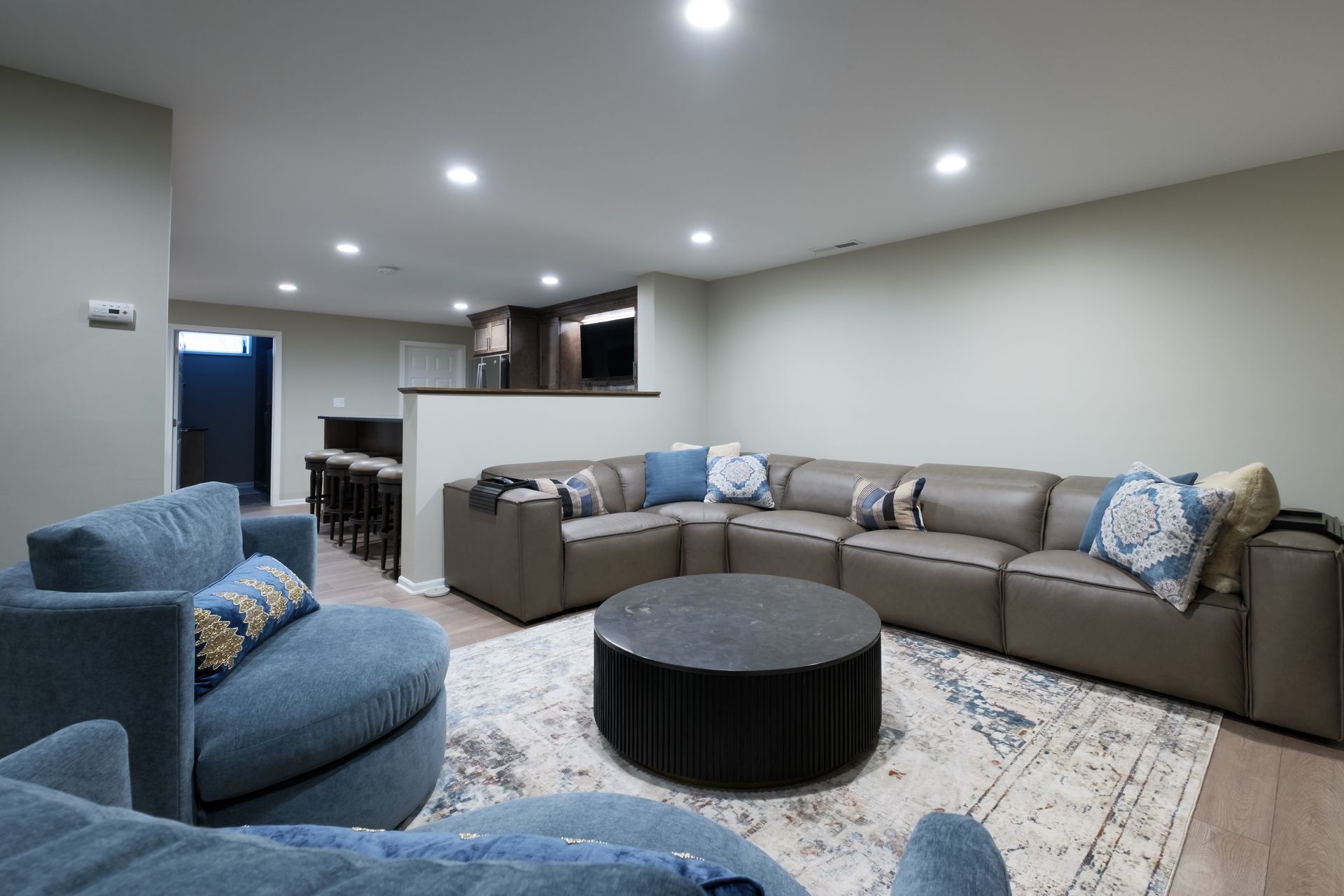
Basements often need thoughtful lighting because natural light may be limited. Recessed lighting, wall lighting, task lighting, and accent lighting can all help the space feel warmer and more finished.


Lighting should be planned before ceilings and soffits are finalized. Fixture placement, switch locations, ceiling obstructions, and room layout all need to work together.


A finished basement should feel comfortable, not dark or secondary.

Think About Storage and Future Use  

Even after finishing a basement, storage still matters. Seasonal items, mechanical access, household overflow, and utility zones should be planned into the layout.


Built-in storage, closets, unfinished storage rooms, or concealed access panels can help the basement remain useful without looking cluttered.


The best basement remodel plans for how the space will be used now and how the household may use it later.

Visit Our Design Studio in Stow, Ohio

Our Stow, Ohio design studio gives homeowners a place to review layout ideas, materials, flooring, lighting, cabinetry, and finish selections together. Seeing these details in context helps clarify how an unfinished basement can become a comfortable, finished living area.

Client Feedback on Our Remodeling Process

Homeowners often share that early planning helps them feel more confident before construction begins. By reviewing basement conditions, moisture concerns, utilities, layout options, and finish selections together, Anthony Slabaugh Remodeling & Design helps clients make decisions with clarity instead of pressure.

Frequently Asked Questions    

  • What should I check before finishing an unfinished basement?

    Check moisture conditions, ceiling height, foundation walls, utilities, windows, lighting, and access to mechanical systems. These details affect the layout, materials, comfort, and long-term performance of the finished basement.

  • Why is moisture important before basement finishing?

    Moisture should be reviewed before finishing because walls, flooring, trim, and built-ins can be affected by damp conditions. Any signs of water intrusion, humidity, staining, or musty odors should be evaluated before construction moves forward.

  • Can utilities be hidden in a finished basement?

    Utilities can often be concealed, but they still need practical access for maintenance. Electrical panels, shutoffs, HVAC components, sump equipment, and plumbing should be considered during the layout phase so the finished space remains functional.

  • How do ceiling height and ductwork affect basement finishing?

    Ceiling height, beams, ducts, pipes, and wiring can affect layout, lighting, soffits, and overall comfort. Reviewing these conditions early helps the finished basement feel planned instead of shaped by awkward obstructions.

Start With a Basement Plan Built Around Existing Conditions    

A refined finished basement starts with understanding what is already there. Schedule a consultation with Anthony Slabaugh Remodeling & Design or call (330) 940-3237 to plan unfinished basement finishing with confidence.

Recent Posts

Basement Egress Window Installation Process | ASRD
By Anthony Slabaugh Remodeling & Design June 23, 2026
Learn what happens during basement egress window installation, from excavation and foundation cutting to drainage, waterproofing, and finish integration.
Basement Bedroom Natural Light With Egress Windows | ASRD
By Anthony Slabaugh Remodeling & Design June 23, 2026
Learn how an egress window can improve basement bedroom natural light, comfort, ventilation, and livability in Hudson, Akron and surrounding areas.
Basement Egress Window Well and Drainage Planning | ASRD
By Anthony Slabaugh Remodeling & Design June 23, 2026
Learn how basement egress window wells, drainage, grading, and moisture planning support safer, more comfortable lower-level bedrooms.
Basement Bedroom Egress Window Guide for Homeowners | ASRD
By Anthony Slabaugh Remodeling & Design June 23, 2026
Learn when a basement bedroom egress window is needed, how it supports safety, and what homeowners should consider before planning a lower-level bedroom.
Basement Egress Window Installation Process | ASRD
By Anthony Slabaugh Remodeling & Design June 23, 2026
Learn what happens during basement egress window installation, from excavation and foundation cutting to drainage, waterproofing, and finish integration.
Basement Bedroom Natural Light With Egress Windows | ASRD
By Anthony Slabaugh Remodeling & Design June 23, 2026
Learn how an egress window can improve basement bedroom natural light, comfort, ventilation, and livability in Hudson, Akron and surrounding areas.
Basement Egress Window Well and Drainage Planning | ASRD
By Anthony Slabaugh Remodeling & Design June 23, 2026
Learn how basement egress window wells, drainage, grading, and moisture planning support safer, more comfortable lower-level bedrooms.

Share this article

CLIENT REVIEWS

Don’t Just Take Our Word For It

See below how our customers react on our ultimate pressure cleaning services