
Glass Walls vs. Solid Partitions for a Basement Office

Conflicting plans are not inevitable in remodeling. They result from fragmented structure. 


Anthony Slabaugh Remodeling & Design provides design-build home renovation services for homeowners in Hudson, Akron & surrounding areas who value architectural alignment and disciplined execution. 


If you are planning a renovation and want drawings that translate directly into construction without conflict, begin with a unified design-build model designed to eliminate misalignment before it begins.

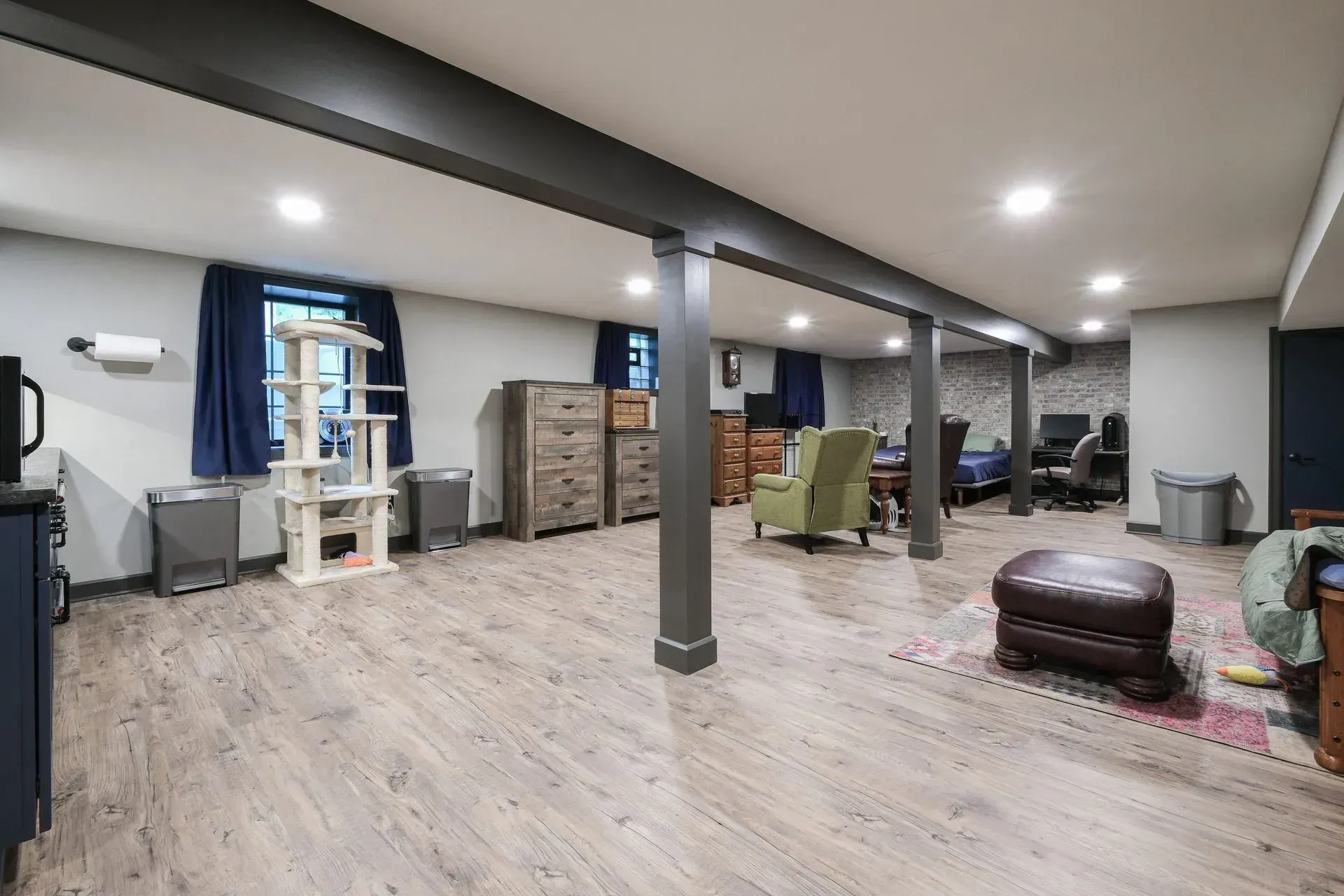
A basement office needs focus, privacy, and comfort, but it should not feel boxed in or disconnected from the rest of the lower level. For many homeowners, the design question becomes whether to use glass doors, interior windows, partial glass walls, or solid partitions to define the workspace.


The right basement office layout depends on how the office will be used. Video calls, deep focus, shared lower-level living spaces, natural light, acoustics, and visual privacy all play a role.


At Anthony Slabaugh Remodeling & Design, we help homeowners in Hudson, Akron and surrounding areas design basement home office remodels with thoughtful room separation, lighting, storage, and finish coordination.

Start With the Type of Privacy You Need  

Privacy is not one single thing. Some offices need visual privacy so the workspace feels separate. Others need acoustic privacy so phone calls, meetings, or household noise are less distracting.


Glass doors or interior windows can help define an office while allowing light to move through the basement. Solid partitions provide more visual separation and may support better sound control, depending on the full wall, door, ceiling, and finish design.


For homeowners throughout Bath, Fairlawn, and Chagrin Falls, the best choice often depends on whether the basement office is used occasionally or every day.

When Glass Makes Sense  

Glass wall office ideas work well when the homeowner wants separation without making the lower level feel closed off. Glass doors, interior windows, or partial glass panels can help a basement office borrow light from nearby areas and maintain a more open feeling.


This can be especially useful when the office is near a family room, hallway, stair landing, or media area. Glass can help the office feel intentional while still visually connected.


However, glass does not automatically solve sound concerns. If calls, confidential conversations, or focused work are priorities, the full design should be planned carefully

When Solid Partitions Work Better  

Solid partitions may be the better choice when privacy, sound control, storage, or built-ins are more important than openness. A solid wall can support cabinetry, shelving, a built-in desk, artwork, outlets, or video-call backgrounds more easily than a glass wall.


Solid walls can also help an office feel quieter and more enclosed, especially when paired with thoughtful door placement, ceiling planning, soft finishes, and room layout.


At Anthony Slabaugh Remodeling & Design, office partition ideas are reviewed as part of the whole basement plan, not as an isolated design choice.

Keep Circulation Clear  

Basements often have limited natural light, so closing off an office can affect how the lower level feels. Glass can help preserve light and sightlines, while solid walls can create a more private workspace.


The decision should consider the view from the stairs, the main basement living area, and the office desk. If the office is visible from shared spaces, the background, storage, and desktop clutter should also be considered.


A beautiful office should look refined whether the door is open or closed.

Basement Office Partition Guide  

Partition Option Best Use
Glass doors Defining the office while keeping visual openness
Interior windows Borrowing light from adjacent basement areas
Partial glass panels Creating separation without fully closing the room
Solid partitions Supporting privacy, built-ins, storage, and focused work
Hybrid approach Balancing light, privacy, and design continuity
Pocket or hinged doors Managing access, privacy, and floor space

This table is useful because basement office privacy depends on light, layout, sound, storage, and how the office connects to nearby rooms.

Consider Acoustic Privacy Carefully  

Basement office privacy often includes sound, especially for remote work, video calls, and focused tasks. Glass doors or interior windows may help define the room visually, but sound performance depends on the full assembly and installation details.


Solid partitions may offer more flexibility for acoustic planning, but they are not automatically soundproof. Doors, gaps, ceilings, floors, wall construction, and nearby mechanical systems all matter.


The safest approach is to plan acoustic privacy early, then choose partition details that support the way the office will be used.

Plan Storage and Built-Ins Around the Wall Type  

The wall type affects office storage. Solid walls can support built-in desks, upper cabinets, shelving, printer storage, and cord management. Glass walls create openness, but they limit where cabinetry and outlets can be placed.


If the office needs files, printers, chargers, routers, books, or a custom video-call background, storage planning should influence the partition decision.


A refined basement office balances design presence with practical daily use.

Coordinate the Office With Nearby Basement Spaces  

A basement office may sit near a family room, gym, guest suite, media room, or hallway. Glass or solid partitions should feel connected to those areas through trim, doors, flooring, lighting, hardware, and wall finishes.


The office can be distinct, but it should not feel like a separate project. The best lower-level designs create flow while giving each space a clear purpose.

Visit Our Design Studio in Stow, Ohio

Our Stow, Ohio design studio gives homeowners a place to review doors, cabinetry, lighting, finishes, hardware, storage options, and layout ideas together. Seeing these selections in context helps clarify whether glass details, solid partitions, or a hybrid approach make sense for a basement office.

Client Feedback on Our Remodeling Process

Homeowners often share that early planning helps them feel more confident about specialized spaces like basement offices. By reviewing privacy, light, sound, storage, wall types, doors, and finish coordination together, Anthony Slabaugh Remodeling & Design helps clients make decisions with clarity instead of pressure.

Frequently Asked Questions    

  • Are glass walls good for a basement office?

    Glass doors, interior windows, or partial glass panels can work well when you want visual separation without closing off the basement. They can help preserve light and openness, but sound privacy should be planned carefully.

  • Are solid partitions better for basement office privacy?

    Solid partitions are often better when the office needs more visual privacy, storage, built-ins, or acoustic planning. They can help create a focused workspace, especially when paired with the right doors, ceiling details, and finishes.

  • Can a basement office have both glass and solid walls?

    Yes, a hybrid approach can work well. A basement office may use solid walls for built-ins and storage, then add glass doors or interior windows to preserve light and connection to nearby lower-level spaces.

  • What should I consider before choosing office partitions?

    Consider privacy, sound, natural light, desk placement, storage, built-ins, outlets, video-call backgrounds, and nearby basement activity. The best partition choice supports the way the office will be used every day.

Start With a Basement Office Layout That Balances Privacy and Light  

A refined basement office should support focus, comfort, light, storage, and privacy without feeling disconnected from the home. Schedule a consultation with Anthony Slabaugh Remodeling & Design or call (330) 940-3237 to plan your basement home office remodel with confidence.

Recent Posts

Basement Egress Window Installation Process | ASRD
By Anthony Slabaugh Remodeling & Design June 23, 2026
Learn what happens during basement egress window installation, from excavation and foundation cutting to drainage, waterproofing, and finish integration.
Basement Bedroom Natural Light With Egress Windows | ASRD
By Anthony Slabaugh Remodeling & Design June 23, 2026
Learn how an egress window can improve basement bedroom natural light, comfort, ventilation, and livability in Hudson, Akron and surrounding areas.
Basement Egress Window Well and Drainage Planning | ASRD
By Anthony Slabaugh Remodeling & Design June 23, 2026
Learn how basement egress window wells, drainage, grading, and moisture planning support safer, more comfortable lower-level bedrooms.
Basement Bedroom Egress Window Guide for Homeowners | ASRD
By Anthony Slabaugh Remodeling & Design June 23, 2026
Learn when a basement bedroom egress window is needed, how it supports safety, and what homeowners should consider before planning a lower-level bedroom.
Basement Egress Window Installation Process | ASRD
By Anthony Slabaugh Remodeling & Design June 23, 2026
Learn what happens during basement egress window installation, from excavation and foundation cutting to drainage, waterproofing, and finish integration.
Basement Bedroom Natural Light With Egress Windows | ASRD
By Anthony Slabaugh Remodeling & Design June 23, 2026
Learn how an egress window can improve basement bedroom natural light, comfort, ventilation, and livability in Hudson, Akron and surrounding areas.
Basement Egress Window Well and Drainage Planning | ASRD
By Anthony Slabaugh Remodeling & Design June 23, 2026
Learn how basement egress window wells, drainage, grading, and moisture planning support safer, more comfortable lower-level bedrooms.

Share this article

CLIENT REVIEWS

Don’t Just Take Our Word For It

See below how our customers react on our ultimate pressure cleaning services