
Guest Bathroom Tile Strategy: How Scale and Layout Affect Balance

Conflicting plans are not inevitable in remodeling. They result from fragmented structure.
Anthony Slabaugh Remodeling & Design provides design-build home renovation services for homeowners in Hudson, Akron & surrounding areas who value architectural alignment and disciplined execution.
Tile is often selected based on color or pattern, but in smaller bathrooms, scale and layout play a more important role. The way tile is sized and arranged can significantly influence how the space feels.
In compact guest bathrooms, poor tile selection can create visual fragmentation. Excessive grout lines, inconsistent patterns, and improper scale can make the room feel smaller than it is.
At Anthony Slabaugh Remodeling & Design, we design guest bathrooms in Hudson, Akron and surrounding areas with a focus on proportion and layout. Tile is not just a finish. It is part of the spatial structure.
Scale defines perception.
Why Tile Scale Matters in Small Bathrooms
Tile size directly affects how the eye reads the space. Smaller tiles introduce more grout lines, which break up surfaces into smaller visual segments.
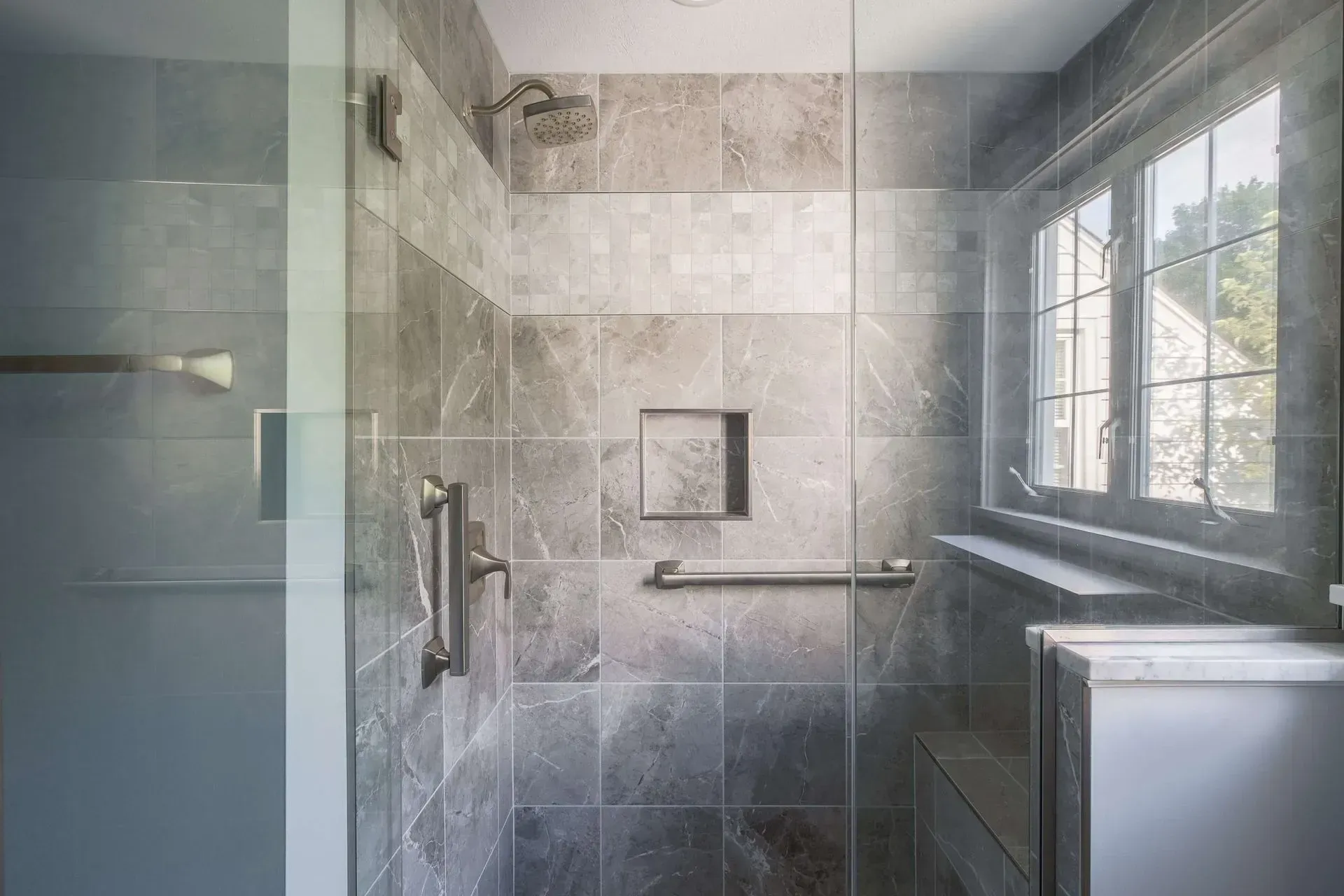
This fragmentation can make walls and floors feel busier and more confined. Larger tiles, on the other hand, reduce the number of interruptions, allowing surfaces to appear more continuous.
In homes throughout Bath, Fairlawn, and Chagrin Falls, larger format tile is often used to create a cleaner and more open appearance in smaller bathrooms.
Fewer interruptions create a larger visual field.
The Role of Grout Lines in Visual Perception
Grout lines may seem like a minor detail, but they have a strong impact on how a space is perceived. Each line creates a visual break that the eye registers.
When too many grout lines are present, the surface appears divided and less cohesive. This can make the room feel tighter.
By reducing grout lines through larger tile formats and careful layout, the space feels more unified and expansive.
Continuity improves balance.
Large-Format Tile in Compact Spaces
Large-format tile is often associated with larger rooms, but it can be even more effective in smaller bathrooms when used correctly.
By covering more surface area with fewer pieces, large tiles create a smoother and more continuous appearance. This helps reduce visual clutter and supports a more refined design.
In homes throughout Hudson and Aurora, large-format tile is frequently used to enhance guest bathrooms without increasing their size.
Larger scale supports openness.
Aligning Tile Layout With Room Geometry
Tile layout must align with the geometry of the room. Patterns should follow the direction of the space rather than compete with it.
When tile is aligned with walls, fixtures, and key lines within the layout, it reinforces structure. Misaligned patterns can disrupt balance and create visual tension.
At Anthony Slabaugh Remodeling & Design, tile layout is planned in coordination with the full design to ensure consistency.
Alignment creates cohesion.
Floor-to-Wall Continuity
Extending tile from the floor to the walls can further enhance the sense of space. When the same material is used across multiple surfaces, transitions become less noticeable.
This continuity allows the eye to move freely through the room, reducing the perception of boundaries.
In homes throughout Pepper Pike and Hunting Valley, this approach is often used to create a more unified and open environment.
Consistency strengthens perception.
Avoiding Overly Complex Patterns
While decorative tile can add interest, excessive patterns can overwhelm a small space. High contrast designs and intricate layouts introduce visual noise.
A more refined approach focuses on simplicity and controlled variation. This allows the tile to support the design rather than dominate it.
At Anthony Slabaugh Remodeling & Design, we prioritize clarity over complexity in smaller bathrooms.
Restraint enhances refinement.
Balancing Texture and Finish
Texture and finish also influence how tile is perceived. Glossy surfaces can reflect light and enhance brightness, while matte finishes provide a softer appearance.
The key is to balance these elements so they complement the overall design. Too much contrast can disrupt the visual flow of the space.
Proper selection ensures that tile contributes to both function and perception.
Material should support the experience.
Proportion Between Tile and Fixtures
Tile size must relate to the scale of fixtures within the bathroom. Oversized tiles in very tight spaces must be carefully planned to avoid awkward cuts or misalignment.
When tile and fixtures are proportioned correctly, the space feels balanced and intentional. When they are not, the design can feel disconnected.
At Anthony Slabaugh Remodeling & Design, proportion is evaluated across all elements to ensure consistency.
Balance comes from coordination.
The Role of Design-Build Planning
Tile selection and layout must be planned early in the design process. Decisions about scale, alignment, and transitions affect installation and overall performance.
Our design-build approach ensures that tile is integrated into the full layout, rather than treated as a final decision.
Planning ensures that the finished result reflects the intended design.
Visit Our Design Studio in Stow, Ohio
Understanding how tile scale and layout affect a space is easier when you can see different options in context. At Anthony Slabaugh Remodeling & Design, our Stow, Ohio design studio allows homeowners from Hudson, Akron and surrounding areas to explore tile strategies that improve both function and perception.
We help clients select materials that support a cohesive and refined result.
Clarity leads to better decisions.
Frequently Asked Questions
Does larger tile make a small bathroom look bigger?
Yes, larger tile can make a small bathroom feel bigger by reducing the number of grout lines. This creates a more continuous surface, which allows the eye to move more freely and perceive the space as more open.
Why are grout lines important in tile design?
Grout lines create visual breaks between tiles. Too many lines can make a space feel busy and fragmented. Reducing grout lines helps create a more cohesive appearance and improves how the room is perceived.
Can large tiles work in very small bathrooms?
Yes, large tiles can work well when planned correctly. Proper layout ensures that cuts are minimized and alignment is maintained. This allows the tile to enhance the space rather than disrupt it.
Should floor and wall tile match in a guest bathroom?
Using the same or similar tile on floors and walls can create continuity and make the space feel larger. This approach reduces visual transitions and supports a more cohesive design.
When should tile layout be planned in a remodel?
Tile layout should be planned during the design phase. Early planning allows scale, alignment, and material selection to be coordinated with the overall layout, ensuring a more refined final result.
Start With a Clear Plan
Small bathrooms benefit from thoughtful material selection. Schedule a consultation with Anthony Slabaugh Remodeling & Design or call (330) 940-3237 to create a space where tile, layout, and proportion work together seamlessly.
Recent Posts
Share this article
CLIENT REVIEWS
Don’t Just Take Our Word For It
See below how our customers react on our ultimate pressure cleaning services