

Drain Placement Strategy: How It Impacts Tile Layout and Maintenance

Conflicting plans are not inevitable in remodeling. They result from fragmented structure.
Anthony Slabaugh Remodeling & Design provides design-build home renovation services for homeowners in Hudson, Akron & surrounding areas who value architectural alignment and disciplined execution.
Drain placement is one of the most overlooked decisions in shower design, yet it has a direct impact on how the entire system performs. While tile and fixtures define the visual outcome, the location and type of drain determine how water moves, how tile is installed, and how the shower holds up over time.
A poorly planned drain can create uneven surfaces, awkward tile cuts, and long-term maintenance issues. A well-planned drain allows the entire shower to function as a cohesive system.
At Anthony Slabaugh Remodeling & Design, we design bathrooms in Hudson, Akron and surrounding areas where drain placement is treated as a critical planning decision. It is not an afterthought. It is a foundation for both performance and craftsmanship.
Precision begins at the lowest point.
Why Drain Placement Matters More Than It Seems
Every shower is designed to direct water toward a single point. Where that point is located affects everything from slope to tile layout.
If the drain is placed without considering the full design, the result can include inconsistent pitch, difficult tile installation, and areas where water does not flow efficiently.
In homes throughout Bath, Fairlawn, and Chagrin Falls, the most refined showers are those where the drain location is aligned with both structure and finish.
Flow must be planned, not assumed.
Linear Drains vs Point Drains
The type of drain selected plays a major role in how the shower is constructed. Linear drains and point drains each require different approaches.
A linear drain allows water to flow in a single direction. This supports a consistent slope across the floor and works well with larger format tile. It also allows for cleaner visual lines.
A point drain requires slope from multiple directions, creating a more complex surface. This often results in smaller tile sections and more visible cuts.
At Anthony Slabaugh Remodeling & Design, we select drain types based on how they support both performance and overall design.
Drain type shapes the entire system.
How Drain Placement Affects Tile Layout
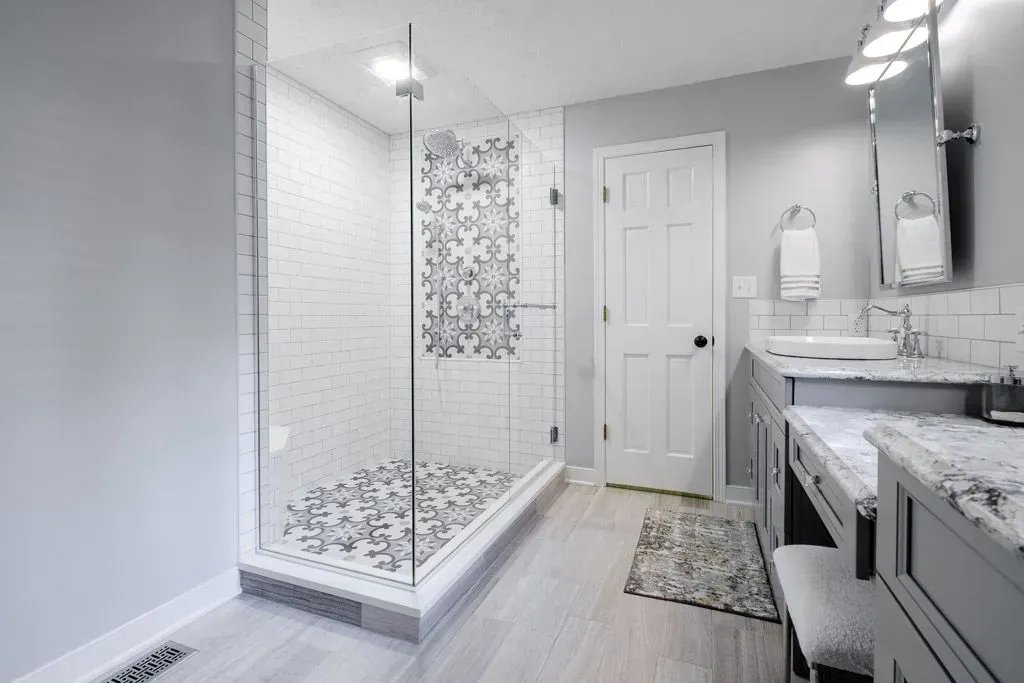
Tile layout is directly influenced by drain location. When the drain is positioned thoughtfully, tile patterns can remain consistent and visually clean.
Poor placement can force irregular cuts, disrupt symmetry, and create a less refined appearance. This becomes especially noticeable with larger format tile.
In homes throughout Hudson and Aurora, careful drain planning allows tile to align naturally with the layout of the space.
Craftsmanship begins with alignment.
Slope and Surface Consistency
Proper slope is essential for directing water efficiently. The placement of the drain determines how that slope is created across the shower floor.
With a linear drain, slope can be consistent in one direction, resulting in a smoother surface. With a point drain, slope must be created from multiple angles, which can introduce variation.
At Anthony Slabaugh Remodeling & Design, we design slope intentionally to ensure both performance and comfort underfoot.
Surface consistency improves usability.
Maintenance and Long-Term Performance
Drain placement also affects how easy the shower is to maintain. Poorly positioned drains can allow water to collect in certain areas, increasing the likelihood of buildup and wear.
A well-placed drain supports efficient water flow, reducing standing water and helping the shower remain cleaner over time.
In homes throughout Pepper Pike and Hunting Valley, this level of planning contributes to both durability and ease of maintenance.
Performance extends beyond installation.
Aligning Drain Location With Layout Geometry
Bathrooms are often used during early morning and nighttime hours. Bright overhead lighting can feel overwhelming in these moments.
Low-level lighting provides a softer alternative that improves safety without disrupting comfort. This can include subtle lighting near the floor or within cabinetry.
At Anthony Slabaugh Remodeling & Design, we integrate this layer to support both function and wellness.
Lighting should adapt to the time of day.
Avoiding Common Planning Mistakes
Many issues with showers begin during the planning phase. When drain placement is treated as a secondary decision, it can lead to complications during installation.
Common problems include misaligned tile, uneven slope, and inefficient drainage. These issues often require adjustments that compromise the final result.
Our approach focuses on resolving these decisions early so the installation process remains consistent and controlled.
Planning prevents compromise..
The Role of Design-Build Coordination
Drain placement requires coordination between design, plumbing, waterproofing, and tile installation. Each element must align for the system to perform correctly.
At Anthony Slabaugh Remodeling & Design, our design-build process ensures that these decisions are made together. This creates a more reliable and cohesive result.
Every detail is considered within the full system.
Visit Our Design Studio in Stow, Ohio
Understanding how drain placement affects a shower is easier when you can see how layout, tile, and structure work together. At Anthony Slabaugh Remodeling & Design, our Stow, Ohio design studio allows homeowners from Hudson, Akron and surrounding areas to explore design strategies that prioritize performance.
We help clients make informed decisions that improve both appearance and durability.
Clarity leads to better outcomes.
Frequently Asked Questions
Why is drain placement important in a shower?
Drain placement determines how water flows across the surface and how the floor is constructed. It affects slope, tile layout, and long-term performance. Proper placement ensures efficient drainage and helps prevent issues such as pooling or uneven surfaces.
What is the difference between a linear drain and a point drain?
A linear drain allows water to flow in one direction, creating a consistent slope and supporting larger tile. A point drain requires slope from multiple directions, which can result in more complex tile layouts and smaller tile sections.
Does drain placement affect tile installation?
Yes, drain placement directly impacts how tile is installed. Poor placement can lead to uneven cuts and disrupted patterns. Thoughtful planning allows for cleaner lines and a more cohesive appearance throughout the shower.
How does drain placement impact maintenance?
Proper drain placement helps water flow efficiently, reducing standing water and buildup. This makes the shower easier to maintain and improves long-term durability. Poor placement can lead to areas where water collects and causes wear.
When should drain placement be decided in a remodel?
Drain placement should be planned early in the design phase. This allows it to be coordinated with layout, slope, and tile design. Early planning ensures the system functions properly and avoids complications during construction.
Start With a Clear Plan
A well-designed shower starts with precise planning. Schedule a consultation with Anthony Slabaugh Remodeling & Design or call (330) 940-3237 to create a bathroom where drain placement, tile, and performance are fully aligned.
Recent Posts


Share this article
CLIENT REVIEWS
Don’t Just Take Our Word For It
See below how our customers react on our ultimate pressure cleaning services