
Lighting Design for Windowless Basement Bathrooms

Conflicting plans are not inevitable in remodeling. They result from fragmented structure.
Anthony Slabaugh Remodeling & Design provides design-build home renovation services for homeowners in Hudson, Akron & surrounding areas who value architectural alignment and disciplined execution.
A windowless basement bathroom needs more thoughtful lighting than many other rooms in the home. Without natural light, the space can feel flat, shadowed, or closed in if the lighting plan is treated as an afterthought.
The best windowless basement bathroom lighting combines vanity lighting, shower lighting, ceiling lighting, mirror placement, finish coordination, and warm visual balance. The goal is to create a bathroom that feels bright, comfortable, and refined without becoming harsh.
At
Anthony Slabaugh Remodeling & Design, we help homeowners in Hudson, Akron and surrounding areas plan basement bathroom installation with lighting, ventilation, layout, plumbing, and finish details considered together.
Start With the Bathroom’s Purpose
A basement bathroom may serve an entertainment room, guest suite, home gym, family living area, or home office. Each use affects the lighting plan.
A guest bathroom may need softer, more welcoming light. A bathroom near a gym may need brighter, cleaner visibility. A powder room near an entertainment space may benefit from more decorative lighting and refined finishes.
For homeowners throughout Bath, Fairlawn, and Chagrin Falls, matching the lighting to the bathroom’s purpose helps the room feel intentional instead of purely functional.
Layer the Lighting
Basement bathroom lighting ideas should include more than one light source. A single ceiling fixture often creates shadows, especially at the vanity. A layered plan can make the room feel more open and easier to use.
Ceiling lighting can provide general brightness. Vanity lighting can improve visibility at the mirror. Shower lighting can make an enclosed shower feel safer and more comfortable. Accent lighting can add warmth when the bathroom is used by guests.
At
Anthony Slabaugh Remodeling & Design, lighting is reviewed with layout, mirrors, tile, cabinetry, and ceiling conditions so the room feels balanced.
Give the Vanity Special Attention
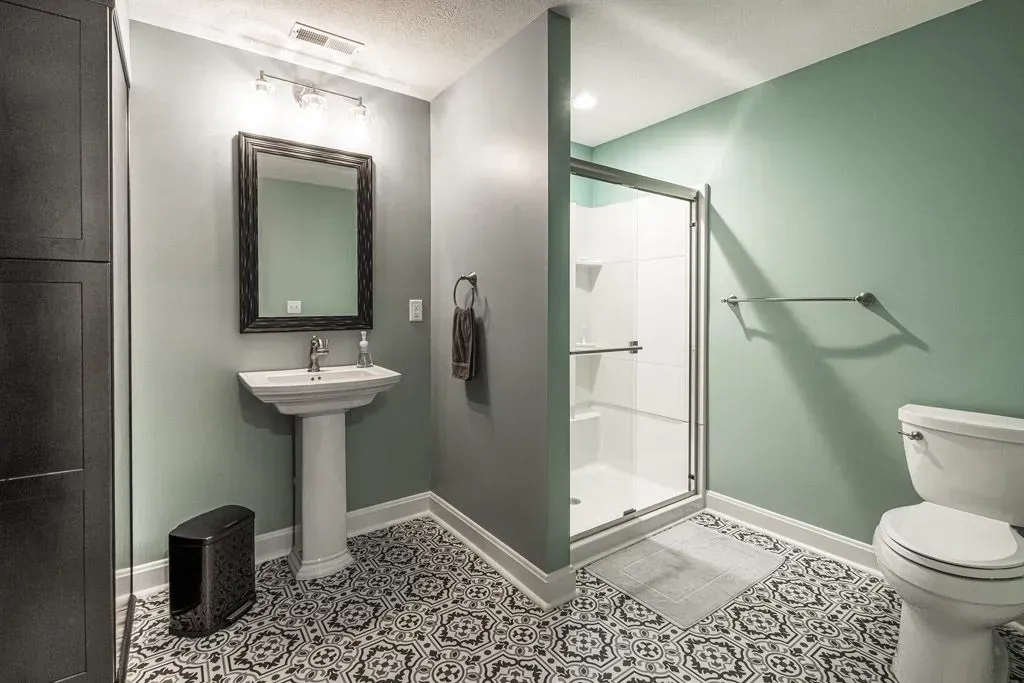
Basement vanity lighting is one of the most important parts of a windowless bathroom. Poor placement can create shadows on the face or make the mirror area feel dim.
Lighting at or near the mirror should be planned around the vanity width, mirror size, ceiling height, and wall space. Depending on the design, lighting may include sconces, an above-mirror fixture, integrated mirror lighting, or a combination of sources.
The vanity should feel bright enough for daily use without feeling clinical.
Do Not Forget the Shower
Shower lighting matters in a basement bathroom, especially when the shower is enclosed or located away from the main ceiling lights. A dim shower can make even a luxury basement bathroom feel unfinished.
Shower lighting should be planned with waterproofing, ceiling conditions, ventilation, tile, glass, and fixture placement in mind. The light should improve comfort and visibility while fitting the overall bathroom design.
A well-lit shower feels more finished and easier to use.
Windowless Basement Bathroom Lighting Guide
| Lighting Area | Why It Matters |
|---|---|
| Ceiling lighting | Provides overall brightness and helps the room feel open |
| Vanity lighting | Reduces shadows and improves mirror visibility |
| Shower lighting | Makes enclosed shower areas feel safer and more complete |
| Accent lighting | Adds warmth and supports a refined guest experience |
| Mirror planning | Reflects light and helps the room feel larger |
| Finish coordination | Prevents the bathroom from feeling harsh or flat |
This table is useful because windowless bathrooms depend on several light sources working together.
Use Mirrors to Reflect Light
Mirrors can help a windowless basement bathroom feel larger and brighter. Their placement should be planned with the lighting, vanity, door swing, shower glass, and sightlines.
A large mirror may help expand the room visually. A framed mirror or integrated mirror lighting may add polish. The best choice depends on the bathroom size and style.
Mirrors should support the lighting plan, not simply fill wall space.
Choose Finishes That Work With the Lighting
Wall color, tile, grout, cabinetry, counters, hardware, and flooring all affect how light behaves in a basement bathroom. Dark finishes can feel refined, but they may need stronger or warmer lighting. Light finishes can brighten the room, but they should not feel cold or unfinished.
The most successful designs balance contrast, texture, and warmth. A windowless bathroom can feel elevated when finishes and lighting are selected together.
Coordinate Lighting With Ventilation and Ceiling Conditions
Basement bathrooms often require careful ceiling planning. Exhaust fan placement, duct routing, shower lighting, recessed fixtures, soffits, and ceiling height can all affect the final lighting design.
Lighting and ventilation should be planned together, especially in bathrooms with showers. This helps the room feel comfortable, fresh, and visually complete.
Visit Our Design Studio in Stow, Ohio
Our Stow, Ohio design studio gives homeowners a place to review lighting, tile, mirrors, vanities, plumbing fixtures, hardware, flooring, and finish selections together. Seeing these details in context helps clarify how a windowless basement bathroom can feel bright, refined, and comfortable.
Client Feedback on Our Remodeling Process
Homeowners often share that early planning helps them feel more confident about detailed bathroom decisions. By reviewing lighting, mirrors, tile, ventilation, shower details, vanity placement, and finish coordination together, Anthony Slabaugh Remodeling & Design helps clients make decisions with clarity instead of pressure.
Frequently Asked Questions
What lighting works best in a windowless basement bathroom?
Layered lighting works best. Ceiling lighting provides general brightness, vanity lighting improves mirror visibility, shower lighting adds comfort, and accent lighting can add warmth. The goal is a balanced bathroom that feels bright without harsh glare.
How do you make a windowless basement bathroom feel brighter?
Use layered lighting, reflective mirrors, coordinated finishes, and thoughtful tile and wall colors. Light should come from more than one direction so the room feels open, comfortable, and visually balanced.
Does a basement shower need its own light?
A basement shower often benefits from dedicated lighting, especially if it is enclosed or set away from the vanity area. Shower lighting should be planned with waterproofing, ventilation, ceiling conditions, glass, and tile layout.
How should vanity lighting be placed in a basement bathroom?
Vanity lighting should reduce shadows at the mirror and provide comfortable visibility. Placement depends on mirror size, vanity width, ceiling height, and wall space. Sconces, integrated mirror lighting, or above-mirror lighting may all be considered.
Start With Bathroom Lighting Designed for Comfort
A windowless basement bathroom should feel bright, refined, and comfortable through thoughtful lighting, mirrors, finishes, and ventilation planning. Schedule a consultation with Anthony Slabaugh Remodeling & Design or call (330) 940-3237 to plan your basement bathroom installation with confidence.
Recent Posts
Share this article
CLIENT REVIEWS
Don’t Just Take Our Word For It
See below how our customers react on our ultimate pressure cleaning services