
Designing a Luxury Basement Shower: Waterproofing and Ventilation

Conflicting plans are not inevitable in remodeling. They result from fragmented structure.
Anthony Slabaugh Remodeling & Design provides design-build home renovation services for homeowners in Hudson, Akron & surrounding areas who value architectural alignment and disciplined execution.
A basement shower can make a lower-level bathroom feel more complete, especially when it supports a guest suite, home gym, entertainment space, or flexible family living area. But a shower below grade needs more planning than fixtures and tile selections.
The best custom basement shower designs combine refined finishes with practical waterproofing, ventilation, drainage, lighting, and moisture planning. A beautiful shower should also perform well in a lower-level environment.
At
Anthony Slabaugh Remodeling & Design, we help homeowners in Hudson, Akron and surrounding areas plan basement bathroom installation with the technical details and finish coordination considered from the start.
Start With the Shower’s Purpose
Before choosing tile or glass, consider how the shower will be used. A shower near a basement guest suite may need a calm, private feel. A shower near a home gym may need durability, easy cleaning, and strong ventilation. A shower in a family basement may need practical storage and comfortable access.
For homeowners throughout Bath, Fairlawn, and Chagrin Falls, matching the shower design to the basement’s purpose helps prevent overbuilding or underplanning.
A luxury shower should feel intentional, not added simply because there was space.
Waterproofing Comes Before Finishes
Basement shower waterproofing is one of the most important parts of the project. Tile and grout are visible finish materials, but they are not the complete moisture-management system.
A well-planned shower should address waterproofing behind the finished surface, proper transitions, shower base or pan design, wall conditions, corners, niches, benches, and glass details. These elements should be planned before finish selections are finalized.
At
Anthony Slabaugh Remodeling & Design, waterproofing is treated as part of the overall bathroom planning process, not as an afterthought.
Plan Ventilation Early
Basement bathroom ventilation is especially important when a shower is included. Steam, humidity, and limited natural airflow can make the room feel uncomfortable if ventilation is not properly planned.
Exhaust fan placement, duct routing, ceiling conditions, room size, shower enclosure style, and nearby spaces should all be considered. A shower tucked into a lower-level bathroom may need more attention than a powder room because moisture is part of regular use.
Ventilation helps the bathroom feel fresh and supports the long-term comfort of the space.
Think About Drainage and Plumbing Access
A custom basement shower also requires thoughtful plumbing and drainage planning. Existing rough-ins, slab conditions, drain location, water supply, venting, and access all influence the final layout.
If the basement bathroom is being added without existing rough-ins, the shower location may affect concrete work and plumbing complexity. Even when rough-ins exist, shower size, curb style, drain type, and fixture placement should be reviewed early.
The goal is a shower layout that looks refined and works with the home’s conditions.
Basement Shower Planning Guide
| Shower Detail | Why It Matters |
|---|---|
| Waterproofing | Protects the shower assembly behind tile and glass |
| Ventilation | Helps manage steam, humidity, and comfort |
| Drainage | Supports proper shower function and layout feasibility |
| Tile selection | Affects durability, cleaning, comfort, and appearance |
| Shower storage | Keeps products organized without visual clutter |
| Lighting | Makes the shower feel brighter, safer, and more refined |
This table is useful because a luxury basement shower depends on both visible design choices and hidden performance details.
Choose Tile With Performance in Mind
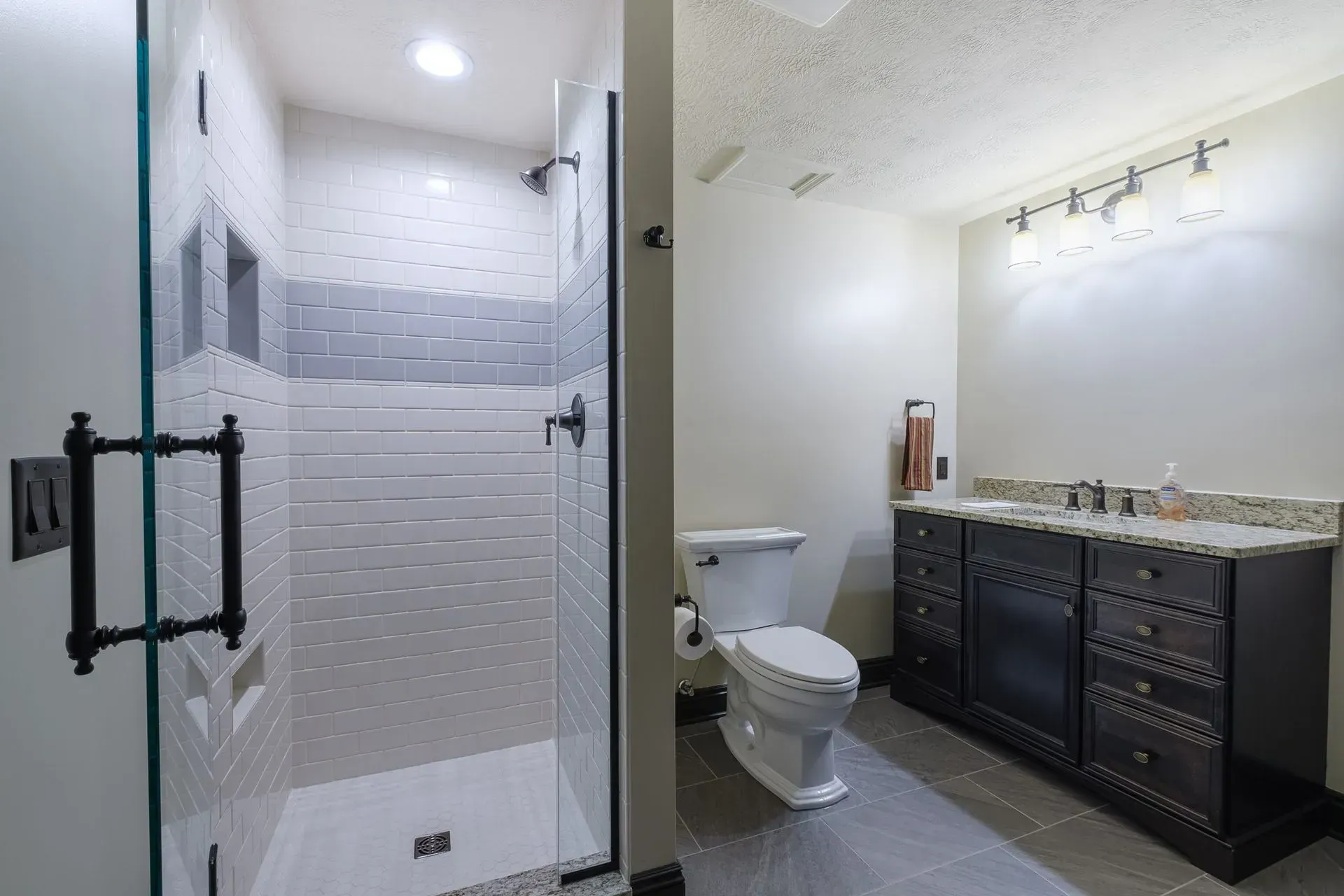
Basement shower ideas should include both appearance and practicality. Tile, grout, trim pieces, shower floors, niches, benches, and wall layouts should be selected with moisture, cleaning, slip awareness, and long-term use in mind.
Large-format tile can create a clean look. Smaller tile may be useful in certain shower floor applications. Accent tile can add interest when used with restraint.
A luxury shower feels refined because the materials are coordinated and appropriate for the space.
Add Storage Without Creating Clutter
A basement shower should include a plan for soap, shampoo, towels, and daily essentials. Niches, ledges, cabinetry outside the shower, hooks, and linen storage can all help.
Storage should be placed where it is easy to use but does not interrupt the shower’s clean design. A cluttered shower can make even premium finishes feel less polished.
Good storage makes the bathroom easier to maintain.
Coordinate Lighting, Glass, and Finishes
Lighting affects how a basement shower feels. Because many basement bathrooms lack windows, lighting should be layered and carefully placed. Shower lighting, vanity lighting, mirror lighting, and ambient light all contribute to comfort.
Glass placement and finish selections should also be coordinated. Clear glass may make the bathroom feel more open, while privacy, cleaning, and layout should still be considered.
The shower should feel connected to the vanity, flooring, trim, and overall bathroom design.
Visit Our Design Studio in Stow, Ohio
Our Stow, Ohio design studio gives homeowners a place to review tile, plumbing fixtures, shower glass, lighting, vanities, hardware, and finish selections together. Seeing these details in context helps clarify how a basement shower can feel luxurious while still respecting waterproofing and ventilation needs.
Client Feedback on Our Remodeling Process
Homeowners often share that early planning helps them feel more confident about technical bathroom details. By reviewing waterproofing, ventilation, tile, plumbing, lighting, storage, and finish coordination together, Anthony Slabaugh Remodeling & Design helps clients make decisions with clarity instead of pressure.
Frequently Asked Questions
Why is waterproofing important in a basement shower?
Waterproofing is important because tile and grout alone are not the full moisture-management system. A basement shower should be planned with proper waterproofing behind finished surfaces, including transitions, corners, niches, benches, and shower base details.
Does a basement shower need special ventilation?
A basement shower needs thoughtful ventilation because steam and humidity can linger in lower-level spaces. Fan placement, duct routing, room size, ceiling conditions, and shower enclosure style should be considered early in the bathroom planning process.
What should I consider when designing a custom basement shower?
Consider waterproofing, ventilation, drainage, plumbing access, tile selection, lighting, storage, glass, and how the shower supports the lower-level space. A shower near a guest suite may have different needs than one near a home gym.
Can a basement shower feel luxurious and practical?
Yes, a basement shower can feel luxurious and practical when the visible finishes and hidden performance details are planned together. Tile, lighting, glass, storage, ventilation, and waterproofing should work as one coordinated bathroom design.
Start With a Basement Shower Designed to Perform Beautifully
A refined basement shower should support comfort, moisture management, ventilation, storage, lighting, and long-term use. Schedule a consultation with Anthony Slabaugh Remodeling & Design or call (330) 940-3237 to plan your basement bathroom installation with confidence.
Recent Posts
Share this article
CLIENT REVIEWS
Don’t Just Take Our Word For It
See below how our customers react on our ultimate pressure cleaning services