
Sound Control in Open-Concept Kitchens: What Most Remodels Overlook

Conflicting plans are not inevitable in remodeling. They result from fragmented structure.
Anthony Slabaugh Remodeling & Design provides design-build home renovation services for homeowners in Hudson, Akron & surrounding areas who value architectural alignment and disciplined execution.
Open-concept kitchens are designed for connection, flow, and shared living. While these spaces create visual openness, they also introduce a challenge that is often overlooked during remodeling. Sound travels freely.
Without walls to absorb or contain it, noise from appliances, conversation, and daily activity can carry across the entire home. What feels open can quickly feel overwhelming.
At Anthony Slabaugh Remodeling & Design, we design kitchens for homeowners in Hudson, Akron and surrounding areas who expect both beauty and comfort. Sound control is part of how a space functions, not just how it looks.
A well-designed kitchen should feel calm, not chaotic.
Why Noise Becomes a Problem in Open Kitchens
In traditional kitchens, walls help contain sound. In open layouts, those barriers are removed. This allows noise to travel between the kitchen, dining, and living areas without interruption.
Common sources of noise include:
- Dishwashers and refrigerators
- Range hoods and ventilation systems
- Hard surfaces that reflect sound
- Conversations and daily activity
- Clattering dishes and cookware
In homes throughout Bath, Fairlawn, and Chagrin Falls, these combined sounds can create an environment that feels louder than expected.
Sound should be managed, not left to chance.
The Impact of Hard Surfaces
Modern kitchens often feature materials such as stone countertops, hardwood flooring, and tile backsplashes. While these materials are durable and visually appealing, they also reflect sound.
When sound waves bounce between hard surfaces, noise becomes amplified rather than absorbed.
This can result in:
- Echo within the kitchen
- Increased noise levels during gatherings
- Reduced speech clarity
- A space that feels more active than comfortable
At Anthony Slabaugh Remodeling & Design, we consider how materials interact with sound as part of the overall design process.
Material selection affects more than appearance.
Layout and Spatial Planning for Sound Control
The layout of an open-concept kitchen influences how sound moves through the space. Strategic planning can reduce how far noise travels and how it is perceived.
Effective layout strategies include:
- Positioning noisy appliances away from primary seating areas
- Creating distance between cooking zones and living spaces
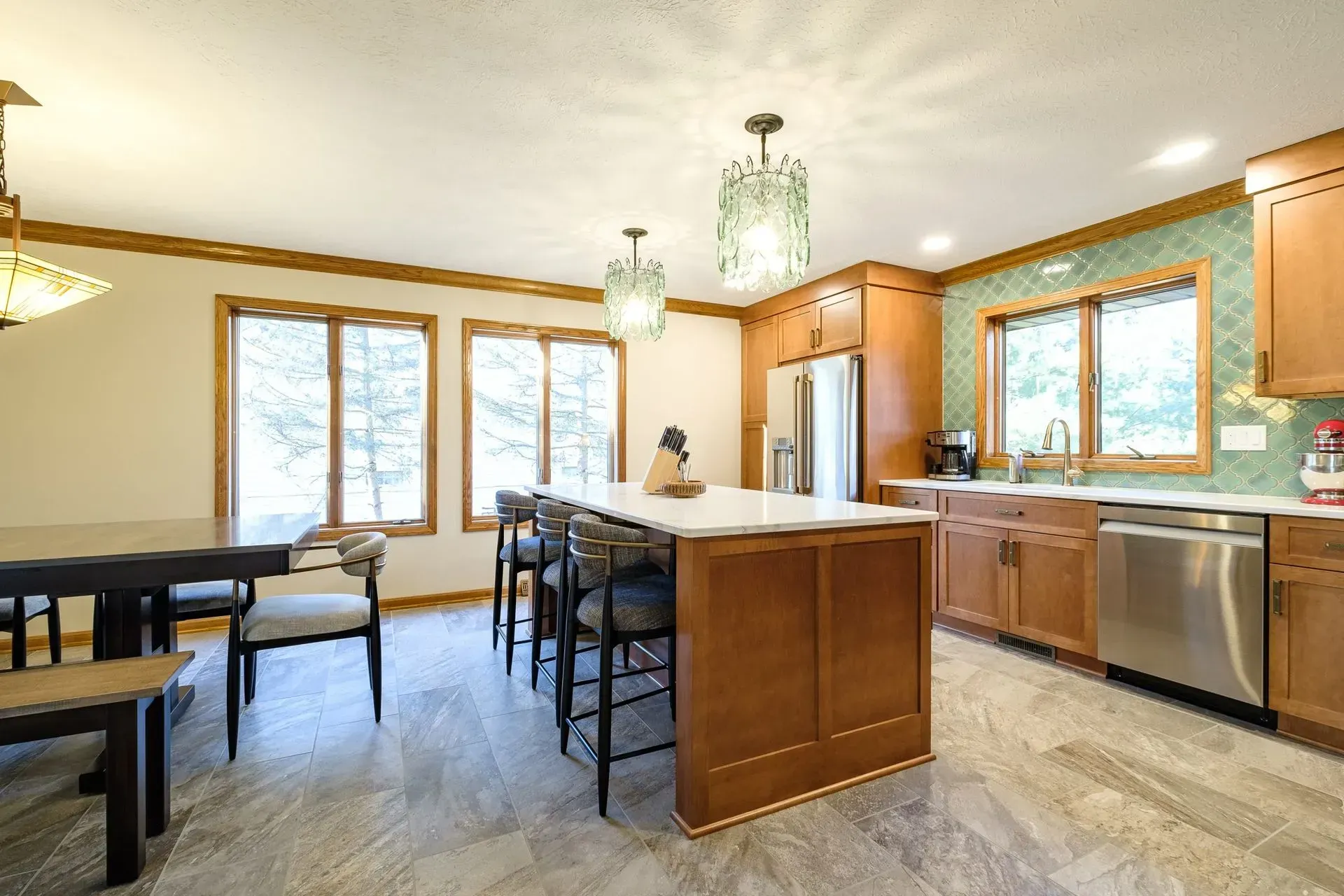
- Using islands to help interrupt sound paths
- Defining zones that separate activity levels
In homes throughout Hudson and Aurora, thoughtful layout planning can significantly improve comfort without altering the open design.
Placement influences perception.
Cabinetry and Built-In Sound Absorption
Cabinetry is often viewed as a storage solution, but it also plays a role in sound control. Built-in elements help absorb and diffuse sound within the kitchen.
Soft-close mechanisms, solid cabinet construction, and integrated panels all contribute to reducing noise.
Cabinet design can help:
- Minimize impact noise from doors and drawers
- Reduce vibration from appliances
- Break up sound reflection across surfaces
These details may seem subtle, but they contribute to a more refined experience.
Quiet performance reflects quality construction.
Appliance Selection and Noise Levels
Not all appliances operate at the same sound level. In open-concept kitchens, appliance noise becomes more noticeable because it is not contained.
When planning a remodel, it is important to consider:
- Dishwasher noise ratings
- Range hood sound levels
- Refrigerator operation noise
- Ventilation system performance
In high-end kitchens throughout Pepper Pike and Hunting Valley, quieter appliances are often selected to maintain a more comfortable environment.
Performance includes both function and sound.
Using Materials to Soften Sound
While many kitchen materials reflect sound, others can help absorb it. Introducing balance within the space improves acoustics without compromising design.
Examples include:
- Upholstered seating at islands
- Area rugs in adjacent living spaces
- Wood elements that soften reflections
- Fabric window treatments
These elements help reduce echo and create a more comfortable atmosphere.
Balance between hard and soft materials improves the experience.
Ceiling Design and Sound Behavior
Ceiling design plays a major role in how sound travels. Flat ceilings can allow sound to reflect evenly across the space, while varied ceiling treatments can help diffuse it.
Design strategies may include:
- Coffered or beamed ceilings
- Changes in ceiling height between zones
- Integrated architectural details that break up sound paths
At Anthony Slabaugh Remodeling & Design, ceiling design is considered not only for visual impact but also for how it influences acoustics.
Structure affects sound as much as it affects appearance.
Lighting and Sound Perception
While lighting does not directly reduce sound, it influences how a space feels. Bright, evenly lit spaces can feel more active, while layered lighting can create a calmer atmosphere.
Dimming controls and layered lighting help:
- Reduce perceived intensity of the space
- Create separation between zones
- Enhance comfort during different times of day
In open-concept kitchens, lighting and acoustics work together to shape the overall experience.
Perception is influenced by multiple factors.
The Role of Design-Build Coordination
Sound control is not achieved through a single solution. It requires coordination across layout, materials, appliances, and architectural elements.
At Anthony Slabaugh Remodeling & Design, our design-build process ensures:
- Layout planning considers sound flow
- Materials are selected with both aesthetics and acoustics in mind
- Appliances are evaluated for performance and noise
- The final space supports both function and comfort
This level of coordination ensures that the kitchen performs well in everyday use.
Attention to detail defines the difference.
Open-Concept Kitchen Remodeling Planning Resources
If you are still exploring your options, these related guides may help:
- Open-Concept Kitchen Remodeling
- The Invisible Beam: Flush-Mount Strategies for Load-Bearing Wall Removal
- Zoning Without Walls: Using Architecture to Define an Open Kitchen
- Open-Concept Kitchens in Older Homes: Structural Challenges to Expect
- How Removing Walls Impacts HVAC, Electrical, and Plumbing in Kitchen Remodeling
Frequently Asked Questions
Why are open-concept kitchens louder?
Because sound is not contained by walls, allowing it to travel freely between spaces.
Can noise be reduced without closing off the kitchen?
Yes. Layout, materials, and appliance selection can all help manage sound.
Do appliances make a big difference in noise levels?
Yes. Quieter appliances significantly improve comfort in open spaces.
What materials help reduce sound?
Soft materials such as upholstered seating and textiles help absorb sound.
Should sound control be planned during remodeling?
Yes. It should be considered early in the design process.
Visit Our Design Studio in Stow, Ohio
Sound control is best understood within the full context of your home. At Anthony Slabaugh Remodeling & Design, our Stow, Ohio design studio allows homeowners from Hudson, Akron and surrounding areas to explore how layout, materials, and design choices influence both sound and experience.
We help clients create kitchens that feel as good as they look.
Comfort is part of good design.
Start With a Clear Plan
Open-concept kitchens should feel connected without becoming overwhelming. Schedule a consultation with Anthony Slabaugh Remodeling & Design or call (330) 940-3237 to design a kitchen that balances openness, comfort, and performance.
Recent Posts


Share this article
CLIENT REVIEWS
Don’t Just Take Our Word For It
See below how our customers react on our ultimate pressure cleaning services