
A well-designed home should feel timeless. It should not require visible adjustment to remain supportive over time.
Aging-in-place design is often misunderstood as a set of medical accommodations added later. In reality, the most refined homes incorporate flexibility from the beginning.
In Hudson, Akron & surrounding areas, homeowners investing in high-end remodeling increasingly seek architectural strategies that support long-term living without altering visual character.
Flexibility should be integrated, not added.
Rethinking Aging-In-Place as Architectural Planning
Aging flexibility does not begin with equipment. It begins with proportion, circulation, and thoughtful layout.
Architectural planning considers:
- Step-free transitions
- Wider circulation pathways
- Clear sightlines
- Accessible room sequencing
- Balanced vertical relationships
When these elements are resolved early, the home feels intuitive rather than adapted.
Design dignity matters.
Subtle Design Strategies That Support Long-Term Living
Architectural aging-in-place design may include:
- Primary suites positioned on main levels
- Bathrooms designed with spatial clearance that appears proportional
- Doorways sized to accommodate flexibility without visual emphasis
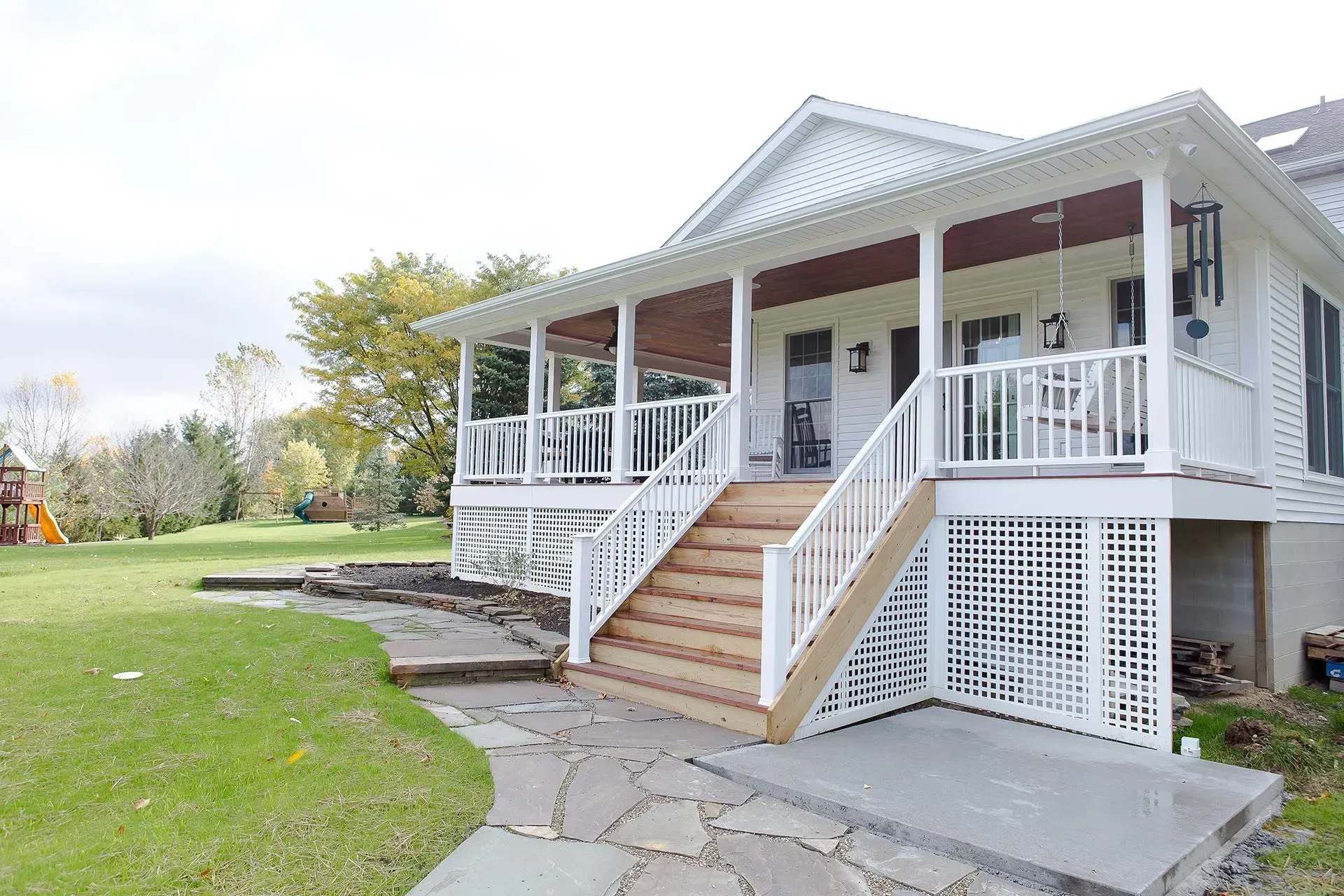
- Gradual transitions instead of abrupt level changes
- Lighting layers that enhance visibility without harshness
These strategies are invisible when executed well.
In established communities such as Bath and Chagrin Falls, where architectural character carries long-term value, these refinements must integrate seamlessly with the existing design language.
The goal is longevity without compromise.
Flexibility Without Visual Disruption
| Design Strategy | Architectural Approach | Resulting Experience |
|---|---|---|
| Main-level living alignment | Integrate suite placement naturally | Effortless daily movement |
| Wider circulation | Maintain proportionally scaled openings | Visual balance |
| Step-free transitions | Subtle floor leveling | Seamless mobility |
| Layered lighting | Balanced illumination planning | Enhanced comfort |
| Structural foresight | Clear spans for future modification | Adaptable layout |
When flexibility is embedded structurally and spatially, the home remains refined.
Why Architectural Discipline Matters
Reactive modifications later in life often feel intrusive because they were not anticipated.
By contrast, disciplined architectural planning allows homes to evolve without aesthetic interruption.
Anthony Slabaugh Remodeling & Design integrates aging flexibility into custom remodeling and design-build projects from the earliest stages of architectural development.
For additional insight into long-term planning strategies, you may find our article on Adaptable Home Design helpful.
You can also explore our Custom Home Design Services page for a broader overview of our planning philosophy.
Planning for Independence Without Sacrificing Beauty
Luxury remodeling is not about visible accommodation. It is about invisible foresight.
Homes that support independence gracefully maintain:
- Cohesive spatial hierarchy
- Balanced proportion
- Thoughtful circulation
- Structural readiness for subtle adjustment
When these principles guide design, flexibility enhances rather than alters the home.
Frequently Asked Questions
What is aging-in-place design in remodeling?
It is an architectural approach that supports long-term living through thoughtful layout and proportion rather than visible accommodation.
Does aging-in-place design require medical-style modifications?
Not when planned early. Architectural foresight can integrate flexibility without altering aesthetic quality.
Can older homes be adapted for long-term living?
Yes. Strategic reconfiguration can improve circulation and accessibility while preserving character.
Is aging flexibility only for retirement planning?
No. It benefits any homeowner who intends to remain in their home long-term.
When should aging-in-place considerations be addressed?
During early architectural planning, before structural framing and spatial hierarchy are finalized.
Client Feedback on Our Design Process
Homeowners frequently share that our planning conversations extend beyond immediate goals. By anticipating future needs while preserving architectural integrity, we create homes that feel refined today and prepared for tomorrow. We invite you to read our Google reviews to learn more about their experiences.
Designing for Longevity With Architectural Integrity
A home should not signal accommodation. It should express confidence and balance at every stage of life.
Anthony Slabaugh Remodeling & Design works with homeowners in Hudson, Akron & surrounding areas to integrate aging-in-place design into high-end remodeling projects without compromising aesthetic quality.
If you are planning a renovation and want your home to remain supportive, elegant, and adaptable for years to come, begin with a design conversation grounded in architectural foresight.