
Basement Home Gym Lighting and Mirror Placement That Makes the Space Feel Energizing

Conflicting plans are not inevitable in remodeling. They result from fragmented structure.
Anthony Slabaugh Remodeling & Design provides design-build home renovation services for homeowners in Hudson, Akron & surrounding areas who value architectural alignment and disciplined execution.
A basement home gym should feel energizing, focused, and comfortable to use. Even with the right equipment and flooring, the room can feel flat or uninviting if lighting and mirrors are not planned carefully.
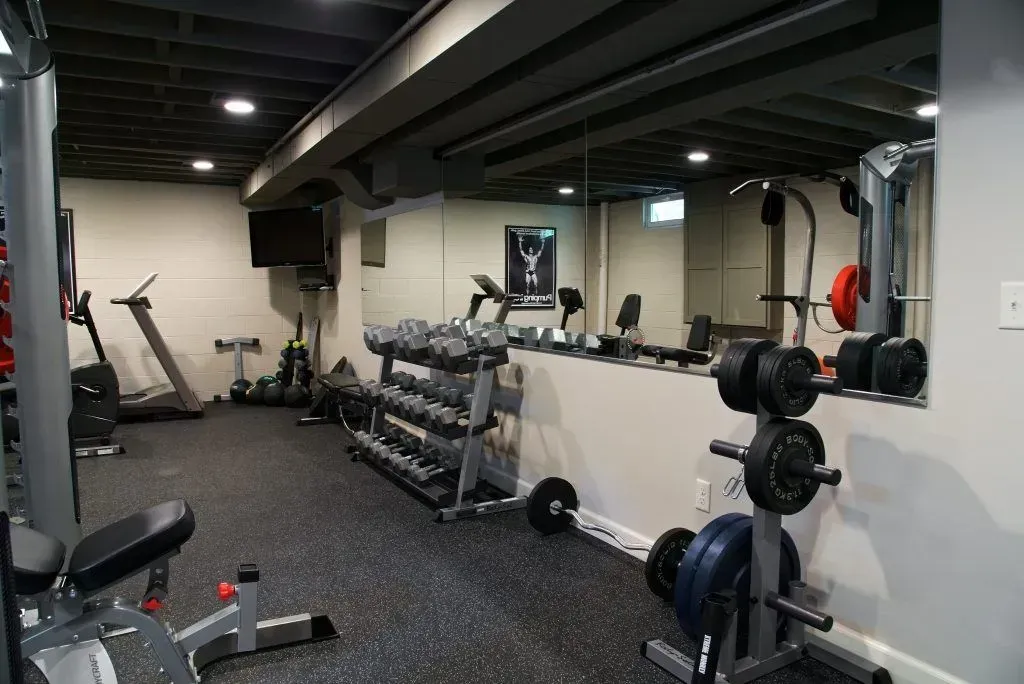
Basement gym lighting affects visibility, motivation, safety, and the overall atmosphere of the workout space. Mirror placement also matters because mirrors can support form checks, make the room feel larger, and reflect light through the space.
At
Anthony Slabaugh Remodeling & Design, we help homeowners in Hudson, Akron and surrounding areas design basement home gyms with lighting, mirrors, layout, flooring, storage, and finish details planned together.
Start With the Type of Workout
Lighting and mirror placement should support how the gym will be used. A strength-training zone may need bright, even lighting and mirrors for form. A stretching or mobility area may feel better with softer light. A cardio area may need glare-conscious lighting near screens or machines.
The best home gym lighting is not one-size-fits-all. It should match the activity, equipment layout, ceiling height, and overall basement design.
For homeowners throughout Bath, Fairlawn, and Chagrin Falls, this planning helps the gym feel intentional instead of simply finished.
Use Layered Lighting for Energy and Control
A basement workout room lighting plan should include more than one fixture type when the room supports multiple activities. Recessed lighting can provide general brightness. Wall lighting can add warmth. Accent lighting may help highlight mirrors, built-ins, or storage areas.
Layered lighting allows the gym to shift between high-energy workouts and slower recovery sessions. Bright light can support movement and focus, while softer lighting can make stretching or cooldown time feel more comfortable.
At
Anthony Slabaugh Remodeling & Design, lighting is planned with equipment placement, mirrors, flooring, and ceiling conditions so the room feels balanced.
Place Mirrors Where They Serve a Purpose
Basement gym mirrors should be useful, not excessive. Mirrors can help with exercise form, posture, and visual openness, but too much mirror coverage can make the space feel commercial or harsh.
A mirror may work well near a strength zone, stretching wall, or open movement area. It should be placed where the homeowner can actually use it during exercise. Mirror height, width, wall location, and lighting should all be considered.
The goal is a custom fitness room, not a borrowed studio look.
Avoid Glare and Harsh Reflections
Mirrors and lighting must be planned together. A poorly placed fixture can create glare in a mirror, reflect directly into the eyes, or make the room feel uncomfortable.
This matters near cardio equipment, weight benches, screens, and stretching zones. Fixture placement should account for where the homeowner stands, sits, moves, and looks during a workout.
A refined basement gym should feel bright and energizing without feeling harsh.
Basement Gym Lighting and Mirror Guide
| Design Detail | Why It Matters |
|---|---|
| General lighting | Provides safe, even visibility across the room |
| Task lighting | Supports specific workout zones or storage areas |
| Mirror placement | Helps with form checks and visual openness |
| Glare control | Prevents harsh reflections from mirrors or screens |
| Zone lighting | Allows strength, cardio, and stretching areas to feel different |
| Finish coordination | Keeps the gym connected to the finished basement |
This table is useful because lighting and mirrors should support performance, comfort, and design quality at the same time.
Consider Ceiling Height and Fixture Placement
Basement ceiling height affects lighting decisions. Fixtures should not interfere with movement, equipment, or the visual openness of the room. Lower ceilings may benefit from clean, low-profile lighting. Taller areas may allow more layered effects.
Ceiling conditions can also affect where lights can be placed. Ductwork, beams, soffits, and access points should be reviewed before the lighting plan is finalized.
Good lighting works with the basement conditions instead of fighting them.
Coordinate Mirrors With Storage and Equipment
Mirrors should not compete with storage, doors, outlets, or equipment placement. If a wall is needed for bands, mats, towels, weights, or built-ins, it may not be the best place for a full mirror.
A strong gym layout balances mirrors with storage and clear movement zones. This keeps the room practical for daily workouts and visually organized when the gym is not in use.
Storage, lighting, mirrors, and equipment should feel connected.
Choose Finishes That Support the Mood
Lighting and mirrors interact with flooring, wall color, trim, and cabinetry. Darker finishes can feel focused and grounded, but they may need stronger lighting. Lighter finishes can help the gym feel open, but glare should be controlled.
The right finish plan helps the gym feel energetic without feeling cold or overly commercial.
Visit Our Design Studio in Stow, Ohio
Our Stow, Ohio design studio gives homeowners a place to review lighting, flooring, cabinetry, mirrors, hardware, wall finishes, and layout ideas together. Seeing these selections in context helps clarify how lighting and mirror placement can shape the feel of a basement home gym.
Client Feedback on Our Remodeling Process
Homeowners often share that early planning helps them feel more confident about specialized lower-level spaces. By reviewing lighting, mirror placement, equipment layout, flooring, storage, and finishes together,
Anthony Slabaugh Remodeling & Design helps clients make decisions with clarity instead of pressure.
Frequently Asked Questions
What lighting is best for a basement home gym?
The best basement gym lighting depends on the workouts and layout. Recessed lighting can provide general brightness, while wall or accent lighting can add warmth. Lighting should support visibility, movement, mirrors, and comfort without creating glare.
Where should mirrors go in a basement gym?
Mirrors work best where they support form checks and make the space feel more open. Common locations include strength zones, stretching areas, or open workout walls. Placement should account for lighting, storage, equipment, and glare.
Can mirrors make a basement gym feel larger?
Yes, mirrors can help a basement gym feel larger by reflecting light and extending sightlines. They should be used with restraint so the room feels custom and refined rather than overly commercial.
How do you avoid glare in a basement workout room?
Plan lighting and mirrors together. Fixture placement should avoid direct reflections into mirrors, screens, or workout positions. Glare control is especially important near cardio machines, benches, stretching zones, and video screens.
Start With a Basement Gym That Feels Energizing
A refined basement gym should support visibility, movement, comfort, mirror placement, lighting control, and daily motivation. Schedule a consultation with Anthony Slabaugh Remodeling & Design or call (330) 940-3237 to plan your basement home gym with confidence.
Recent Posts
Share this article
CLIENT REVIEWS
Don’t Just Take Our Word For It
See below how our customers react on our ultimate pressure cleaning services