
How to Plan a Finished Basement Layout Around Mechanical Systems

Conflicting plans are not inevitable in remodeling. They result from fragmented structure.
Anthony Slabaugh Remodeling & Design provides design-build home renovation services for homeowners in Hudson, Akron & surrounding areas who value architectural alignment and disciplined execution.
A finished basement layout has to work around more than furniture and room function. Most basements contain mechanical systems that affect where walls, storage, bathrooms, bars, living areas, and utility spaces can go. Furnaces, water heaters, electrical panels, sump systems, plumbing lines, cleanouts, shutoffs, and ductwork all need to be considered before the layout is finalized.
The goal is not to make these systems the focus of the room. It is to conceal what can be concealed while keeping important equipment accessible for maintenance, service, and long-term function.
At
Anthony Slabaugh Remodeling & Design, we help homeowners in Hudson, Akron and surrounding areas plan finished basements through a design-build process that coordinates layout, mechanical access, storage, and finished details.
Start With What Must Stay Accessible
Before planning walls or room zones, identify the systems that need access. Electrical panels, water shutoffs, sump pumps, cleanouts, HVAC equipment, and plumbing connections should not be buried behind finished walls without a clear access plan.
For homeowners throughout Bath, Fairlawn, and Chagrin Falls, this step helps avoid a common basement mistake: creating a beautiful finished space that becomes difficult to service later.
A refined basement should hide utilities thoughtfully, not ignore them.
Define the Mechanical Room Early
A basement mechanical room should be planned before the rest of the layout is finalized. Its size and location can affect nearby rooms, storage areas, doors, pathways, and ceiling details.
The mechanical room may need to house a furnace, water heater, sump equipment, shutoffs, or other systems. It should also allow enough working room for service access.
At
Anthony Slabaugh Remodeling & Design, mechanical zones are reviewed early so the finished basement feels comfortable while still supporting practical maintenance.
Plan Around Electrical Panels and Shutoffs
Electrical panels and shutoffs need clear access. They may be located in areas homeowners would prefer to finish as living space, but covering or blocking them can create problems.
The design may include a utility closet, access door, cabinet-style concealment, or nearby storage area that keeps the panel accessible without making it visually prominent.
This is where layout planning matters. The best solution blends access into the design instead of treating it as an afterthought.
Work With Plumbing Lines and Cleanouts
Basement plumbing lines, drains, and cleanouts can influence wall placement, bathroom planning, wet bar locations, and storage zones. If a future bathroom, sink, or bar area is being considered, plumbing access should be reviewed early.
Cleanouts should remain reachable. Covering them behind permanent finishes can make future service more difficult.
A finished basement layout should respect plumbing needs while creating a clean, comfortable living space.
Finished Basement Mechanical Planning Guide
| System or Feature | Layout Consideration |
|---|---|
| Furnace and HVAC | Mechanical room size, access path, ventilation, and service clearance |
| Electrical panel | Clear access, safe placement, and discreet concealment |
| Sump system | Access, noise planning, moisture monitoring, and nearby finishes |
| Water heater | Service clearance, venting, and utility room layout |
| Plumbing cleanouts | Accessible panels, closets, or utility zones |
| Ductwork and beams | Ceiling layout, soffits, lighting, and room proportions |
This table is useful because basement layout planning must balance finished design with long-term access.
Conceal Utilities Without Blocking Access
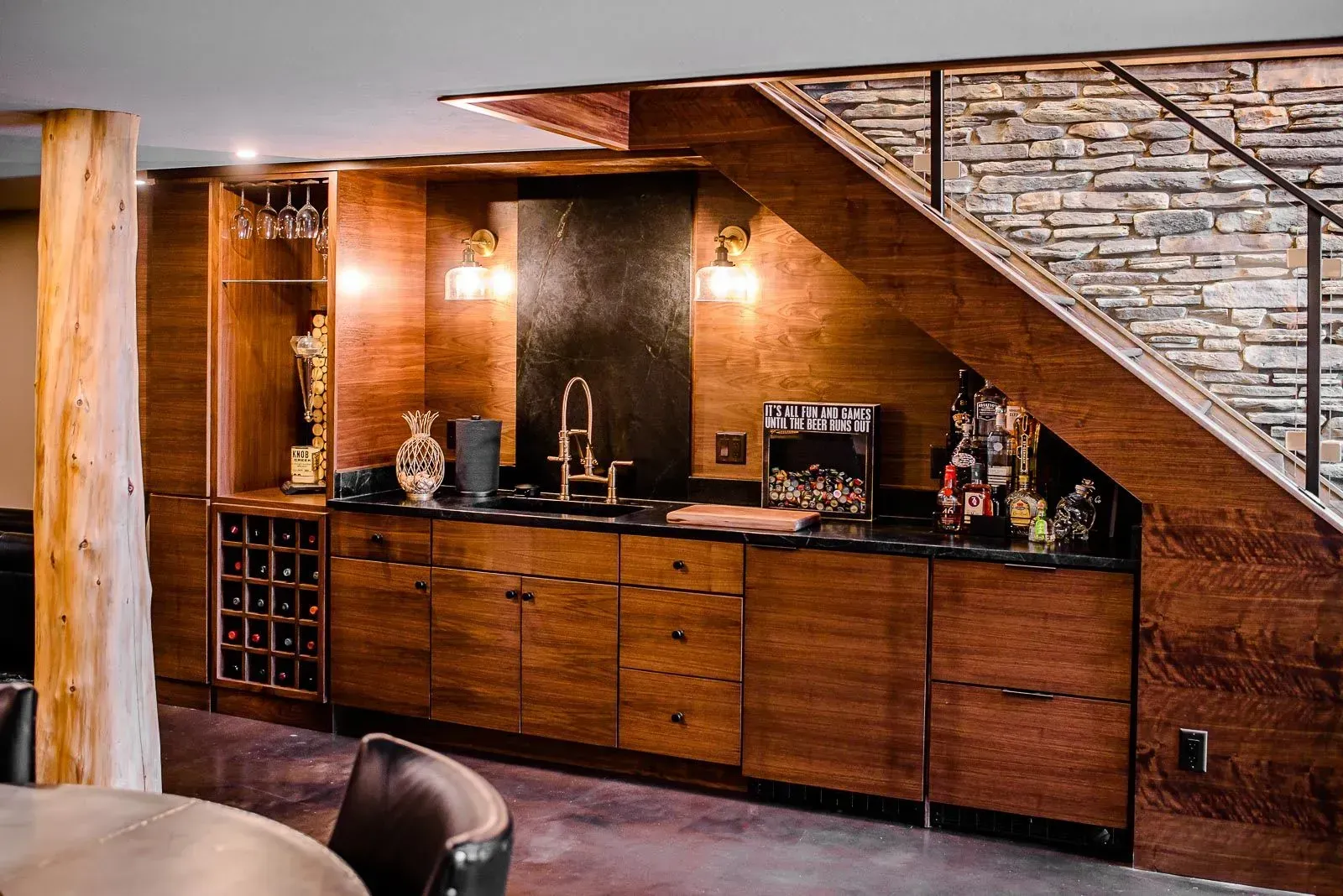
Utilities can often be hidden behind doors, panels, cabinetry, or mechanical room walls. The key is making the access intentional.
A flush access panel may work in some areas. A storage closet may make sense in another. A cabinet-style solution can help conceal a panel while keeping it reachable.
The right approach depends on the equipment, the room function, and how visible the area will be.
Use Storage to Support Utility Planning
Storage can be a useful way to organize mechanical access. Instead of placing utility doors randomly, storage rooms, closets, or built-ins can help integrate access into the layout.
Seasonal storage, household overflow, and mechanical access can often be planned together. This helps the finished basement stay practical without letting utility zones dominate the design.
A good layout uses every area with intention.
Coordinate Layout With Lighting and Ceiling Details
Mechanical systems often affect the ceiling. Ductwork, pipes, beams, and wiring may require soffits or access panels. These details should be planned with lighting and room zones.
If lighting is placed without considering ceiling obstructions, the basement can feel uneven or awkward. When ceiling lines and lighting are coordinated early, the finished room feels more polished.
Visit Our Design Studio in Stow, Ohio
Our Stow, Ohio design studio gives homeowners a place to review layout ideas, storage options, lighting, finishes, cabinetry, and basement material selections together. Seeing these decisions in context helps clarify how mechanical access can be worked into a finished basement design.
Client Feedback on Our Remodeling Process
Homeowners often share that early planning helps them feel more confident about complex lower-level remodels. By reviewing mechanical systems, utility access, layout options, storage needs, and finish selections together,
Anthony Slabaugh Remodeling & Design
helps clients make decisions with clarity instead of pressure.
Frequently Asked Questions
How do you plan a finished basement layout around mechanical systems?
Start by identifying equipment and access points that must remain reachable, including HVAC systems, electrical panels, sump equipment, shutoffs, and plumbing cleanouts. Then plan walls, storage, ceilings, and room zones around those requirements before selecting finishes.
Can you hide a basement mechanical room?
Yes, a basement mechanical room can often be concealed with doors, walls, trim, storage zones, or cabinet-style details. The key is keeping equipment accessible for service while making the finished basement look intentional and comfortable.
Should electrical panels be covered in a finished basement?
Electrical panels should not be permanently blocked. They may be visually concealed with an access door, cabinet-style panel, or utility closet, but access must remain practical. Placement should be reviewed during the layout phase.
Why is utility access important in basement finishing?
Utility access is important because mechanical systems may need service, inspection, adjustment, or repair over time. A finished basement should look polished while still allowing access to panels, shutoffs, sump systems, cleanouts, and HVAC equipment.
Start With a Basement Layout That Respects the Home’s Systems
A refined finished basement should conceal mechanical systems thoughtfully while preserving practical access. Schedule a consultation with Anthony Slabaugh Remodeling & Design or call (330) 940-3237 to plan basement finishing with confidence.
Recent Posts
Share this article
CLIENT REVIEWS
Don’t Just Take Our Word For It
See below how our customers react on our ultimate pressure cleaning services