
Many homeowners begin considering a full home renovation because something feels inefficient. Rooms may be large enough, finishes may be acceptable, yet daily movement through the home feels awkward or interrupted. Interior flow is often the hidden issue.
At Anthony Slabaugh Remodeling, we help homeowners in Hudson, Fairlawn, Akron, Bath, Stow, and surrounding communities rethink circulation, spatial relationships, and layout alignment during full home renovations. Improving flow is not about removing walls randomly. It is about understanding how the home should function as a connected system.
What Interior Flow Really Means
Interior flow refers to how naturally people move through a home. It includes:
- Circulation paths between primary spaces
- Sightlines from room to room
- Transitions between open and private areas
- The relationship between kitchen, living, dining, and entry zones
When flow is strong, movement feels intuitive. When flow is weak, homeowners experience congestion, bottlenecks, and unnecessary detours throughout the day.
A full home renovation provides the rare opportunity to correct these issues holistically.
Identify Friction Points
Before redesigning anything, we analyze where friction exists.
Common signs of poor interior flow include:
- Narrow or awkward hallways
- Doorways that interrupt furniture placement
- Kitchen layouts that isolate the cook
- Living areas disconnected from gathering spaces
- Traffic patterns cutting through functional zones
Rather than assuming open concept is the solution, we study how the home is actually used.
Flow improvements begin with observation.
Open Concept vs Structured Connectivity
Many homeowners assume improving flow means removing walls. Sometimes that is appropriate. Often, it is not.
Open concept planning can improve visibility and movement between spaces, particularly between kitchen and living areas. However, complete openness can reduce definition and create noise challenges.
Instead of defaulting to open concept, we evaluate:
- Which walls provide necessary structure
- Where wider openings improve transition
- How ceiling treatments can visually connect spaces
- Whether partial separations maintain balance
Effective circulation upgrades are measured, not extreme.
Reconfiguring Circulation Paths
A full home renovation allows circulation paths to be reshaped entirely.
This might involve:
- Relocating entry points
- Adjusting stair placement
- Expanding narrow transitions
- Redirecting traffic away from private zones
Small shifts in wall placement can dramatically improve movement patterns. In many homes throughout Hudson and Fairlawn, modest reconfigurations create more intuitive layouts without significantly increasing square footage.
Interior flow is often corrected through precision rather than expansion.
Aligning Kitchen, Living, and Transitional Spaces
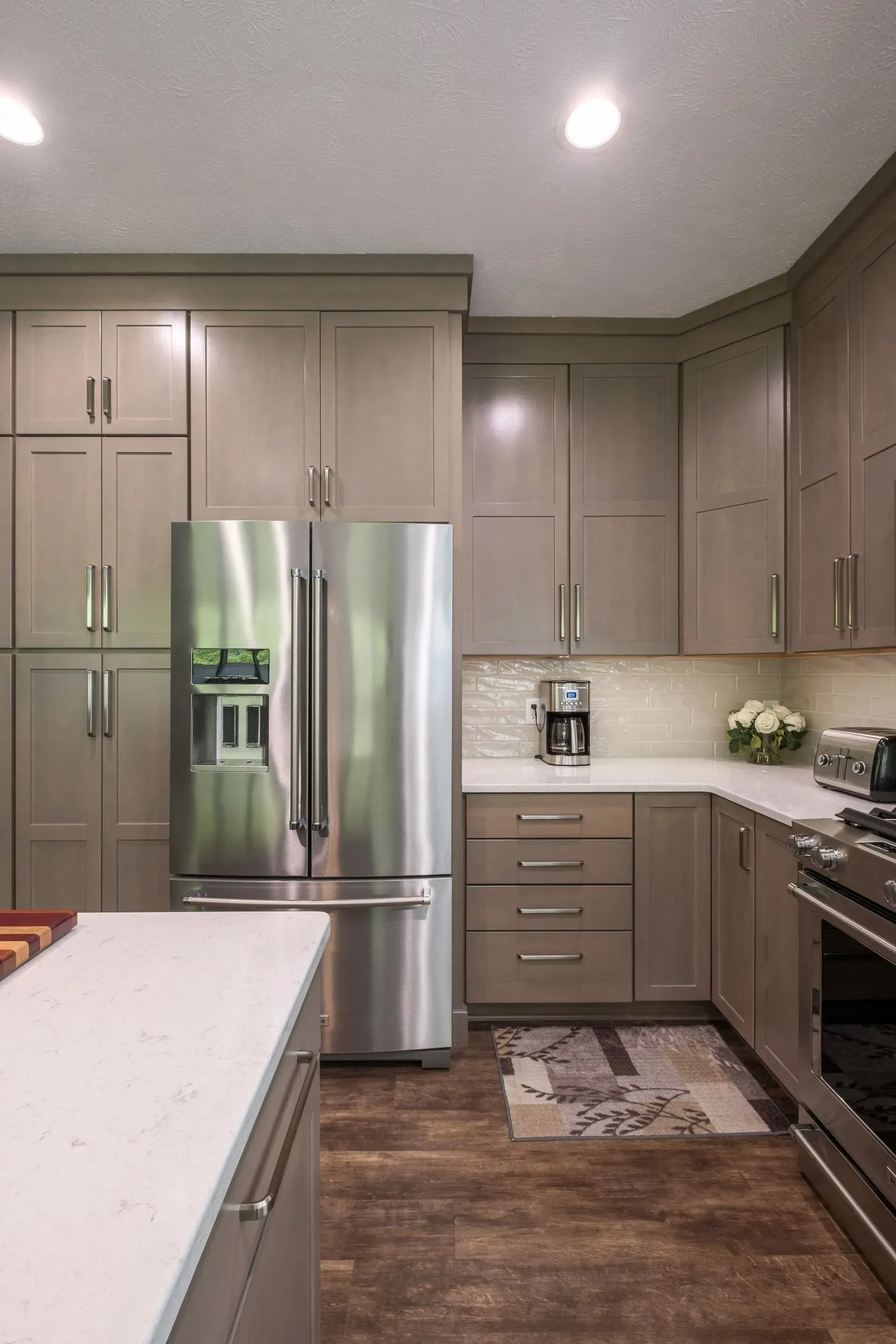
The relationship between the kitchen and adjacent spaces has a significant impact on daily usability.
During renovation planning, we examine:
- How meals are prepared and served
- Where family members gather
- Whether visual connection improves interaction
- How adjacent rooms support or disrupt activity
Improving flow often means aligning these spaces so they function as a cohesive zone rather than isolated rooms.
Supporting Flow With Architectural Continuity
Flow is not only physical. It is visual.
Disruptions in ceiling height, flooring transitions, or inconsistent trim profiles can make a home feel fragmented even if walls are removed.
Architectural continuity supports movement by creating visual calm. During a full home renovation, we often coordinate:
- Flooring alignment
- Ceiling transitions
- Consistent trim details
- Lighting placement
These refinements make circulation feel smoother without structural changes.
The Role of Structural Evaluation
Improving interior flow sometimes requires structural adjustments.
Load-bearing walls, support beams, and foundation considerations must be evaluated before reconfiguration occurs. This is why full home renovations benefit from an integrated design-build approach.
Structural feasibility planning ensures that flow improvements are both safe and realistic.
For homeowners exploring comprehensive layout changes, our Full Home Renovation service page outlines how early planning supports successful transformation.
Interior Flow Improvements at a Glance
| Flow Issue | Renovation Strategy | Result |
|---|---|---|
| Congested pathways | Widened transitions | Easier movement |
| Disconnected rooms | Strategic openings | Visual continuity |
| Isolated kitchen | Layout realignment | Better interaction |
| Traffic through private zones | Circulation redirection | Increased comfort |
| Visual fragmentation | Architectural alignment | Cohesive feel |
How Flow Impacts Daily Living
When interior flow improves, homeowners often notice subtle but meaningful changes:
- Morning routines feel less rushed
- Entertaining feels more natural
- Noise patterns improve
- Shared spaces feel balanced
- Movement between rooms requires less effort
The home begins to support daily life instead of creating resistance.
Testimonials from Satisfied Clients
The positive feedback from our clients reflects the care, communication, and craftsmanship that define every project. Their experience working through our design-build process and the lasting impact of their renovations continue to shape the way we approach every home.
Read our Google reviews here.
Full Home Renovation Planning Resources
If you are still exploring your options, these related guides may help:
Frequently Asked Questions
Does improving interior flow always require removing walls?
No. Many improvements involve reconfiguring openings, adjusting circulation paths, or refining transitions.
Is open concept always better for flow?
Not necessarily. Structured connectivity often creates better balance than full openness.
Can interior flow be improved without adding square footage?
Yes. Strategic layout adjustments often provide significant improvement without expanding the home.
Does structural evaluation matter when improving flow?
Yes. Load-bearing considerations must be addressed before walls are modified.
Do you help homeowners across multiple communities?
Yes. We work with homeowners in Hudson, Fairlawn, Akron, Bath, Stow, Chagrin Falls, and surrounding areas.
Plan a Home That Moves Naturally
Improving interior flow during a full home renovation is not about trends. It is about designing a home that feels intuitive and comfortable to live in.
Anthony Slabaugh Remodeling guides homeowners through thoughtful layout planning that enhances movement, connectivity, and long-term usability.