
Whole-home transformations are often described in terms of layout, finishes, and visual impact. Yet beneath every successful renovation lies structural recalibration.
Surface updates may refresh a home. Structural remodeling reshapes it.
In Hudson, Akron & surrounding areas, major whole-home remodels frequently require opening walls, extending spans, reinforcing foundations, and realigning framing systems. These interventions form the structural backbone of meaningful transformation.
Without structural clarity, architectural ambition has limits
Cosmetic Renovation vs Structural Transformation
Not all remodeling is equal in scope.
Cosmetic updates may include:
- Cabinet replacement
- Flooring updates
- Paint and surface changes
- Fixture upgrades
Structural remodeling, by contrast, addresses:
- Load-bearing reconfiguration
- Span extension
- Foundation reinforcement
- Framing realignment
- Roof structure modification
Whole-home transformations that significantly alter layout and flow require structural intervention.
Structure defines possibility.
Why Structural Remodeling Precedes Design Refinement
In large-scale remodels, homeowners often envision open layouts, integrated gathering spaces, and improved circulation.
These goals frequently involve:
- Removing structural partitions
- Expanding openings
- Integrating additions
- Realigning floor levels
- Modifying ceiling planes
Each of these actions changes load paths and structural demand.
Structural remodel whole home planning ensures that layout revisions are feasible before aesthetic decisions are finalized.
For broader insight into engineering-informed remodeling, visit our Structural Home Remodeling page.
Structural Domains Within Whole-Home Projects
Comprehensive remodeling may involve multiple structural categories:
Structural Domains Within Whole-Home Projects
Walls and beams recalculated to support expanded layouts.
Foundation Evaluation
Existing footings reviewed to confirm capacity for redistributed loads.
Framing Realignment
Joist spans adjusted to accommodate larger spaces.
Addition Integration
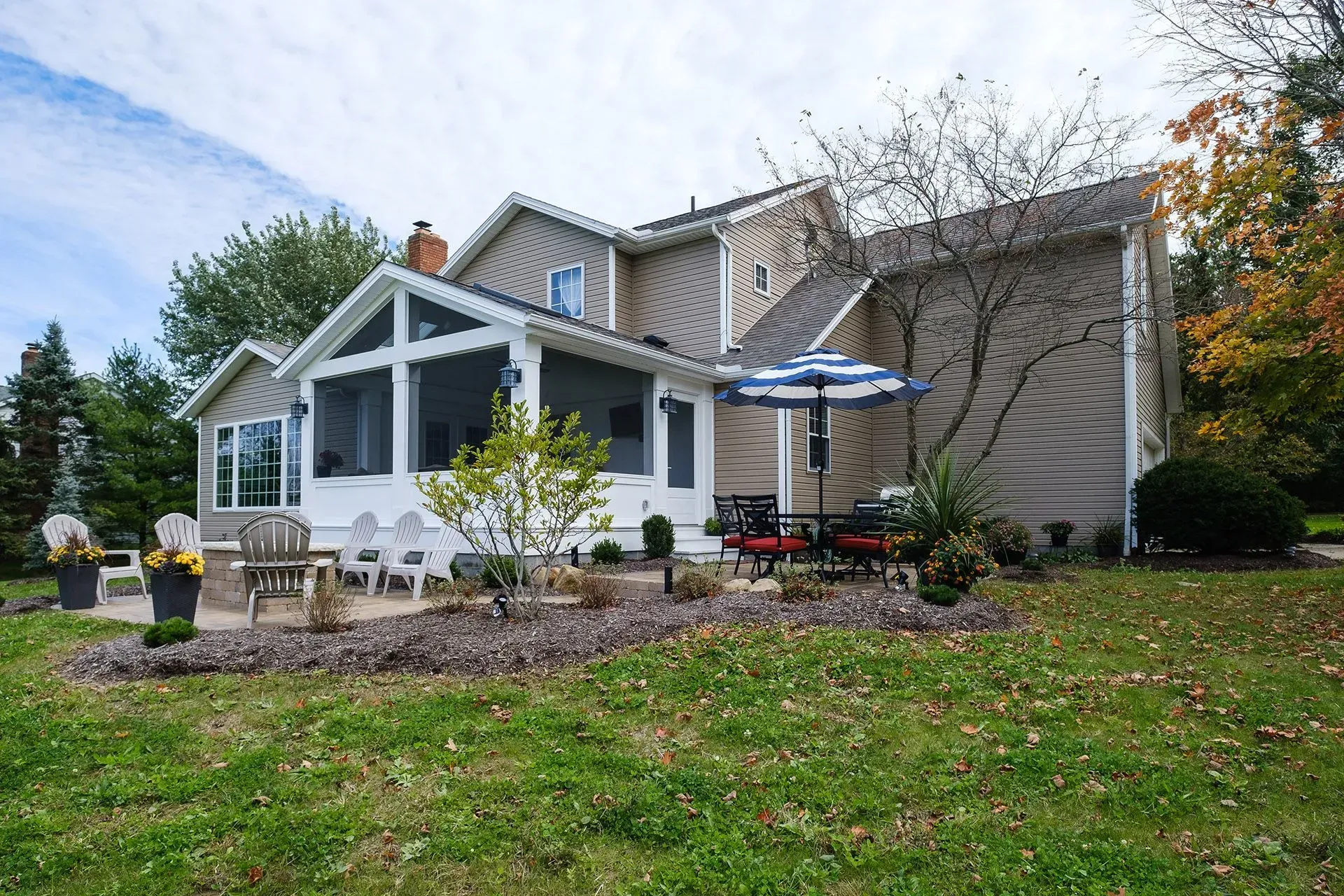
New structures tied into existing framing with aligned load transfer.
Vertical Reconfiguration
Stair relocation or ceiling plane modification coordinated structurally.
In established communities such as Bath and Chagrin Falls, older framing conditions often require disciplined review before major transformation.
Structural evaluation anchors the project.
Structural Remodeling Impact Overview
| Structural Strategy | Whole-Home Benefit | Long-Term Result |
|---|---|---|
| Load path recalculation | Open, integrated layouts | Stable floor and ceiling alignment |
| Beam integration | Expanded gathering areas | Maintained proportion |
| Foundation reinforcement | Support for additions | Controlled settlement |
| Framing realignment | Balanced room relationships | Cohesive spatial flow |
| Roof structure modification | Reconfigured vertical space | Structural longevity |
Structural remodeling protects both performance and refinement.
Engineering as a Design Enabler
Structural remodeling is sometimes viewed as restrictive. In reality, it enables design freedom.
When engineering is integrated early:
- Larger spans become possible
- Sightlines expand
- Ceiling alignment can be preserved
- Additions feel cohesive
- Mechanical systems integrate more effectively
Engineering does not limit transformation. It supports it.
The Role of Design-Build Coordination
Whole-home structural remodeling involves coordination between:
- Structural analysis
- Architectural proportion
- Mechanical rerouting
- Material integration
- Construction sequencing
When these disciplines operate independently, revisions often emerge during construction.
Within a unified design-build framework, structural feasibility informs architectural planning from the outset.
Anthony Slabaugh Remodeling & Design approaches whole-home structural remodeling with coordinated engineering and architectural discipline. Load paths, framing alignment, and proportion are evaluated together before demolition begins.
For additional perspective on how structure influences spatial refinement, you may find our article on Architectural Proportion and Structural Balance helpful.
Why Structure Protects Long-Term Investment
Whole-home renovations represent significant investment.
Structural clarity protects that investment by ensuring:
- Even load distribution
- Reduced deflection
- Preserved ceiling alignment
- Foundation stability
- Adaptability for future modifications
Homeowners may not see structural reinforcement once finishes are complete. They experience its stability and performance for decades.
Frequently Asked Questions
Is structural remodeling required for every whole-home renovation?
Not always. However, major layout changes and additions often require structural evaluation.
Can a whole-home remodel succeed without structural changes?
If the layout remains largely unchanged, possibly. Significant transformation typically involves structural modification.
Does structural remodeling significantly increase project scope?
It increases planning discipline. Early evaluation often reduces mid-project revisions.
How early should structural engineering be involved?
Before finalizing layout drawings and before removing or modifying structural components.
What makes structural remodeling different from standard renovation?
It recalibrates load paths, framing systems, and foundation capacity rather than simply updating surfaces.
The Backbone of Transformational Remodeling
Whole-home transformation begins beneath the surface.
Structural remodeling provides the framework that allows open layouts, balanced proportion, integrated additions, and lasting performance to coexist.
Anthony Slabaugh Remodeling & Design works with homeowners in Hudson, Akron & surrounding areas to ensure that structural discipline anchors every major renovation.