
How to Expand Kitchen Space Through Structural Reconfiguration

In many older homes, the kitchen was never intended to function as the central gathering space it is today.


Rooms were smaller. Walls divided cooking from living. Ceiling spans were limited by structural framing.


Expanding a kitchen in a meaningful way often requires more than new cabinetry or updated finishes. It requires structural reconfiguration.


In Hudson, Akron & surrounding areas, structural kitchen remodel projects frequently involve modifying load-bearing walls, recalibrating ceiling planes, and redistributing loads to create a balanced and open layout.


True expansion begins with structural clarity.

Why Kitchens Feel Constrained in Older Homes  

Homes built decades ago were designed around different usage patterns.


Common constraints include:


  • Load-bearing walls separating kitchens from dining rooms
  • Narrow openings limiting circulation
  • Low ceiling spans
  • Under-scaled window placements
  • Limited structural depth for larger openings


While surface updates may improve aesthetics, they rarely address spatial limitation.


Structural remodeling allows the kitchen footprint to evolve.

Identifying Structural Barriers  

Before expanding a kitchen, structural evaluation determines:


  • Which walls carry load
  • How floor joists transfer weight
  • Where beams can be integrated
  • Whether foundation capacity supports reconfiguration
  • How mechanical systems are routed


Removing a wall without evaluating load paths can compromise floor alignment and ceiling continuity.


Engineering must precede demolition.


For a broader look at engineered remodeling strategy, visit our Structural Home Remodeling page.

Structural Reconfiguration Strategies  

Expanding kitchen space may involve:


  • Removing or modifying load-bearing partitions
  • Installing engineered beams
  • Reinforcing foundation points
  • Integrating structural support within cabinetry or ceiling planes
  • Realigning framing to support larger spans


These interventions create open sightlines and improved circulation while preserving structural integrity.


In established communities such as Bath and Chagrin Falls, many homes require careful calibration between structural reinforcement and architectural proportion.


Open layouts must remain balanced.

Structural Kitchen Remodel at a Glance  

Structural Adjustment Kitchen Benefit Architectural Impact
Load-bearing wall removal Expanded footprint Improved sightlines
Beam integration Larger continuous space Controlled ceiling alignment
Foundation reinforcement Supports redistributed loads Long-term stability
Framing realignment Greater span flexibility Enhanced proportion
Structural opening enlargement Improved circulation Balanced connection to adjacent rooms

Each structural move influences both performance and spatial experience.

Protecting Proportion While Expanding Space  

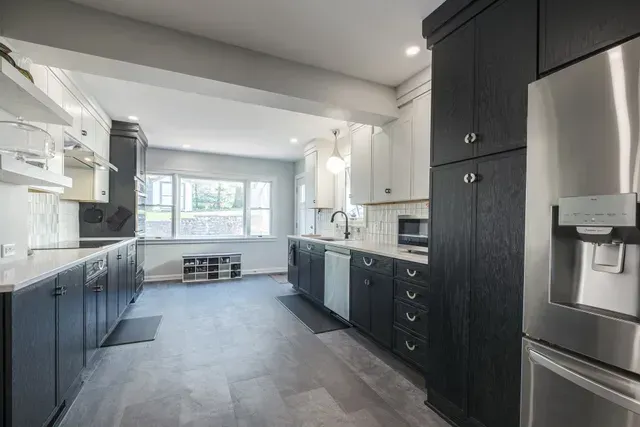
Opening a kitchen is not simply about maximizing square footage.


Proportion must be maintained:


  • Opening widths should align with ceiling height
  • Beam depth should integrate into architectural detailing
  • Floor alignment must remain consistent
  • Transitions to adjacent spaces should feel intentional


Structural kitchen remodel planning ensures that expansion enhances hierarchy rather than flattening it.

Engineering and Design Must Align 

Kitchen expansions intersect structure, mechanical systems, and architectural detailing.


Beam placement affects lighting integration. HVAC rerouting influences ceiling configuration. Column placement impacts cabinetry layout.


Within a unified design-build framework, engineering evaluation informs kitchen design from the outset.


Anthony Slabaugh Remodeling & Design integrates structural analysis, proportion planning, and finish coordination so that kitchen expansion is engineered and refined simultaneously.


The result is a kitchen that feels spacious, stable, and architecturally aligned.

Long-Term Value of Structural Kitchen Remodeling 

When structural reconfiguration guides kitchen expansion, homeowners benefit from:


  • Improved circulation
  • Enhanced gathering space
  • Structural reliability
  • Ceiling alignment consistency
  • Greater adaptability for future renovations


The kitchen becomes integrated within the home’s architectural framework rather than appended to it.

Frequently Asked Questions

  • Does expanding a kitchen usually require structural engineering?

    If load-bearing walls or major openings are involved, engineering evaluation is necessary to ensure safe load redistribution.

  • Can a kitchen be expanded without removing walls?

    Sometimes, but meaningful spatial transformation often involves structural modification.

  • Will beam installation lower my ceiling?

    It depends on structural span and beam sizing. Planning evaluates how beams can be integrated architecturally.

  • Does foundation reinforcement become necessary when removing walls?

    In some cases, yes. Load redistribution may require foundation review.

  • When should structural evaluation occur for a kitchen remodel?

    Before finalizing layout drawings and before demolition begins.

Expanding Kitchens With Structural Precision  

Premium kitchen transformations begin with structural clarity.


Expanding space through engineered reconfiguration ensures that improved flow, proportion, and stability align seamlessly.


Anthony Slabaugh Remodeling & Design works with homeowners in Hudson, Akron & surrounding areas to approach structural kitchen remodel projects with architectural discipline and engineering awareness.


If you are considering expanding your kitchen and want structural precision to guide the transformation, begin with a planning conversation grounded in load paths and proportion.

Recent Posts


Micro Zoning Home Design | Hudson, Akron & Surrounding Areas
By Anthony Slabaugh February 18, 2026
Discover how micro zoning home design improves modern layouts in Hudson, Akron & surrounding areas through advanced space planning techniques.
Transition Space Design | Hudson, Akron & Surrounding Areas
By Anthony Slabaugh February 18, 2026
Explore transition space design strategies in Hudson, Akron & surrounding areas that improve thresholds, openings, and home flow through advanced layout planning.
Corner Space Planning | Hudson, Akron & Surrounding Areas
By Anthony Slabaugh February 18, 2026
Learn how advanced corner space planning improves home layout and functionality in Hudson, Akron & surrounding areas through refined design strategies.
Nighttime Lighting Layout | Hudson, Akron & Surrounding Areas
By Anthony Slabaugh February 18, 2026
Learn how nighttime lighting layout strategies shape home flow and atmosphere in Hudson, Akron & surrounding areas through advanced space planning.
3D Remodel Renderings | Hudson, Akron & Surrounding Areas
By Anthony Slabaugh February 18, 2026
Learn how 3D remodel renderings improve renovation decision-making in Hudson, Akron & surrounding areas before construction begins.
Exterior Rendering Home Addition | Hudson, Akron & Surrounding Areas
By Anthony Slabaugh February 18, 2026
Learn how exterior rendering for home additions protects architectural continuity in Hudson, Akron & surrounding areas before construction begins.
3D Rendering FAQs | Hudson, Akron & Surrounding Areas
By Anthony Slabaugh February 18, 2026
Answers to common 3D remodel rendering questions for homeowners in Hudson, Akron & surrounding areas planning renovations before construction.
Design-First Remodeling | Hudson, Akron & Surrounding Areas
By Anthony Slabaugh February 18, 2026
Learn how design-first remodeling in Hudson, Akron & surrounding areas reduces costly mid-project changes through structured architectural planning.
Open Concept Structural Design | Hudson, Akron & Surrounding Areas
By Anthony Slabaugh February 18, 2026
Learn why open concept structural design requires careful planning in Hudson, Akron & surrounding areas to prevent costly structural and layout issues.
Remodeling Circulation Design | Hudson, Akron & Surrounding Areas
By Anthony Slabaugh February 18, 2026
Discover why remodeling circulation design matters more than square footage for refined homes in Hudson, Akron & surrounding areas.

Micro Zoning Home Design | Hudson, Akron & Surrounding Areas
By Anthony Slabaugh February 18, 2026
Discover how micro zoning home design improves modern layouts in Hudson, Akron & surrounding areas through advanced space planning techniques.
Transition Space Design | Hudson, Akron & Surrounding Areas
By Anthony Slabaugh February 18, 2026
Explore transition space design strategies in Hudson, Akron & surrounding areas that improve thresholds, openings, and home flow through advanced layout planning.
Corner Space Planning | Hudson, Akron & Surrounding Areas
By Anthony Slabaugh February 18, 2026
Learn how advanced corner space planning improves home layout and functionality in Hudson, Akron & surrounding areas through refined design strategies.
Nighttime Lighting Layout | Hudson, Akron & Surrounding Areas
By Anthony Slabaugh February 18, 2026
Learn how nighttime lighting layout strategies shape home flow and atmosphere in Hudson, Akron & surrounding areas through advanced space planning.
3D Remodel Renderings | Hudson, Akron & Surrounding Areas
By Anthony Slabaugh February 18, 2026
Learn how 3D remodel renderings improve renovation decision-making in Hudson, Akron & surrounding areas before construction begins.
Exterior Rendering Home Addition | Hudson, Akron & Surrounding Areas
By Anthony Slabaugh February 18, 2026
Learn how exterior rendering for home additions protects architectural continuity in Hudson, Akron & surrounding areas before construction begins.
More Posts