
In historic homes, finishes do more than decorate. They reinforce proportion, rhythm, and architectural identity.
When new materials are introduced without regard for scale or detailing, even well-executed renovations can feel visually disconnected from the original structure.
In Hudson, Akron & surrounding areas, many historic properties feature layered millwork, defined room hierarchy, and distinctive material palettes. Renovating these homes requires more than selecting attractive finishes. It requires disciplined alignment between new and existing elements.
Matching finishes in historic homes is not about imitation. It is about compatibility.
Why Finish Integration Is More Complex Than It Appears
Homeowners often focus on cabinetry style, flooring color, or countertop material independently.
In historic homes, those selections must respond to:
- Trim depth and scale
- Ceiling height relationships
- Window proportion
- Wall thickness
- Existing flooring transitions
A finish that works beautifully in a contemporary setting may feel out of scale within a historic framework.
Finish decisions should be informed by architecture, not trends.
Respecting Proportion and Scale
Scale governs how finishes feel within a space.
For example:
- Oversized hardware may overpower refined millwork
- Wide-plank flooring may conflict with narrow historic trim profiles
- Large-format tile may overwhelm smaller proportioned rooms
Planning evaluates how material dimensions relate to ceiling height, room size, and detailing depth.
In established communities such as Bath and Chagrin Falls, homes often reflect careful proportional relationships that should guide finish selection.
Compatibility begins with scale.
Coordinating Wood Tones and Millwork
Historic homes frequently feature:
- Original hardwood floors
- Detailed window casings
- Built-in cabinetry
- Crown molding
Introducing new wood finishes requires calibration.
Planning considers:
- Undertone compatibility rather than exact color matching
- Sheen level consistency
- Grain pattern relationship
- Transition alignment between old and new flooring
The objective is harmony without artificial replication.
Stone, Tile, and Surface Materials
Surface materials must respond to architectural rhythm.
When selecting stone, tile, or plaster finishes, evaluation includes:
- Pattern scale relative to room proportion
- Edge detailing compatibility
- Color contrast against existing trim
- Transition alignment at thresholds
Materials should enhance architectural structure rather than compete with it.
For broader context on structural and architectural planning in historic renovations, visit our Historic Home Renovations page.
Finish Integration at a Glance
| Finish Element | Common Pitfall | Planning Consideration |
|---|---|---|
| Flooring | Visible break between old and new | Align thickness and direction |
| Cabinetry | Modern style conflicts with trim scale | Adjust proportion to room hierarchy |
| Hardware | Oversized fixtures | Match scale to millwork depth |
| Tile patterns | Overpowering visual texture | Calibrate pattern to ceiling height |
| Paint selection | Stark contrast | Evaluate undertones relative to existing materials |
Each selection influences whether the renovation feels layered or cohesive.
Blending Modern Comfort With Architectural Detail
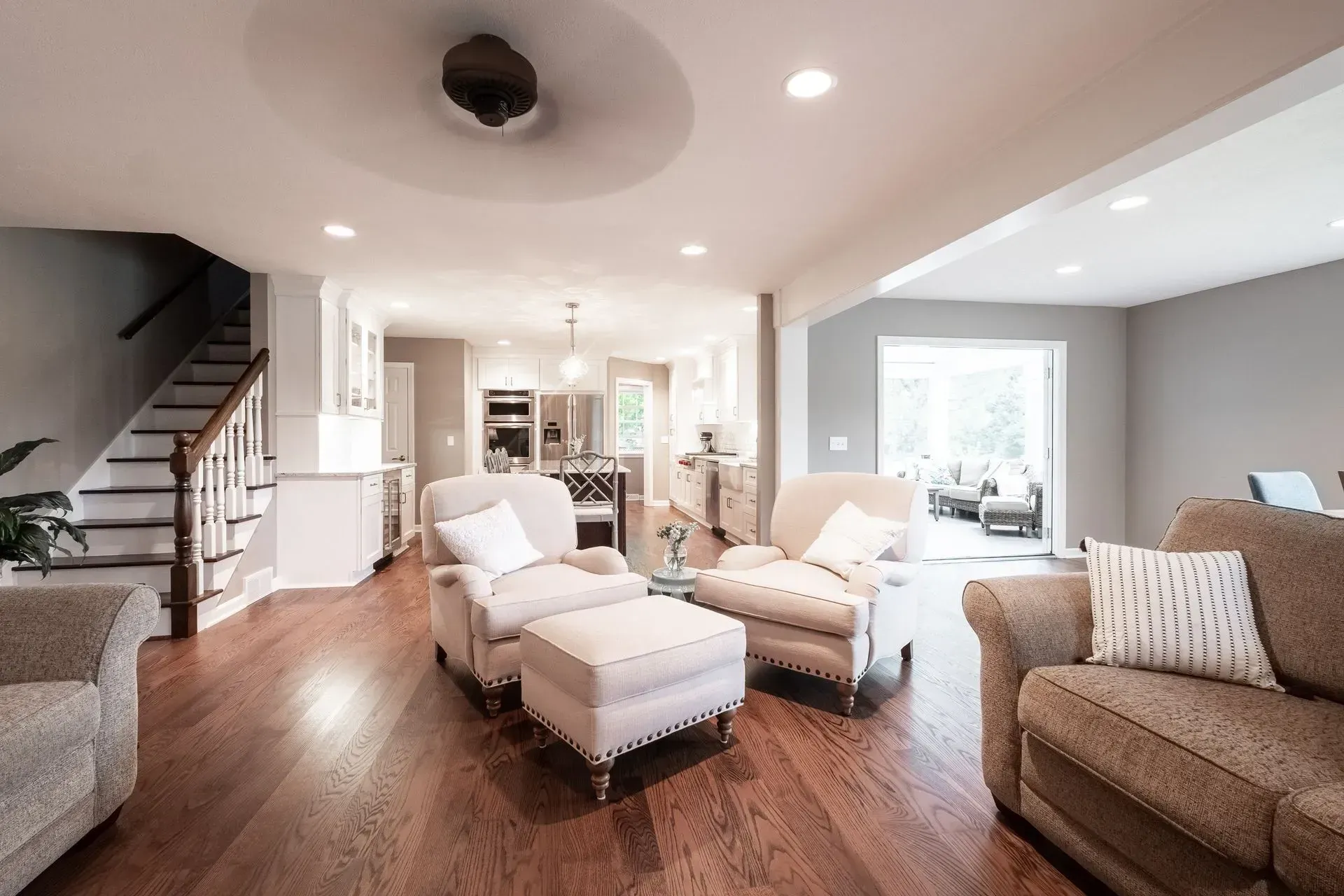
Historic homes often benefit from modern material performance, such as durable countertops or improved flooring stability.
The challenge lies in integrating these materials while preserving:
- Architectural trim detailing
- Window rhythm
- Ceiling alignment
- Spatial hierarchy
Modern finishes can coexist with historic detailing when proportion and texture are evaluated together.
Thoughtful restraint often produces the most refined results.
Why Finish Matching Requires Design-Build Coordination
Finish decisions cannot be isolated from structure.
Subfloor alignment affects flooring transitions. Wall thickness influences casing depth. Cabinet placement impacts millwork proportion.
Within a unified design-build framework, structural evaluation and architectural detailing inform finish selection.
Anthony Slabaugh Remodeling & Design approaches matching finishes in historic homes with this integrated discipline. Material calibration occurs within the broader context of proportion, ceiling alignment, and structural clarity.
For additional insight into preserving architectural character, you may find our article on The Role of Architectural Character in Modern Renovation Planning helpful.
Frequently Asked Questions
Should new finishes match historic materials exactly?
Not necessarily. Compatibility in scale, undertone, and proportion is more important than exact replication.
How do you choose flooring that works with original trim?
By evaluating plank width, color undertone, and sheen relative to trim depth and ceiling height.
Can modern cabinetry fit within a historic home?
Yes, if proportions and detailing respond to architectural hierarchy rather than current trends.
Is it better to restore or replace original finishes?
It depends on condition and integration goals. Preservation is often preferred when feasible.
When should finish decisions be made in the renovation process?
After structural and proportion planning is complete, but before final detailing is executed.
Detail Defines Refinement
In historic homes, finishes are not secondary. They are architectural.
Matching new finishes with historic details requires measured planning, proportional discipline, and material sensitivity.
Anthony Slabaugh Remodeling & Design works with homeowners in Hudson, Akron & surrounding areas to integrate modern materials with historic character in a way that feels cohesive and intentional.
If you are planning a historic renovation and want material selections that respect architectural identity, begin with a planning conversation grounded in proportion and detail.