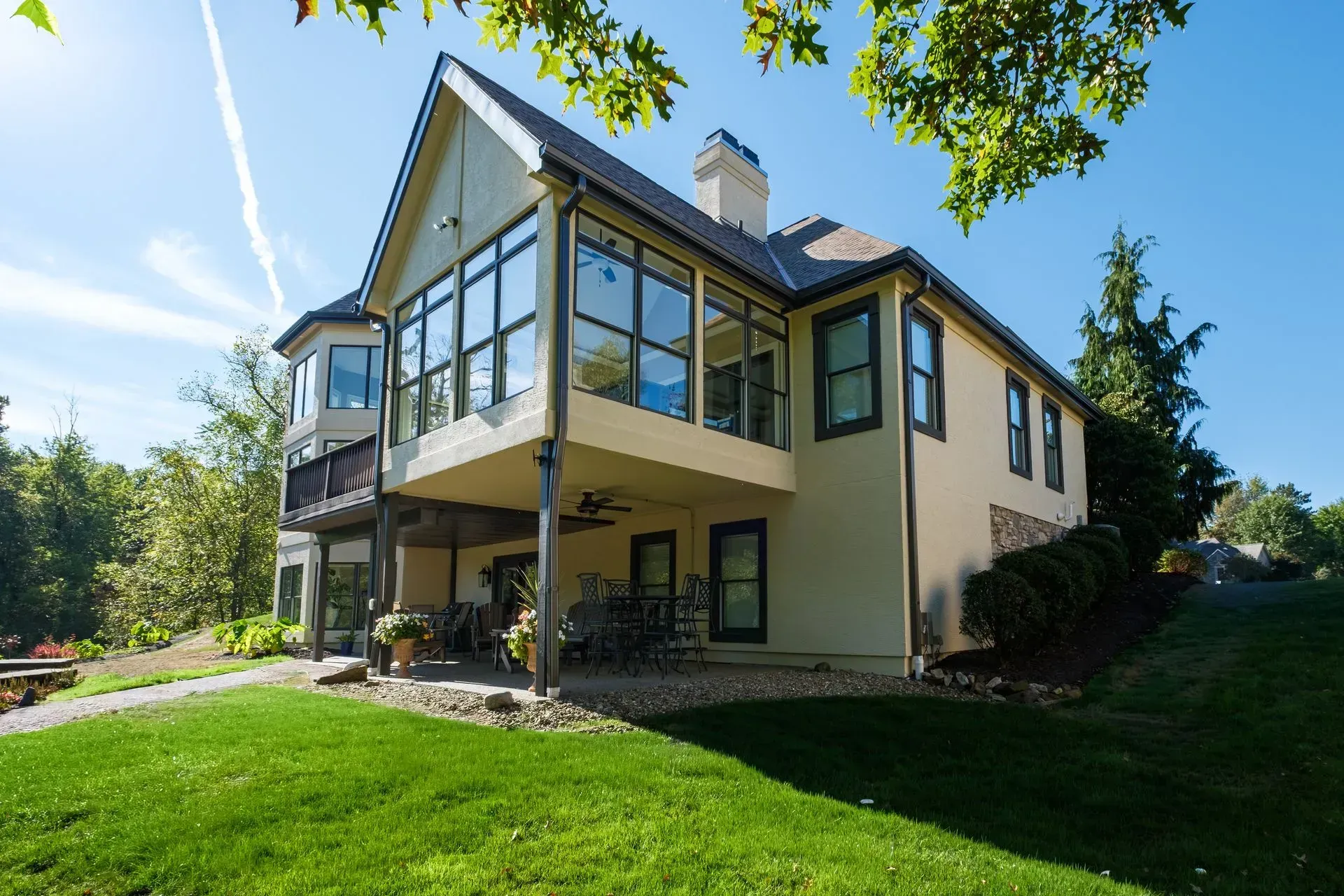

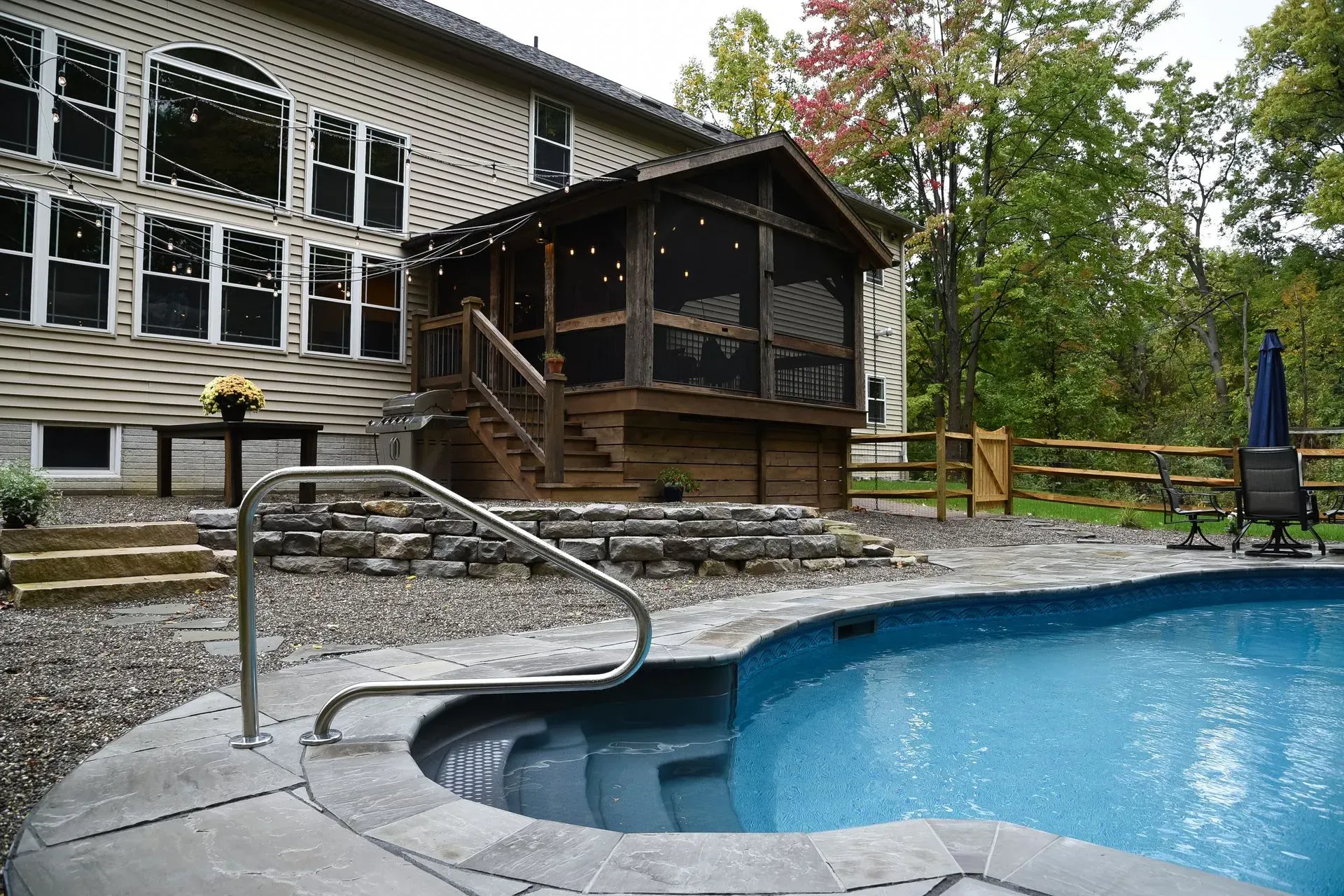
Many older homes offer craftsmanship and character that newer construction cannot replicate. At the same time, their layouts often reflect lifestyle patterns that no longer align with how families live today.
Compartmentalized rooms. Narrow transitions. Uneven ceiling relationships. Disconnected gathering spaces.
In Hudson, Akron & surrounding areas, structural remodeling in older homes frequently becomes the key to unlocking improved flow and restored proportion.
When structural clarity guides layout transformation, spaces begin to feel balanced rather than segmented.
Why Older Homes Often Feel Disconnected
Homes built decades ago were designed for:
- Formal dining rooms separated from kitchens
- Narrow passageways between living spaces
- Defined room boundaries for privacy
- Mechanical systems that required less spatial integration
Over time, homeowners seek:
- Integrated gathering spaces
- Clear sightlines
- Improved circulation
- More intuitive room relationships
Achieving these goals often requires structural modification rather than cosmetic adjustment.
Structural Constraints That Influence Flow
Improving interior flow in older homes typically involves addressing:
- Load-bearing walls
- Framing irregularities
- Ceiling height variation
- Foundation load paths
- Limited structural spans
Opening a space without understanding how structural forces are distributed can compromise alignment.
Structural remodeling older homes must begin with evaluation of load transfer and framing capacity.
For broader insight into engineered remodeling, visit our Structural Home Remodeling page.
Recalibrating Circulation Through Structural Planning
Flow is not simply openness. It is intentional movement between spaces.
Structural remodeling may include:
- Removing or modifying load-bearing partitions
- Expanding openings proportionally
- Integrating beams into ceiling design
- Realigning framing to support larger spans
These interventions allow rooms to connect naturally while maintaining architectural hierarchy.
Structural clarity enables spatial clarity.
Restoring Proportion Through Structural Adjustment
Older homes sometimes feel imbalanced because proportion has shifted through past renovations.
Examples include:
- Additions with mismatched ceiling heights
- Narrow openings between expanded rooms
- Uneven floor levels across sections of the home
Structural remodeling allows these inconsistencies to be recalibrated.
Beam integration, floor leveling, and opening resizing can restore balanced relationships between spaces.
In established communities such as Bath and Chagrin Falls, preserving architectural presence while improving interior flow requires this level of proportional discipline.
Glance Structural Remodeling Impact Overview
| Structural Adjustment | Flow Improvement | Proportion Benefit |
|---|---|---|
| Load-bearing wall removal | Expanded circulation path | Restored spatial hierarchy |
| Beam integration | Open sightlines | Controlled ceiling alignment |
| Floor leveling | Smooth room transitions | Balanced visual continuity |
| Opening enlargement | Improved connectivity | Proper scale between rooms |
| Addition tie-in reinforcement | Unified interior movement | Cohesive structural alignment |
Each modification must align structural feasibility with architectural intent.
Engineering and Proportion Must Work Together
Structural changes influence more than stability. They influence perception.
Beam depth affects ceiling height. Column placement influences furniture layout. Opening width determines spatial rhythm.
When structural remodeling is engineered carefully, interior flow improves without sacrificing proportion.
Anthony Slabaugh Remodeling & Design integrates structural analysis into early planning so layout goals and load paths align before construction begins.
Engineering protects both safety and spatial refinement.
Long-Term Benefits of Structurally Guided Remodeling
When structural remodeling is approached with discipline, homeowners experience:
- Balanced interior flow
- Consistent ceiling relationships
- Reduced visual fragmentation
- Improved mechanical integration
- Greater long-term flexibility
The home feels unified rather than layered over time.
Frequently Asked Questions
Can structural remodeling improve interior flow in older homes?
Yes. Removing or modifying load-bearing elements strategically can improve circulation and spatial connection.
Does improving flow require removing all interior walls?
Not necessarily. Structural planning may identify targeted modifications that enhance movement without eliminating architectural hierarchy.
Will structural remodeling affect ceiling height?
Often. Beam integration and framing adjustments must be evaluated to maintain ceiling alignment and proportion.
Is engineering always required when opening up space?
When load-bearing elements are involved, engineering evaluation ensures safe load redistribution.
When should structural evaluation occur during renovation?
Before layout drawings are finalized and before structural elements are altered.
Aligning Structure With Spatial Experience
Older homes deserve renovation strategies that honor craftsmanship while improving livability.
Structural remodeling provides the framework for enhanced flow and restored proportion when guided by engineering discipline.
Anthony Slabaugh Remodeling & Design works with homeowners in Hudson, Akron & surrounding areas to approach structural remodeling in older homes with architectural sensitivity and structural clarity.
If your home feels compartmentalized or imbalanced and you are considering structural changes, begin with a planning conversation grounded in load paths, proportion, and long-term performance.